

More news on this day
America’s freight rail network is showing fresh signs of momentum, with U.S. railroads reporting a third consecutive weekly increase in traffic as shippers shift more goods back onto the tracks amid stabilizing supply chains and firmer industrial demand.
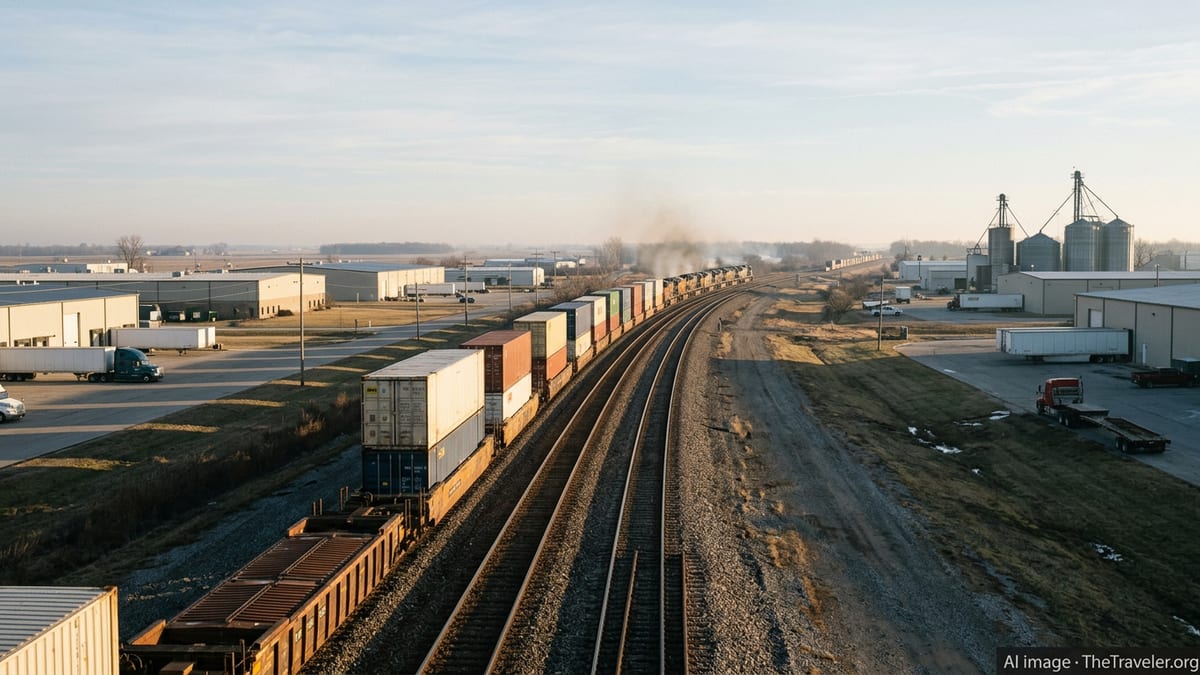
Fresh Data Show a Clear Upward Trend
The latest weekly figures from the Association of American Railroads, tracking traffic through late February 2026, point to a modest but meaningful rebound across the nation’s rail network. Total U.S. rail traffic, measured in combined carloads and intermodal units, has ticked higher for three weeks in a row after a soft start to the year.
Industry analysts note that while the gains are far from explosive, the consistency of the increases is what stands out. After a stretch in late 2025 when volumes slipped on weaker goods demand and intense competition from trucking, railroads are now seeing a broader base of cargo returning, from industrial commodities to consumer-facing freight.
Government freight indicators echo that story. Recent data from the Bureau of Transportation Statistics show rail carloads and intermodal units edging higher as part of a broader improvement in truck-rail freight output, suggesting that the rail uptick is not a one-off blip but part of a slow, grinding recovery in goods movement.
Rail executives say the improvement comes despite a difficult operating backdrop that has included winter storms, volatile fuel prices and lingering uncertainty around trade policy. That resilience is raising hopes that rail could play a larger role in keeping supply chains balanced if demand continues to firm through the spring.
Intermodal Rebounds as Shippers Seek Stability
Much of the recent strength is coming from intermodal traffic, the containers and trailers that move on flatcars and connect ports, warehouses and distribution centers. After several months in which ample trucking capacity and softer import volumes weighed on intermodal, rail-served container flows are showing clearer signs of life.
Logistics managers say that as ocean freight rates cool from recent spikes and congestion eases at major gateways, they are re-optimizing inland routings and shifting more volume to rail where it offers cost and reliability advantages over long-haul trucking. For time-sensitive cargo, trucks still dominate, but for larger blocks of freight with predictable flows, intermodal is regaining ground.
Retailers and e-commerce players are also recalibrating. Many spent the last two years over-indexed on truck to regain control after pandemic-era disruptions. Now, with service metrics improving and train speeds stabilizing on key corridors, spreading volumes back across rail is seen as a hedge against driver shortages, highway congestion and fuel price swings.
At the same time, some of the nation’s big railroads have been rolling out service refinements and new container capacity aimed at speeding up handoffs between trains and trucks. Those operational tweaks, while less visible than headline-grabbing infrastructure projects, can translate directly into higher throughput and better schedule reliability that encourage shippers to commit more freight.
Commodity Flows Reflect a Mixed but Improving Economy
Under the headline numbers, the pattern of gains across individual commodity groups offers clues about the underlying economy. Carloads of chemicals and related products, closely tied to manufacturing and construction activity, have been among the steadier performers, signaling a slow firming in industrial output after last year’s softness.
Automotive-related traffic is another bright spot, as railcars loaded with finished vehicles and parts move between assembly plants, ports and distribution hubs. A more stable flow of semiconductors has helped smooth vehicle production, and rail is benefitting from higher output and inventory repositioning across North America.
Other sectors remain more volatile. Grain shipments are highly seasonal and depend on both crop conditions and export demand, which have been buffeted by global weather patterns and shifting trade relationships. Coal, once a dominant traffic source, continues its structural decline as utilities lean further into natural gas and renewables, though short-term weather and power demand still drive week-to-week fluctuations.
The combination of relatively strong consumer-related freight, improving industrial shipments and pockets of weakness in traditional bulk commodities adds up to what economists describe as a “patchy but positive” backdrop. For railroads, that means focusing on the lanes and sectors where growth is most durable, even as they manage structural shifts in others.
Implications for Travelers and Rail-Centric Regions
While freight trains are a world apart from passenger services, rising rail volumes can still shape the travel experience across the country. In dense corridors where passenger and freight trains share tracks, such as sections of the Northeast, Midwest and West Coast, additional freight traffic can tighten schedules and heighten the need for precise dispatching to avoid delays.
Transportation planners say this is sharpening the conversation around targeted capacity upgrades, passing sidings and modern signaling to keep both freight and passenger flows moving smoothly. For travelers on long-distance routes, the recent freight momentum may translate into incremental schedule adjustments as railroads balance growing freight demand with commitments to passenger operators.
For communities that have long depended on rail, the uptick brings more immediate benefits. Higher freight traffic supports jobs in rail yards, maintenance facilities and local industries clustered along key lines. It can also strengthen the case for investments in station upgrades and multimodal hubs that improve access for both freight and people.
Tourism officials in rail-centric regions note that a healthier freight network can indirectly boost visitor numbers by making it easier and more predictable for hotels, restaurants and attractions to receive the goods they need. In smaller towns where the railroad is both an economic lifeline and a visual centerpiece, fuller trains passing through are often seen as a sign of broader local resilience.
Outlook: Cautious Optimism on the Rails
Looking ahead, industry forecasts for 2026 remain cautious but slightly brighter than they appeared late last year. Trade tensions, interest rates and geopolitical risks still hang over global goods flows, yet a recovering manufacturing sector and steady consumer spending could continue to support rail volumes if current trends hold.
Railroads are positioning themselves for that possibility by investing in infrastructure, technology and workforce development. From expanded sidings on busy corridors to data tools that help match train capacity with demand, carriers are betting that incremental improvements will make rail more attractive to shippers even if overall economic growth stays moderate.
For travelers and the broader public, the recent three-week rise in freight volumes is a reminder of how closely the health of the rail network is tied to the nation’s economic pulse. Each trainload of containers, cars or chemicals moving quietly across the landscape is part of a larger story about how goods, jobs and opportunities flow through the country.
If the current momentum continues into spring, America’s railroads could play an even more prominent role in keeping shelves stocked, factories running and travel-dependent communities thriving, underscoring the enduring importance of steel wheels on steel rails in the modern U.S. economy.