

More news on this day
Hundreds of air travelers were left stranded at Queen Alia International Airport in Amman on Sunday as at least 37 flight delays and three cancellations disrupted services by Royal Jordanian, Flynas, Qatar Airways and other carriers to key destinations including Dubai, Cairo, Beirut, Istanbul and London, according to live airport information and regional flight-tracking data.
Get the latest news straight to your inbox!
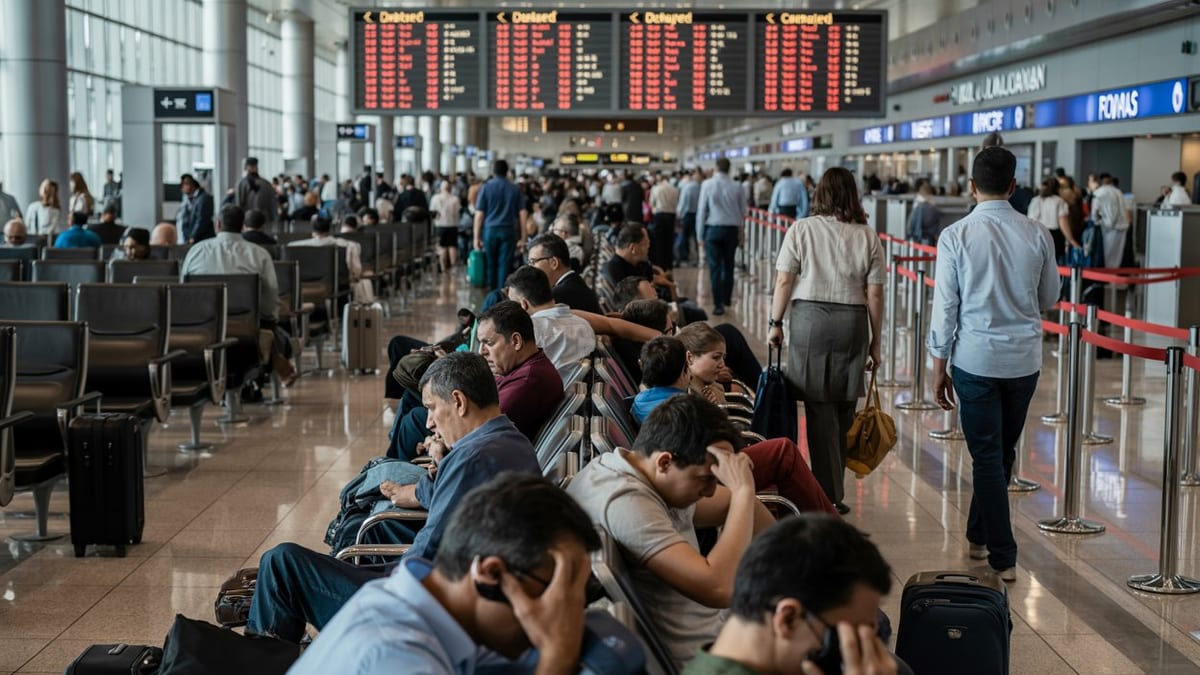
Image by Travel And Tour World
Wave of Disruptions Hits Queen Alia Airport
Flight status boards at Queen Alia International Airport showed an unusually high concentration of delayed departures and arrivals through the afternoon and evening period, with disruptions affecting both regional and long haul services. Publicly available tracking platforms and airport information indicated that many flights were postponed by several hours, while a smaller number were canceled outright.
The 37 delays and three cancellations recorded over the course of the day represent a marked deviation from Amman’s typical operating pattern, where short schedule changes are common but large clusters of extended delays are less frequent. The disruption appeared to build gradually, with initial hold ups in the morning wave spreading across later rotations as aircraft and crew were repositioned.
Passengers connecting through Amman reported missed onward flights and unexpected overnight stays, while local travelers attempting to leave Jordan for regional hubs encountered long queues at airline service desks. Travel forums and social media posts described crowded departure halls and confusion over revised departure times as rolling updates filtered through carrier apps and airport screens.
The pattern at Queen Alia echoed wider instability across Middle East air corridors in recent weeks, where a combination of airspace restrictions, heightened security postures and congested diversion routes has increased the risk of day of travel schedule upheaval for passengers.
Royal Jordanian, Flynas and Qatar Airways Among Affected Carriers
Royal Jordanian, which uses Queen Alia International Airport as its primary hub, saw several of its core regional services pushed back, particularly rotations linking Amman with Gulf and Levant destinations. Public schedules showed knock on effects on flights serving Dubai, Cairo and Beirut, where inbound delays cascaded into outbound departures.
Flynas operations between Amman and select Saudi Arabian gateways were also affected, reflecting the broader strain on north south traffic that has intensified as airlines adjust routings around constrained airspace. Even moderate delays on these high frequency routes can quickly compound, limiting the options for same day reaccommodation.
Qatar Airways services connecting Amman with Doha experienced schedule volatility as well, in line with the carrier’s wider network challenges since the latest round of regional tensions. Reports from travelers over recent days have highlighted repeated last minute schedule changes and periodic cancellations on some Doha linked itineraries, forcing passengers to seek rebooking on other airlines or accept extended layovers.
Other regional and international airlines serving Queen Alia, including carriers operating to Istanbul and London, registered a mix of minor and extended delays as they navigated slot availability and crew duty time limits. With many aircraft arriving late into Amman, airlines were left with narrow margins to turn flights around without exceeding regulatory constraints.
Key Routes to Dubai, Cairo, Beirut, Istanbul and London Disrupted
Among the most affected routes on Sunday were flights to Dubai, Cairo, Beirut, Istanbul and London, all of which serve as critical transit and business corridors for travelers from Jordan and neighboring countries. Delays on these sectors not only stranded passengers in Amman but also jeopardized onward connections through major hubs such as Dubai International, Istanbul Airport and London Heathrow.
Services to Dubai have been particularly sensitive to regional developments, with previous advisories warning of possible congestion and last minute operational changes across Gulf airports. When departures from Amman slip by several hours, travelers often miss tightly timed onward flights to Asia, Europe or North America and face limited same day alternatives.
Flights to Cairo and Beirut were also impacted, compounding existing capacity constraints after earlier reductions and suspensions on some Middle East routes by various carriers in March. For passengers relying on these cities as staging points for travel deeper into North Africa or the eastern Mediterranean, even short notice delays can translate into an extra travel day and unplanned accommodation costs.
On the Istanbul and London routes, disruptions affected both point to point passengers and those connecting to broader European networks. Published coverage in recent weeks has already documented pressure on seats between the Middle East and major European capitals as travelers attempt to reroute away from more heavily affected corridors, leaving fewer spare seats available when irregular operations occur.
Regional Airspace Tensions Drive Ongoing Uncertainty
The turbulence at Queen Alia International Airport cannot be viewed in isolation. Travel advisories and industry analysis issued through March have pointed to a fragile operating environment across multiple Middle Eastern airspaces, citing intermittent missile and drone activity, precautionary airspace closures and air traffic control saturation on remaining open corridors.
These factors have forced airlines to implement longer routings, build in additional fuel and contingency time, and periodically suspend or consolidate services to certain cities. Even when Jordan’s own airspace remains formally open, knock on effects from neighboring closures can result in holding patterns, diversions and crew duty time issues that reverberate through Amman’s daily schedule.
Consultancy reports focused on corporate travel risk have stressed that the region is experiencing an elevated level of operational unpredictability compared with typical seasonal fluctuations. Carriers have adjusted schedules repeatedly with only a few days’ notice, and some have paused sales on selected routes until greater clarity emerges about airspace availability and demand patterns.
Against this backdrop, the mix of 37 delays and three cancellations at Queen Alia on a single day illustrates how quickly an already stretched network can tip into disruption when weather, security checks or technical issues intersect with constrained regional routing options.
Travelers Urged to Build Flexibility Into Itineraries
Publicly available guidance from travel risk firms and consumer advisories in recent weeks has emphasized the importance of flexibility for anyone flying into or out of the Middle East and neighboring regions. Recommendations include allowing longer connection windows, favoring itineraries with fewer separate tickets and monitoring flight status closely from 24 hours before departure.
Passengers transiting through Amman on Sunday who held separate tickets on different airlines were especially vulnerable, as missed onward flights often required purchasing entirely new itineraries rather than simple rebooking. Those on single ticket journeys generally had better protection, though many still faced overnight stays and rearranged ground plans at their final destinations.
Insurance specialists have also highlighted the need to review policy terms carefully, since coverage for delays and cancellations linked to broader geopolitical developments can vary significantly between providers. Travelers caught up in the current wave of disruptions have shared contrasting experiences about reimbursement for hotels, meals and alternative transport.
With no immediate sign that regional airspace dynamics will normalize fully in the coming days, industry observers expect continued day to day variability at Queen Alia International Airport and other key hubs. For now, the scenes in Amman underline how swiftly hundreds of passengers can find their plans upended when a complex network of airlines, airports and airspace controls comes under simultaneous strain.