

More news on this day
Hundreds of travelers were left stranded at Amman’s Queen Alia International Airport on Sunday as publicly available flight data showed at least 37 delays and three cancellations affecting departures to major hubs including Dubai, Cairo, Beirut, Istanbul and London.
Get the latest news straight to your inbox!
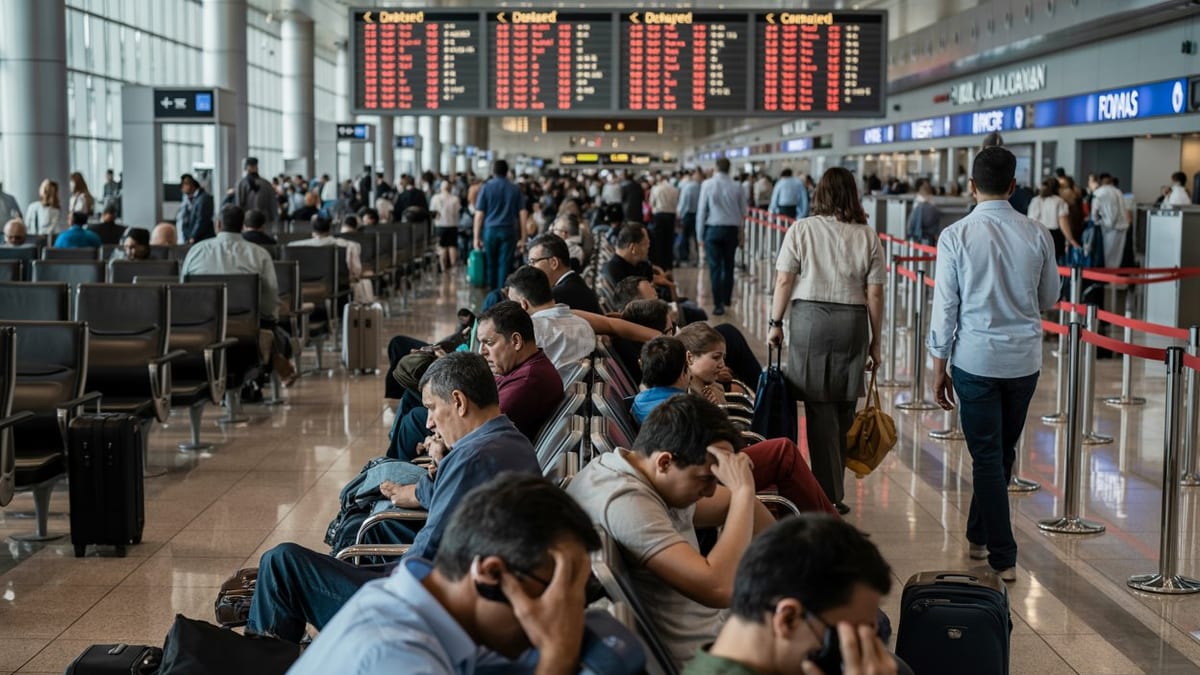
Image by Travel And Tour World
Wave of Disruptions Hits Regional and Long Haul Routes
Flight tracking boards at Queen Alia International Airport showed a sustained pattern of disruption through the day, with a cluster of departures pushed back by several hours and a smaller number canceled outright. The affected services spanned short regional hops and longer medium haul routes, complicating travel plans across the Middle East and beyond.
Royal Jordanian, the country’s flag carrier, appeared among the most visibly impacted operators, with key departures to regional gateways such as Cairo and Beirut posting significant delays. Services operated by Flynas and Qatar Airways were also among those disrupted, alongside other regional and international airlines that link Amman with major transit hubs.
In addition to regional connections, flights bound for Istanbul and London experienced schedule changes, creating knock on effects for passengers relying on onward connections to Europe, North America and Asia. With many of these flights already operating with tight turnaround windows, even moderate delays quickly cascaded into missed links and forced rebookings.
By early evening, the cumulative impact of the disruptions had become clear, with airport seating areas and check in zones crowded with passengers awaiting updated departure times, rerouting options or overnight accommodation from their airlines.
Passengers Face Long Waits, Missed Connections and Rebookings
Travelers caught up in the disruption reported extended waits inside the terminal as departure boards shifted repeatedly. Many passengers connecting through Dubai, Doha, Cairo and Istanbul faced particular uncertainty, since altered departure times from Amman risked breaking carefully timed itineraries stitched across multiple carriers.
For those heading to London and other European destinations, delays from Amman meant a heightened risk of missing last bank evening departures onward to North American and regional European cities. Some passengers were forced to weigh whether to proceed to their first transit point or attempt to negotiate a complete rerouting from Amman to avoid becoming stranded mid journey.
The situation proved especially challenging for families and travelers without flexible tickets, who often had fewer options to move onto alternative flights without incurring additional costs. Travel industry guidance generally notes that airlines may provide meals, hotel rooms or rebooking support during extended delays, but the specifics can vary significantly by carrier, route and jurisdiction.
Social media posts from the terminal described long queues at customer service desks, with some passengers opting to contact airline call centers or travel agents in parallel in hopes of finding quicker rebooking solutions while still in Jordan.
Operational Strain Adds Pressure to Queen Alia Airport
The concentration of delays across a single day highlighted the operational pressures facing Queen Alia International Airport as it handles a heavy schedule of regional and connecting traffic. Even on normal days, the airport functions as a vital link between the Levant, the Gulf and Europe, meaning any disruption is quickly felt across multiple networks.
Publicly available airport operations data and flight tracking platforms indicated that many of Sunday’s affected services were pushed back in blocks, suggesting knock on effects from aircraft and crew rotations earlier in the day. When aircraft arrive late from previous sectors, their onward departures from Amman are often delayed in turn, compressing already tight turnaround schedules.
Royal Jordanian, Flynas, Qatar Airways and other carriers that link Amman with Doha, Riyadh, Jeddah, Dubai and other Gulf hubs rely heavily on precise timing to feed long haul waves. Any delay leaving Queen Alia can ripple into missed long haul departures or force passengers onto later flights with limited availability.
Observers noted that such patterns are particularly disruptive at airports like Amman that serve as both origin and transfer points, since disruptions affect not only local travelers but also those merely passing through the country on multi leg itineraries.
Key Routes to Dubai, Cairo, Beirut, Istanbul and London Affected
The list of affected destinations underlined the significance of Sunday’s disruption. Dubai, Cairo, Beirut, Istanbul and London represent some of Queen Alia’s busiest and most strategically important routes, serving as gateways for business travelers, tourists, expatriate communities and students.
Delays on the Dubai and Cairo routes can have an outsized impact on regional mobility, as both cities act as onward connection points for flights to Africa, Asia and North America. Beirut and Istanbul routes also play a central role for diaspora communities and for travelers transiting between Europe and the wider Middle East.
London services are particularly critical for long haul connectivity, offering key links to the United Kingdom and serving as a major entry point for North American and European travel. Schedule disruptions on these flights can compound difficulties for passengers relying on tightly timed onward journeys within the United Kingdom or across the continent.
Travel agents noted in public commentary that when such cornerstone routes are disrupted, it can take several days for the system to fully absorb displaced passengers, especially if load factors had already been high heading into the disruption.
Advice for Travelers Departing Amman in the Coming Days
With irregular operations at Queen Alia International Airport likely to reverberate beyond the immediate day of disruption, travel industry guidance suggests that passengers due to depart from Amman in the coming days should monitor their bookings closely and allow additional time at the airport.
Publicly available airline advisories typically recommend checking flight status through official airline channels and airport information boards before heading to the terminal. Passengers with tight connections through hubs such as Dubai, Doha, Cairo, Istanbul and London may wish to review alternative routings or build in longer buffers where possible.
Travelers are also encouraged, per standard consumer guidance, to review the conditions of carriage and any applicable passenger rights regimes for their journey, which may set out entitlements to care, rebooking or refunds in the event of significant delays or cancellations. Such frameworks can differ by departure country, airline and whether the disruption is deemed within the carrier’s control.
While Sunday’s wave of delays and cancellations underscored the vulnerability of tightly scheduled route networks, it also highlighted the importance for passengers of maintaining flexible plans, keeping digital boarding passes and contact details up to date and remaining prepared for last minute changes when flying through busy hubs such as Amman.