


More news on this day
Amsterdam has become a focal point for aviation and travel technology this week as Trip.com Group’s Airline Global Conference gathers leading carriers and partners to explore how artificial intelligence, digital identity, and new distribution technologies are reshaping global air travel.
Get the latest news straight to your inbox!
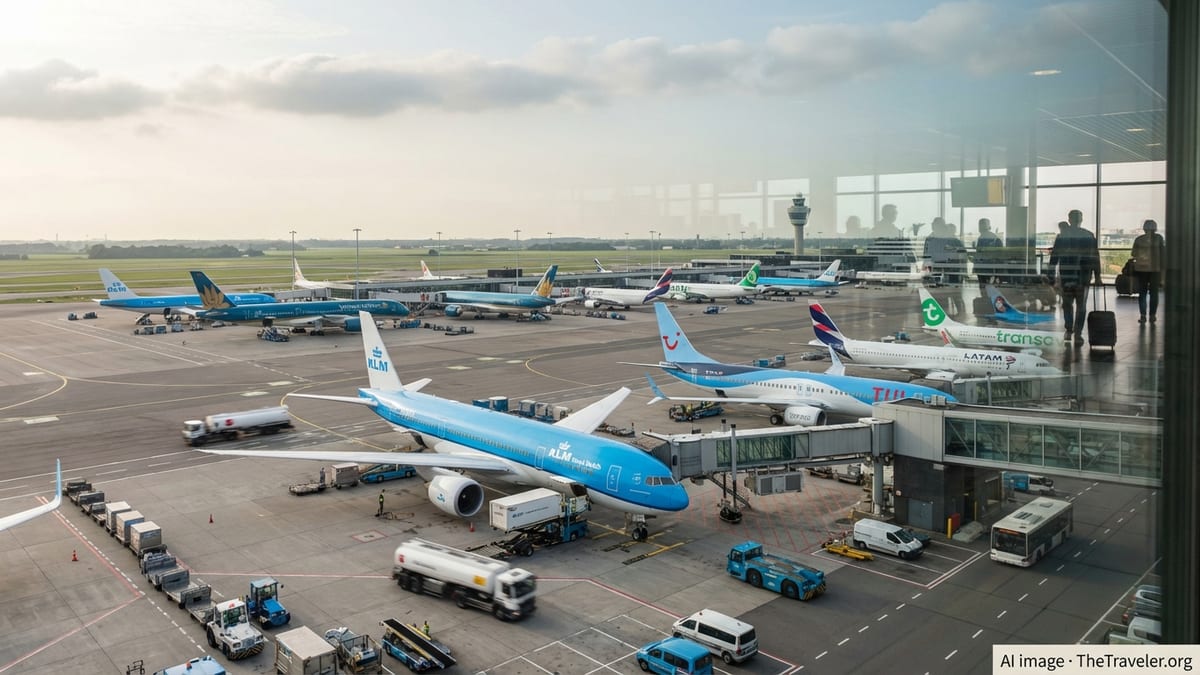
Amsterdam Showcases a New Era of Airline Collaboration
The Trip.com Airline Global Conference 2026 opened in Amsterdam with a stated ambition to position the city as a hub for next-generation travel innovation. Publicly available information indicates that the event, held at Passenger Terminal Amsterdam, brings together airlines, airports, technology firms and travel distributors to examine how data and digital tools can streamline the end-to-end journey.
Reports on the conference agenda highlight a strong focus on co-creation between airlines and online travel platforms. Trip.com Group is using the gathering to reinforce its role as a global connector between carriers and travelers, building on earlier partner conferences and strategic events that outlined the company’s roadmap for artificial intelligence, sustainability and customer experience.
The timing aligns with a broader wave of aviation and travel meetings in Europe that aim to reset strategies after several years of disruption. Industry coverage points to rising demand, intensifying competition on long-haul routes and a rapid acceleration in digital expectations from passengers, all of which underpin the conversations in Amsterdam.
By hosting airline executives, technologists and distribution specialists in one venue, the conference underscores how cross-border collaboration is becoming central to the industry’s recovery and future growth.
Air Canada, Turkish Airlines and Qatar Airways Join Forces on Innovation
Participating airlines at the Amsterdam event include Air Canada, Turkish Airlines and Qatar Airways, according to conference information released through corporate communications channels. Their presence signals the strategic importance of digital partnerships to carriers that operate extensive global networks and rely heavily on long-haul traffic.
Each of the three airlines has been expanding its digital capabilities in recent years, from enhanced mobile apps and dynamic offers to more personalized loyalty propositions. Industry analyses of airline strategies suggest that these carriers are increasingly turning to technology alliances to refine retailing, increase ancillary revenue and deliver more seamless interline and codeshare experiences.
At the Amsterdam conference, collaboration with Trip.com Group is framed around improving the way fares, schedules and ancillaries are presented and serviced across multiple channels. Publicly available descriptions of the event indicate that participants are exploring how richer data sharing and new standards can make it easier for travelers to compare options, manage disruptions and access tailored offers.
The joint focus by airlines from North America, Europe-Asia and the Gulf highlights the global nature of the challenge. As passengers expect consistent digital experiences regardless of carrier or region, airlines are under pressure to align their technology strategies and remove friction from international journeys.
Trip.com Group Positions Itself at the Heart of Travel Tech
Trip.com Group has been steadily strengthening its profile as a technology-driven travel platform through a series of high-profile conferences and investments. Previous events such as the Envision 2025 partner gathering in Shanghai showcased the company’s emphasis on artificial intelligence, sustainability and data-driven personalization, supported by dedicated innovation funds and product roadmaps.
In Amsterdam, the Airline Global Conference builds on that trajectory by focusing specifically on airline partnerships and digital infrastructure. Information shared about the event theme, centered on intelligence, trust and partnership, reflects Trip.com Group’s intention to move beyond distribution into deeper technical collaboration with carriers and airports.
Industry reports describe the group’s ambition to integrate AI into every stage of the traveler journey, from inspiration and search to after-sales support. This includes conversational interfaces, predictive pricing tools, automated disruption handling and smarter recommendations that leverage large volumes of historical and real-time data.
By convening leading airlines and technology partners in Amsterdam, Trip.com Group is seeking to demonstrate how its platform can serve as a shared innovation layer, enabling partners to test new retailing concepts, deploy emerging standards and tap into evolving traveler preferences at scale.
AI, Digital Identity and Data Standards Take Center Stage
Artificial intelligence and digital identity solutions dominate the Amsterdam discussions, according to publicly available summaries of the conference program. Sessions are reported to focus on how machine learning can reduce complexity in pricing and inventory management while giving customers more transparent and relevant choices.
Digital identity is another key theme, particularly in the context of secure, consent-based data sharing between airlines, travel platforms and airport stakeholders. The goal is to make it easier for passengers to move through airports, verify documents and access services without repeatedly presenting physical identification, while preserving privacy and regulatory compliance.
Data standards and interoperability are recurring topics as well. Industry observers note that airlines and intermediaries are increasingly looking to modern retailing approaches that depend on consistent data structures, real-time connections and open interfaces. The Amsterdam conference is framed as a venue to explore how these frameworks can be applied across markets and aligned with emerging initiatives from associations and technology providers.
For travelers, these developments could translate into more accurate information during disruptions, better recognition across loyalty ecosystems and smoother transitions when connecting between airlines and modes of transport. For airlines and partners, the payoff lies in reduced operational friction and more targeted commercial strategies.
Amsterdam’s Growing Role in the Global Travel Innovation Circuit
The choice of Amsterdam as host for Trip.com Group’s Airline Global Conference reflects the city’s expanding reputation as a meeting point for aviation, technology and travel. The Dutch capital regularly attracts major industry gatherings that explore airport design, passenger experience and digital infrastructure, reinforcing its status as a neutral and well-connected venue for global stakeholders.
Industry event calendars for 2026 show a dense cluster of aviation and travel technology conferences across Europe, with Amsterdam frequently appearing alongside hubs such as London, Berlin and Singapore. Analysts view this pattern as evidence that innovation in air travel is increasingly shaped by cross-border dialogue rather than isolated national initiatives.
Locally, the conference contributes to a broader ecosystem of companies and institutions focused on smart mobility, sustainable transport and digital services. For Amsterdam, hosting global airline and travel technology leaders brings short-term economic benefits through business tourism while also strengthening its profile as a laboratory for future-oriented mobility solutions.
As the Amsterdam event unfolds, the combination of heavyweight airlines, a major online travel platform and a technology-forward agenda underscores how rapidly the contours of global aviation are changing. The discussions around AI, digital identity and shared innovation frameworks signal that the next phase of growth in air travel will depend as much on data and code as on aircraft and routes.