


More news on this day
U.S. employers and skilled foreign workers will pay more for rapid immigration decisions in 2026, as United States Citizenship and Immigration Services has implemented inflation-linked increases to premium processing fees across key work visa and green card categories.
Get the latest news straight to your inbox!
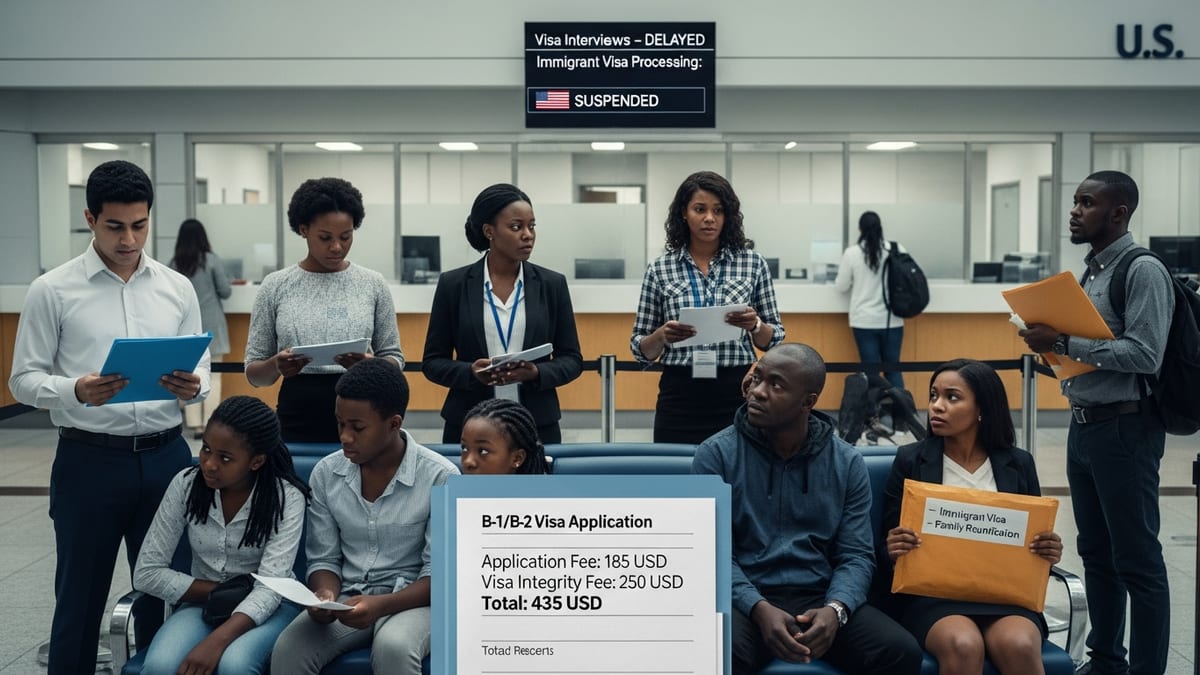
Higher costs for rapid decisions take effect in 2026
Premium processing allows certain employment-based immigration petitions to be reviewed within a guaranteed timeframe if applicants pay an additional fee using Form I-907. For years, this optional service has been used heavily by companies needing timely decisions on H-1B, L-1 and other work visa categories, as well as immigrant petitions for permanent residence filed on Form I-140.
Published federal rulemaking for 2026 shows that the government has now adjusted these premium processing fees upward to reflect inflation measured between June 2023 and June 2025. The changes apply to requests postmarked on or after March 1, 2026, meaning any filing date from that day forward must include the new amount or risk rejection.
According to public summaries of the rule, the adjustment raises the standard premium processing charge for most I-129 and I-140 filings from 2,805 dollars to 2,965 dollars. For the smaller group of H-2B and R-1 nonimmigrant classifications, which historically carried a lower premium processing rate, the 2026 fee rises from 1,685 dollars to 1,780 dollars.
These increases follow an earlier round of inflation-based changes that took effect in 2024, continuing a trend in which employers and workers face steadily rising costs to secure faster immigration decisions.
Key fee changes for employers and skilled workers
The 2026 fee schedule affects several of the most commonly used employment-based categories. For petitions filed on Form I-129, which covers many temporary work visas, the new 2,965 dollar premium processing fee typically applies to H-1B specialty occupation workers, L-1 intracompany transferees and similar classifications where premium processing has been authorized.
Employment-based immigrant petitions filed on Form I-140, widely used for EB-1, EB-2 and EB-3 green card categories, also fall under the 2,965 dollar premium processing rate when the service is requested. Legal analyses published in early 2026 highlight that employers now need to budget nearly 3,000 dollars on top of standard filing fees if they want an expedited decision on these petitions.
The smaller increase for H-2B temporary nonagricultural workers and R-1 religious workers moves their premium processing fee to 1,780 dollars. Federal regulatory commentary notes that this adjustment is calculated using the same inflation formula but starts from a lower baseline that historically distinguished these categories from other premium processing requests.
Although premium processing remains optional, immigration law updates point out that many U.S. employers consider it essential for workforce planning, project timelines and travel coordination. In practice, the higher 2026 charges will often be built into hiring budgets for hard to fill technical, professional and managerial roles.
Timeline rules and who must pay the higher amounts
Universities and corporate immigration teams that monitor agency updates have emphasized one practical detail for 2026: the government is applying the new fees based on the postmark date of the premium processing request. If Form I-907 is postmarked on or after March 1, 2026, the updated fee must be included, regardless of when the underlying petition was prepared or drafted.
Guidance circulated by international student and scholar offices at U.S. universities explains that filings postmarked before March 1 can still use the previous premium processing amounts, while any later submissions with outdated checks or payment authorizations are likely to be rejected and returned. That risk could lead to time lost on critical extensions, changes of status and start date planning for new hires.
Responsibility for payment is another important question. Official regulations do not require that employers cover premium processing in every case, but many corporate policies do. Some companies pay when the faster decision is primarily for business reasons, such as a project launch or relocation deadline, while workers may be asked to contribute if speed is largely for personal convenience.
For foreign professionals and researchers, the higher 2026 fees may influence decisions about whether to request an expedited decision at all. Those with flexible timelines or stable underlying status may choose regular processing, while individuals facing expiring status, travel constraints or job start pressures may decide the increased premium charge is still worth it.
Budgeting impacts for corporate mobility and travel
The new premium processing fees arrive at a time when global companies are already dealing with higher mobility and travel costs. Human resources departments that manage U.S. assignments are now revisiting budgets for 2026 to account for the additional hundreds of dollars per case that expedited processing will require.
Immigration-focused law firm alerts note that, for large employers regularly filing dozens or hundreds of H-1B extensions, amendments and transfers each year, the cumulative impact can be significant. Even an increase of roughly 160 dollars per petition can translate into tens of thousands of dollars in additional annual expenses if premium processing remains the default practice.
For smaller employers and startups, particularly those sponsoring their first foreign national employees, the higher 2026 fees may prompt more selective use of premium processing. Some may choose expedited service only for time sensitive hires or for key roles where project delays would be especially costly, while relying on regular processing for routine extensions.
Travel planning is also affected. Delays in approval can complicate business trips or relocations that require a valid approval notice for visa stamping at a U.S. consulate or for reentry to the United States. With higher premium costs in 2026, both companies and workers may need to weigh the price of faster approvals against potential disruptions to travel and project schedules.
Strategic considerations for 2026 and beyond
Commentary on the 2026 rule underscores that premium processing is now explicitly tied to inflation, making periodic fee adjustments more likely in future years. Employers that rely heavily on this service may need to treat rising premium processing costs as an ongoing factor in long term workforce and mobility planning rather than a one time change.
Some analysts point out that the premium fee increases help fund broader agency operations, as user fees represent a major share of the immigration system’s budget. According to publicly available overviews of the fee structure, a portion of premium processing revenue is intended to support general adjudications and modernization initiatives that can benefit all applicants, whether or not they pay for faster handling.
For skilled workers considering U.S. opportunities in 2026, understanding the new premium processing landscape is increasingly important. The higher fees can influence the timing of job changes, decisions about pursuing permanent residence and the choice of whether to push for expedited adjudication in close coordination with sponsoring employers.
While the core mechanics of premium processing remain unchanged, the 2026 increases signal that faster decisions now come at a higher price. Both employers and foreign professionals will need to factor that reality into hiring strategies, relocation plans and travel decisions in the year ahead.