

More news on this day
A dramatic January 2026 operation to free a luxury expedition vessel trapped in pack ice near Antarctica has refocused attention on the risks of polar cruising and the preparations travelers should make before heading south.
Get the latest news straight to your inbox!
A High-Latitude Wake-Up Call
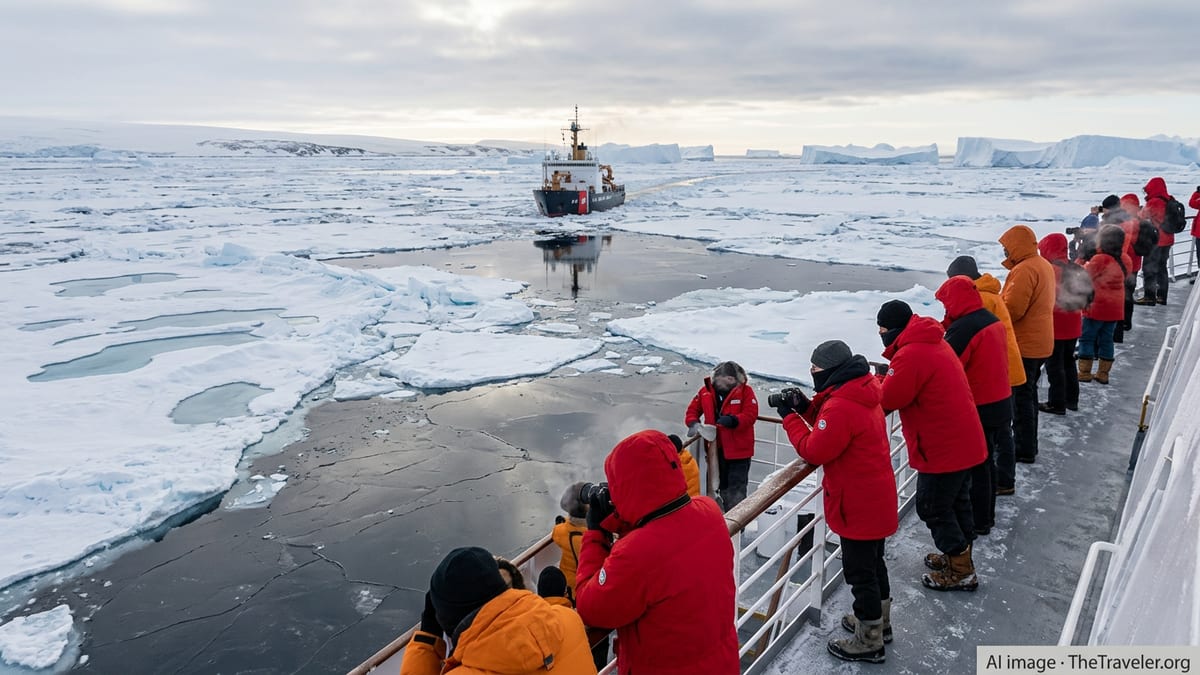
According to widely shared video and news coverage, the U.S. Coast Guard heavy icebreaker Polar Star was dispatched in mid-January 2026 to assist the Australian-owned Scenic Eclipse II after the ship became beset in thick ice in the Ross Sea during an Antarctic voyage. Reports indicate that the expedition vessel, carrying around 200 guests, had been navigating pack ice when shifting conditions locked it in place, prompting a request for help from the only operational U.S. heavy icebreaker.
Publicly available information describes how Polar Star maneuvered close enough to break up the sea ice surrounding the trapped ship, opening a navigable lead and allowing the cruise vessel to slowly work free. Cruise and maritime outlets note that the operator later emphasized that passenger safety was never compromised and that the collaboration between ships allowed them to manage the changing ice safely.
While no injuries were reported and the voyage ultimately continued, the images of a luxury expedition ship immobilized in a remote corner of the Southern Ocean have resonated far beyond the polar travel community. For many would-be visitors, the rescue has served as a vivid reminder that Antarctica is still an active wilderness, where sophisticated ships and experienced crews remain subject to the power of wind, weather, and ice.
The high-profile incident comes after a cluster of Antarctic cruise accidents in late 2022, including a fatal zodiac capsizing and a passenger death linked to heavy seas affecting another expedition ship. Together, these events are shaping new conversations around risk, readiness, and responsibility in one of the world’s fastest-growing adventure travel arenas.
Understanding the Real Risks of Polar Cruising
Travel industry analyses and academic reviews of recent Antarctic seasons highlight a complex risk picture for expedition cruising. The total number of visitors to Antarctica has climbed steadily over the past decade, with more purpose-built expedition ships entering service and a broader range of travelers booking once-in-a-lifetime voyages. At the same time, serious incidents remain relatively rare compared with the overall volume of sailings.
Data cited by polar advocacy and tourism bodies indicate that most Antarctic voyages proceed without major safety events. However, the small number of high-impact cases can be severe. In November 2022, two American passengers died when an inflatable zodiac boat from the World Explorer capsized near Elephant Island during a shore excursion. Separate published accounts describe another death and several injuries on a different expedition ship after it encountered an unusually large wave in the Drake Passage during the same period.
Marine accident reports and technical studies of those 2022 storms point to the interplay between rapidly evolving Southern Ocean weather, complex sea states, and the operational challenges of running small craft such as zodiacs alongside larger vessels. The January 2026 ice entrapment added a different dimension, underscoring that risk does not only come from storms but also from ice dynamics that can change within hours.
For travelers, the takeaway is not that Antarctic voyages are inherently unsafe, but that they are fundamentally different from conventional warm-water cruising. Distances are vast, search-and-rescue assets are limited, and environmental conditions can exceed even seasoned travelers’ expectations. Understanding these realities is a critical first step before booking.
What Prospective Passengers Should Ask Before Booking
The recent rescue has prompted renewed scrutiny of how well travelers are prepared for polar conditions. Industry guidance and expert commentary suggest that one of the most important steps is to examine a ship’s design and capabilities. Prospective guests are encouraged to look for ice-class ratings, redundancy in critical systems, and experience in polar operations, rather than focusing only on spa facilities or cabin size.
Published coverage of expedition accidents emphasizes that operator expertise can be as important as hardware. Travelers can review how long a company has run polar programs, whether it belongs to the International Association of Antarctica Tour Operators, and how its ships have performed over multiple seasons. Public incident records and independent reports can reveal patterns in how operators handle emergencies, weather-related itinerary changes, and equipment failures.
Another frequently overlooked area is the fine print surrounding medical support and evacuation. Medical facilities on small expedition ships are limited, and the nearest hospital may be many flying hours away. Travel medicine specialists advise checking that insurance includes coverage for emergency evacuation from remote regions, which can involve complex coordination and significant cost if a serious illness or injury coincides with severe weather or heavy ice.
Prospective guests are also urged to consider their own fitness and mobility. Zodiac landings, wet beach arrivals, and steep gangways are common features of Antarctic itineraries. Discussions on traveler forums and in post-cruise debriefs repeatedly note that passengers who are comfortable moving in cold, slippery conditions tend to fare better and feel more confident when conditions deteriorate.
On Board: How to Prepare for the Unexpected
The 2026 ice rescue and earlier incidents have highlighted the importance of active participation in safety procedures once on board. Maritime investigation summaries repeatedly reference how passengers respond in the first critical minutes of an incident, whether it involves a small-boat mishap, a rogue wave, or a sudden change in ice conditions that requires rapid maneuvering.
Travel safety specialists encourage guests to treat muster drills as serious training rather than a formality. Knowing the shortest route from a cabin to assembly stations, understanding how to don a life jacket or immersion suit, and listening carefully to instructions about zodiac operations can yield tangible benefits during a real emergency or an unexpected transfer in rough seas.
Clothing and equipment choices also matter. Expedition operators typically provide detailed packing lists that emphasize layered, waterproof, and windproof gear, as well as gloves that allow some dexterity when holding safety lines or climbing wet steps. Reports of past zodiac accidents describe how cold water, spray, and strong wind can quickly undermine balance and judgment, particularly for guests unused to such environments.
On-deck behavior is another factor within passenger control. Avoiding crowded railings during heavy seas, listening to crew restrictions on certain outdoor areas, and respecting temporary closures of gangways or viewing platforms during ice operations all reduce risk. In a region where help may be days away, the margin for individual error is narrower than many travelers are accustomed to.
The Changing Antarctic Environment and Growing Traffic
Scientists tracking Southern Ocean conditions have noted that climate-related changes are affecting both sea ice distribution and weather patterns. Some seasons see reduced coastal ice, while others experience highly mobile pack ice and the calving of very large icebergs, such as the A23a berg that has been closely monitored as it drifts out of the Weddell Sea. These variations can create new navigational challenges along popular expedition routes.
At the same time, the number and diversity of ships operating in Antarctic waters continue to increase. Cruise and environmental organizations have reported a steady rise in expedition capacity, including larger luxury vessels that bring more people into narrow channels and wildlife-rich bays. This growth has fueled debate about whether the region is becoming too crowded for its own good, both in terms of safety and environmental impact.
Recent seasons have already seen itineraries altered or shortened due to unfavorable ice or strong winds, sometimes resulting in voyages with fewer landings than advertised. While many travelers accept this as the price of true expedition travel, others express frustration when they do not reach marquee sites. The 2026 rescue underscores that route changes, delays, and missed landings are sometimes the safest and most responsible choice.
For would-be polar explorers, the lesson is to approach Antarctica as an expedition rather than a conventional cruise vacation. Selecting experienced operators, asking detailed questions about safety and contingency planning, and maintaining flexible expectations can help ensure that when conditions shift, the experience remains memorable for the right reasons.