

More news on this day
Air passengers across four continents faced fresh disruption on April 12, 2026, as operational data and industry reports pointed to 311 flight delays and 29 cancellations affecting routes in Canada, the United States, China, Germany, Bahrain, Qatar and Russia.
Get the latest news straight to your inbox!
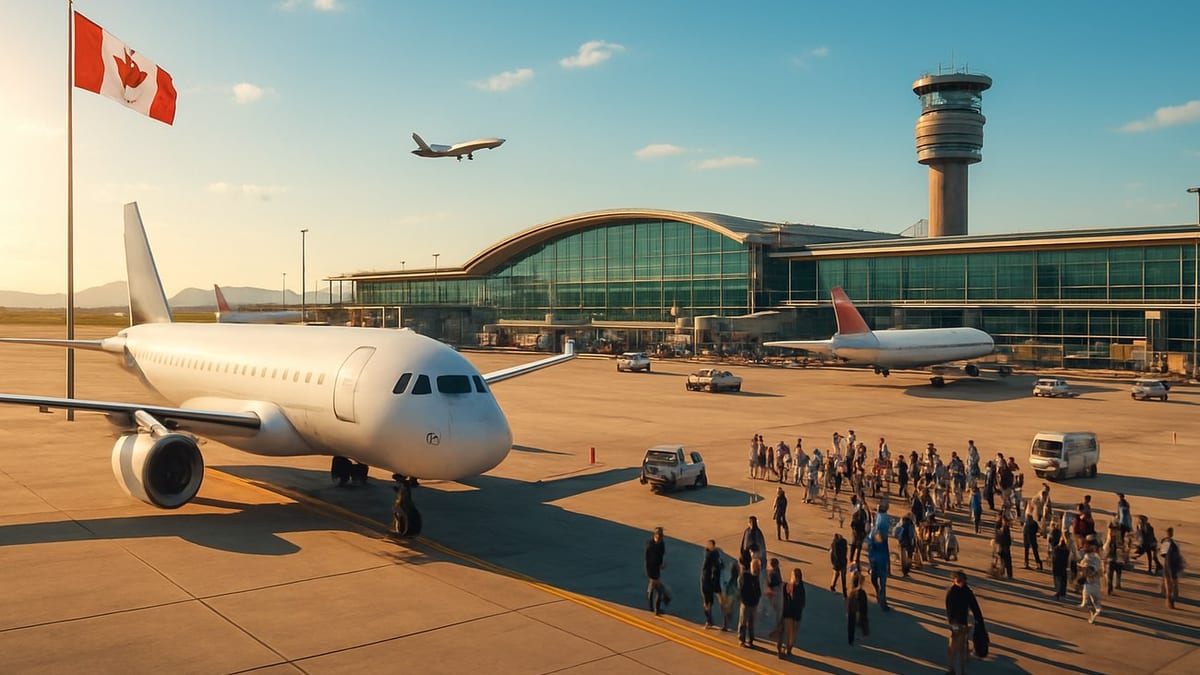
Multi‑country disruptions ripple through global networks
Flight monitoring snapshots and aviation bulletins for April 12 indicate a patchwork of disruption rather than a single concentrated hotspot, with delays and cancellations scattered across major hubs in North America, Europe, the Middle East and Asia. The combined tally of 311 delays and 29 cancellations highlights how quickly minor operational issues can stack up into a global challenge for airlines and travelers.
In Canada and the United States, publicly available data from airport boards and carrier status pages showed a series of hold‑ups on transborder and domestic services, with late‑running aircraft and crew rotations contributing to rolling schedule slippage. Similar patterns were visible in China and Russia, where busy trunk routes experienced knock‑on delays as earlier flights ran behind schedule.
Germany, Bahrain and Qatar formed key pinch points on long‑haul corridors linking Europe, Asia and North America. Reduced flexibility in these hubs, in some cases influenced by recent airspace restrictions and capacity adjustments, meant that comparatively small numbers of cancellations still translated into missed connections and extended layovers for passengers in transit.
Although the absolute figures for April 12 were modest compared with major storm or strike days, the geographic spread across seven countries underscored the interconnected nature of modern aviation. Travelers whose flights operated on time in one region could still find themselves delayed by disruptions originating thousands of kilometers away.
Weather, staffing and airspace shape the day’s delays
Underlying causes on April 12 appeared to mirror broader trends seen in recent months, where a mix of unsettled weather, staffing strains and evolving airspace constraints combined to test airline resilience. Operational updates and recent consumer reports suggest that carriers across North America and Europe have been managing higher‑than‑usual levels of late‑arriving aircraft and crew duty‑time limits, both of which can force last‑minute schedule changes.
In Germany and parts of North America, spring weather patterns have periodically slowed departures and arrivals, with low clouds, gusty winds and heavy showers prompting increased spacing between aircraft. Even short operational pauses at busy hubs can quickly translate into dozens of delayed flights as ground handling teams, gates and crews are rescheduled.
Across Bahrain, Qatar and parts of the wider Gulf region, the legacy of recent airspace closures and route adjustments has left airlines with fewer routing options than usual. Publicly available guidance from travel advisories and airline updates in early April described longer flight times, circuitous routings and constrained runway slots, all of which reduce the margin for recovery when a single rotation runs late.
In China and Russia, where traffic levels remain high on domestic and regional sectors, congestion at peak times added another layer of pressure. When turnarounds run slightly behind schedule, knock‑on effects can propagate through the day, contributing to the kind of mid‑range disruption totals recorded on April 12.
Impact on passengers across Canada, the US and China
For travelers in Canada and the United States, the April 12 figures translated into a familiar set of frustrations: extended waits at departure gates, missed connections at major hubs and tight turnaround times at immigration and security checkpoints. Travel and aviation outlets tracking the day’s operations reported clusters of delays at large connecting airports where multiple carriers feed transcontinental and transborder networks.
In Canada, delays on east‑west services and cross‑border routes meant some passengers arrived too late to board onward flights to the United States and Europe, prompting rebookings into already busy later departures. In the US, similar pressures were felt at major coastal and southern hubs that serve as gateways to Latin America and the Caribbean, amplifying the impact of each delayed arrival.
China’s participation in the day’s disruption added an intercontinental dimension. Late departures from key Chinese hubs affected long‑haul flights to North America and Europe, with some travelers facing rolling departure time changes as ground handling, catering and crew positioning were rescheduled. For those with tight layovers onward to Canada, Germany or Russia, even moderate delays were enough to upset carefully planned itineraries.
Although many flights still operated within broadly acceptable time windows, the cumulative effect for passengers with multiple legs on their journey was significant. A delay of under an hour at departure could grow into several hours of additional travel once missed connections and rebooked segments were taken into account.
European and Gulf hubs feel the strain
Germany, Bahrain and Qatar played a central role in how the April 12 disruptions unfolded, given their position on heavily trafficked east‑west corridors. Aviation analysis published over recent days has pointed to ongoing operational complexity at several European and Middle Eastern hubs, where airlines are balancing demand recovery with constrained capacity.
In Germany, a combination of weather‑related slowing and broader staffing and air traffic control pressures contributed to schedule tightness. Even when outright cancellations were limited, incremental delays affected both intra‑European services and long‑haul flights that rely on precise connections to function smoothly.
Bahrain continued to adjust after earlier periods of airspace closure and temporary rerouting of flights to neighboring airports. While operations have been gradually restored, travel reports note that frequencies on some routes remain reduced, meaning that a single cancellation can leave passengers with few same‑day alternatives.
Qatar, home to one of the region’s largest connecting hubs, also remained in focus. Recent route updates and capacity changes, combined with longer flight times on some detoured paths, limited the ability of airlines to absorb disruption. As a result, even a small number of delayed or canceled services on April 12 had an outsized impact on travelers relying on tightly timed connections between Asia, Europe and North America.
What April 12 reveals about ongoing aviation fragility
Although 311 delays and 29 cancellations fall far short of crisis levels seen during major storms or strike actions, the April 12 snapshot underlines how finely tuned global aviation remains in early 2026. With many carriers still rebuilding schedules and workforces after years of volatility, the system has less slack to accommodate multiple small disruptions occurring at once.
Industry performance data published in recent months shows that a sizable share of delays remain rooted in operational factors within airline and airport control, such as aircraft maintenance, crew availability and ground handling bottlenecks. At the same time, external shocks, including shifting airspace rules and rapidly changing weather, continue to limit predictability for network planners.
For passengers, the events of April 12 serve as another reminder that even on days without headline‑grabbing disruption, international itineraries that rely on tight connections across several hubs remain vulnerable. Building longer layovers, monitoring flight status closely on the day of travel and understanding local passenger‑rights regimes can help reduce the practical impact when schedules shift unexpectedly.
For airlines and airports in Canada, the United States, China, Germany, Bahrain, Qatar and Russia, the latest figures add to a growing body of evidence that small operational improvements at key nodes can make the difference between a manageable day and a cascade of missed connections. As the northern summer travel season approaches, how the industry responds to lessons from days like April 12 will be closely watched by travelers and analysts alike.