

More news on this day
Flight operations across several major aviation markets came under renewed pressure on April 12, 2026, as publicly available tracking data and published coverage indicated at least 311 delays and 29 cancellations affecting services that linked Canada, the United States, China, Germany, Bahrain, Qatar and Russia.
Get the latest news straight to your inbox!
Canada Records Core Share of the Day’s Disruptions
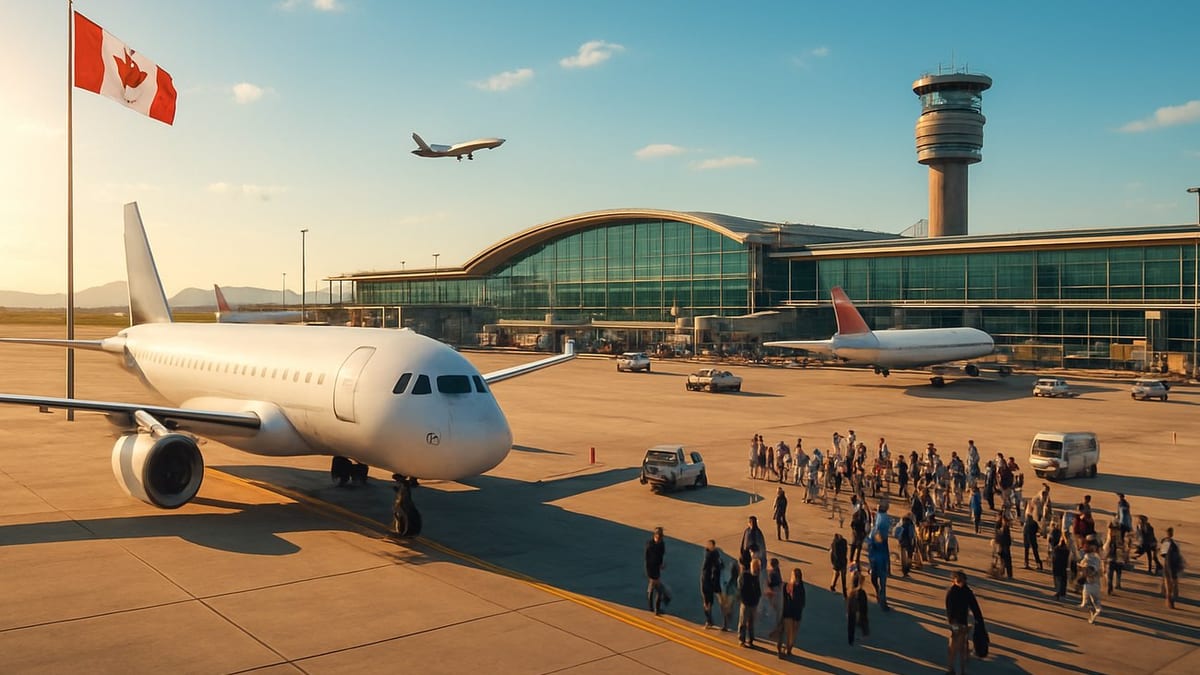
Reporting from flight monitoring platforms and industry-focused outlets showed Canada at the center of the disruption profile, with 311 delayed flights and 29 cancellations recorded across the country’s busiest airports on April 12. Major hubs including Toronto Pearson, Montréal–Trudeau, Vancouver, Calgary, Halifax and St. John’s accounted for most of the interruptions, affecting both domestic services and long haul links to the United States, Europe, Asia and the Middle East.
Publicly available summaries highlighted Toronto Pearson among the hardest hit, with more than 130 delays and several cancellations affecting departures and arrivals. Montréal–Trudeau and Vancouver each reported dozens of delayed flights, as schedules became compressed throughout the afternoon and evening when earlier holds cascaded into missed rotation times. Smaller but strategically important airports such as Halifax and St. John’s also reported cancellations that disproportionately affected regional travelers with limited alternative options.
Air Canada and its regional partners, alongside WestJet, Porter Airlines and Air Transat, featured prominently in the disruption tallies. Published coverage indicated that a combination of tight aircraft turnarounds, crew positioning challenges and residual schedule stress from earlier weather events in late March and early April contributed to the slower recovery, even as conditions on April 12 themselves were relatively manageable at many locations.
Analysts following the Canadian sector noted that while the absolute number of cancellations remained modest compared with peak winter storms, the high volume of delays at major hubs created visible crowding at gate areas and security checkpoints. Prolonged intervals between scheduled and actual departure times left connections vulnerable, particularly for travelers relying on same day links to transborder and transatlantic services.
United States Hubs Absorb Knock-On Delays
In the United States, the April 12 pattern was shaped less by headline cancellation counts and more by rolling delays tied to earlier disruptions. Reporting from North American outlets showed that major hubs including Chicago O’Hare, New York airports and Detroit were still working through congestion tied to weather and operational issues from the preceding day, with flight banks connecting to and from Canada particularly affected.
Recent coverage of Dallas Fort Worth and Detroit Metro disruptions on April 11 underscored how quickly backlogs can form when a large hub experiences several dozen off-schedule movements within a single day. By April 12, some of those aircraft and crew imbalances were still visible in schedules, feeding into delay minutes on cross border routes serving Toronto, Montréal and western Canadian cities.
Domestic networks within the United States also felt the impact as carriers sought to protect key trunk routes while trimming flexibility on thinner services. Publicly accessible operational data pointed to a pattern where airlines favored keeping long haul services to Canada and Europe operating, even if they departed behind schedule, while shorter segments were more likely to experience rolling departure holds.
For travelers, the practical effect was an increase in missed onward connections and tighter transfer windows at hub airports. Consumer advocates have continued to remind passengers that, under existing US and Canadian regulations, compensation rights vary widely depending on whether disruptions are considered within airline control, leaving many affected customers reliant on rebooking and limited vouchers rather than cash remedies.
China and Germany Confront Weather and Capacity Strain
In China and Germany, April 12 disruptions appeared more closely aligned with seasonal weather and structural capacity issues. Earlier April reporting on Asia wide delays highlighted repeated pressure at major Chinese hubs such as Beijing, Shanghai, Guangzhou and Chengdu, where a mix of low visibility conditions, congestion and resource constraints generated significant delay minutes and elevated cancellation figures across multiple days.
On April 12 itself, publicly available information indicated that China’s principal airports again reported off schedule operations, with late arrivals from North America and Europe complicating efforts to launch outbound services on time. Aircraft arriving behind schedule from Canadian and US hubs contributed to a ripple effect, delaying subsequent flights deeper into domestic and regional networks.
Germany’s aviation system has been managing a difficult early spring period, with prior weeks marked by strong winds, heavy rain and occasional snow that affected airports such as Frankfurt and Munich. Industry analyses have also referenced industrial actions and tight staffing levels at ground handling and air traffic control providers earlier in the year, factors that continue to limit resilience when weather or inbound traffic flows deviate from plan.
By April 12, partial recovery was visible, but residual congestion and equipment imbalances meant that even modest operational hiccups could trigger additional delays. Long haul flights linking Germany to Canada, the United States, the Gulf region and Russia were particularly exposed, given their dependency on precise slot times and longer turnaround requirements.
Bahrain and Qatar Disruptions Linked to Airspace and Network Pressures
The Gulf region’s role as a connective bridge between Europe, Asia and North America meant that even isolated interruptions in Bahrain and Qatar had disproportionate effects on itineraries involving Canada, the United States, China and Russia. Recent guidance from travel platforms has documented temporary airspace restrictions and schedule adjustments around Bahrain International Airport, which led to flight suspensions and re timings that continued to inform airline planning into mid April.
Qatari operations centered on Doha’s main hub added another layer of complexity. Industry primers on regional airline performance throughout early 2026 have emphasized the ongoing influence of adverse weather on long haul schedules, as well as the tight legal limits governing crew duty times. When aircraft from North America or Europe arrive significantly behind schedule, onward connections into Asia or Russia can face either extensive delays or same day cancellations as carriers work within regulatory and safety constraints.
On April 12, services touching Doha and Bahrain showed pockets of disruption that interacted with the broader web of delayed flights across Canada, the United States, China and Germany. Passengers on itineraries that combined transatlantic and Gulf segments were among those most exposed to missed connections, given the relatively small number of daily frequencies on some city pairs.
Travel advice circulated by consumer advocates continues to stress the importance of monitoring flight status through multiple channels, building longer connection times at key Gulf hubs and understanding the distinction between controllable and uncontrollable causes when evaluating potential support or redress from airlines.
Russia and Wider Network Effects on Global Connectivity
Russian airspace and airports remained an important backdrop to the April 12 disruption picture, particularly for services linking Asia and Europe. Publicly accessible airline updates and travel industry reporting in recent months have noted a patchwork of schedule changes, reroutings and periodic cancellations affecting flights into and over Russia, shaped by a combination of operational, regulatory and geopolitical factors.
On April 12, Russia’s participation in the global delay and cancellation statistics reflected both direct impacts at its own airports and the indirect effects of altered routings that lengthen flight times between other regions. Longer sector times can tighten crew duty windows and compress ground handling schedules, leaving fewer buffers when additional, unrelated delays emerge elsewhere in the system.
For itineraries involving Canada, the United States, China and Germany, altered routings around or through Russian airspace added minutes or hours to certain long haul flights, increasing the likelihood that subsequent legs would depart late. While many of these services still operated, they contributed to the overall tally of 311 delays logged across the affected countries on April 12.
Aviation analysts have pointed out that the global network currently operates with relatively little slack. The April 12 figures, although modest compared with major storm or strike days, illustrate how intertwined operations in Canada, the United States, China, Germany, Bahrain, Qatar and Russia have become. Even when cancellations remain limited to a few dozen flights, the accumulation of delays across continents can be enough to disrupt thousands of journeys within a single calendar day.