

More news on this day
April 2026 is delivering another turbulent stretch for global air travel, with publicly available tracking data and news coverage indicating 311 flight delays across seven countries in a single day, exposing how fragile aviation networks remain under the combined pressure of weather, staffing constraints and shifting traffic patterns.
Get the latest news straight to your inbox!
Seven Countries Face a New Wave of April Disruption
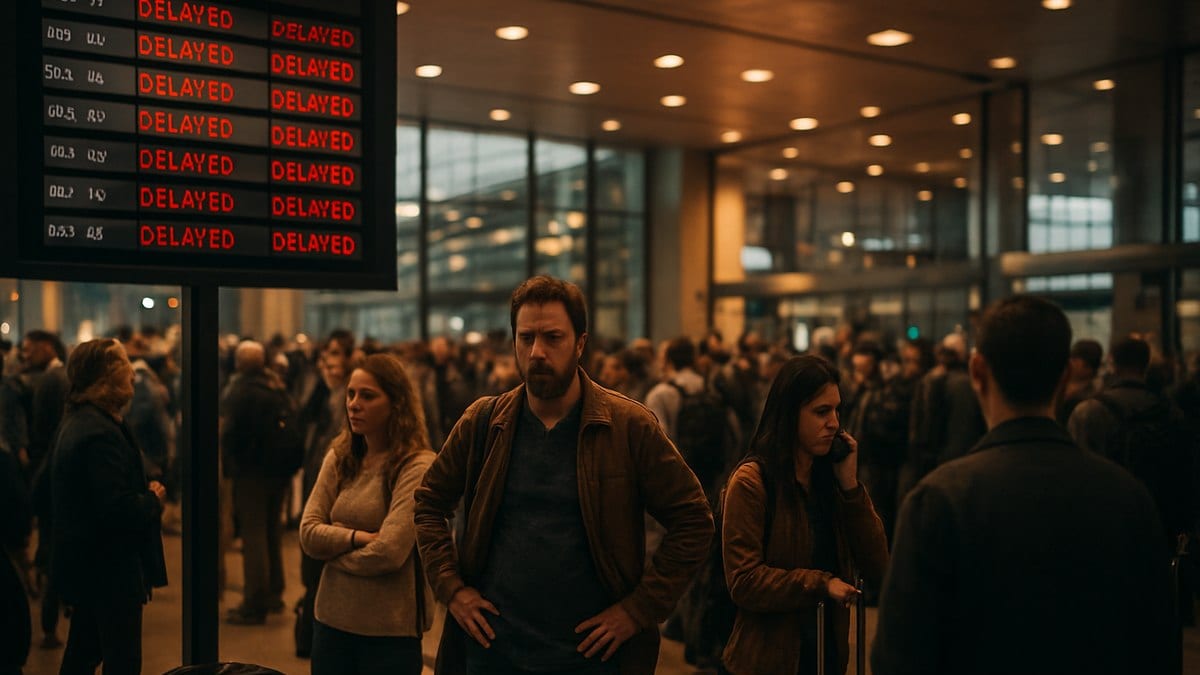
Reports from flight-tracking platforms and aviation news outlets on April 12, 2026, point to a cluster of 311 delayed flights spread across Canada, the United States, China, Germany, Bahrain, Qatar and Russia. The figures, compiled from major hubs in these markets, illustrate how a single day of strain can ripple across time zones and leave thousands of travelers struggling to reach their destinations.
Coverage focused first on Canada, where 311 delays and 29 cancellations were recorded at key international gateways, including Toronto, Vancouver and Montreal. Those figures alone would be notable, but they are part of a wider pattern. Monitoring data and regional reports describe parallel, though smaller, waves of delays at airports in the United States, Europe, the Gulf and parts of Asia, all feeding into a global picture of congestion during what is typically a busy spring travel period.
The seven affected countries sit on several of the world’s most heavily used long haul corridors, connecting North America, Europe, the Middle East and East Asia. When outbound and inbound flows at these hubs slow, the impact can be felt by connecting passengers traveling between entirely different regions, as missed connections, crew dislocation and aircraft rotations add secondary disruption far beyond the original hotspot.
Operational data referenced in published coverage show that many of the delayed flights did ultimately depart, but often well after their scheduled times. For passengers, that meant hours spent in crowded gate areas and tight turnarounds for onward travel, with some forced to rebook for later days when same day alternatives were no longer available.
Weather, Strikes and System Strain Combine
The April 12 figures did not emerge from a vacuum. Across the first half of April 2026, airlines and airports in multiple regions have already faced a mix of labor action, unsettled weather and underlying staffing gaps. In Germany, for example, a series of cabin crew strikes at a major European carrier earlier in the week led to hundreds of cancellations and residual knock on effects as aircraft and crews were repositioned.
In southern Europe, air traffic control walkouts and rolling airport strikes have complicated schedules at busy hubs in Italy and Spain. Published accounts describe short, concentrated stoppages that force controllers to reduce flight flows for several hours at a time. Even when such action is scheduled and publicly announced, the resulting backlog can take much of the remaining day to clear, raising the risk that later flights depart off schedule.
Weather has also remained an intermittent factor. Thunderstorms and low cloud over parts of North America and Europe in the second week of April have triggered ground delay programs and temporary pauses at some airports. When airports reduce arrival and departure rates for safety reasons, aircraft end up waiting on the ground or in holding patterns, eating into crew duty limits and narrowing recovery options if earlier flights were already running late.
Behind these headline events lie structural pressures that industry analysts have been flagging since traffic rebounded after the pandemic. Several reports note that staffing levels in ground handling and air traffic management have lagged the rapid return of demand, leaving less buffer to absorb disruptions. When labor negotiations, severe weather or technical issues occur, there are fewer spare crews and aircraft to help rebuild the schedule quickly.
Passenger Experience: Long Queues and Limited Options
The numbers attached to April 12 translate into very tangible experiences at terminal level. Accounts compiled from consumer platforms and airport monitoring services describe extended security and check in queues at several of the affected airports, with many passengers arriving to find departure boards filled with rolling delay estimates instead of confirmed departure times.
In Canada, travelers reported spending much of the day in crowded departure halls as airlines worked through the backlog created by 311 delayed flights. At major hubs in the United States and Europe, passengers with tight connections found themselves particularly exposed, because even modest initial delays could push arrivals past the final boarding call for onward legs. This dynamic is especially visible at hub airports where banks of arrivals and departures are tightly sequenced.
Rebooking proved challenging in several markets. With April demand already elevated by school holidays and business travel, some flights in the following 24 to 48 hours were close to full, limiting the ability of carriers to move disrupted passengers onto alternative services. Publicly available airline advisories encouraged travelers to use digital channels to manage their trips and to verify flight status repeatedly on the day of departure, reflecting the reality that schedules were shifting in near real time.
Accommodation and expense policies varied by jurisdiction and underlying cause of delay. In parts of Europe, consumer protection rules can offer stronger entitlements when disruptions are deemed within an airline’s control, such as certain technical or staffing issues. In other regions, passengers rely more heavily on the goodwill policies of individual carriers or on travel insurance, particularly when delays are linked to weather or airspace constraints.
Knock On Effects for Global Networks
Although the figure of 311 delays is tied to a particular day and set of countries, network planners and analysts are watching the broader implications carefully. When delays extend across multiple regions simultaneously, aircraft and crews can end up in the wrong locations at the wrong times, a phenomenon sometimes described as system misalignment. This can generate secondary disruptions in subsequent days even if weather improves and strikes end.
Publicly available operational data show examples of this dynamic already emerging in April. Some long haul flights departing Europe and North America have been leaving later than scheduled because the inbound aircraft arrived late from a previous leg affected by April’s weather and labor events. That in turn compresses turnaround times at destination airports, raising the risk that even minor additional issues can push flights outside their planned windows.
Airlines have responded by selectively trimming frequencies, swapping aircraft types and adjusting crew rosters to rebuild resilience where possible. Industry commentary indicates that carriers are prioritizing high demand trunk routes and peak travel periods while being more willing to consolidate thinner services into fewer, larger aircraft when disruption pressure mounts. These choices can help stabilize operations but may further limit options for travelers from smaller markets.
Airport operators in the affected countries are also reviewing capacity management, including how quickly they trigger de-icing, ground delay programs or runway configuration changes in response to changing conditions. The experience of early April 2026 is likely to feed into future planning for holiday peaks and for periods when multiple risk factors, such as seasonal storms and industrial disputes, overlap.
What April’s Disruptions Mean for Upcoming Travel
With most of the northern hemisphere’s peak travel season still ahead, the April 12 disruption serves as a reminder that aviation systems remain vulnerable when multiple stressors collide. For travelers, recent events underline the value of building extra time into itineraries that rely on connections, particularly when flying through busy hubs in North America, Europe or the Gulf that have already featured prominently in this month’s delay statistics.
Travel organizations and passenger rights groups continue to highlight the importance of understanding ticket conditions, compensation rules and rebooking options before departure. In regions with strong regulatory protections, awareness of delay thresholds and covered causes can help travelers make timely claims when eligible. In markets where such rules are less prescriptive, passengers may wish to scrutinize airline policies and consider insurance products that explicitly address disruption.
For the industry, the 311 delays recorded across seven countries in April 2026 may not match the scale of past global crises, but they underscore a more persistent challenge: maintaining reliability in a tightly coupled system facing weather volatility, evolving labor relations and high demand. How airlines, airports and regulators respond over the coming months will help determine whether similar multi country disruption days remain an occasional spike or become a more regular feature of the travel calendar.