

More news on this day
Flight operations across Europe, the Middle East, and South Asia are facing a turbulent April 2026, as a combination of strikes, airspace closures, and staffing constraints disrupts at least 311 routes across seven countries, according to multiple aviation and travel-industry reports.
Get the latest news straight to your inbox!
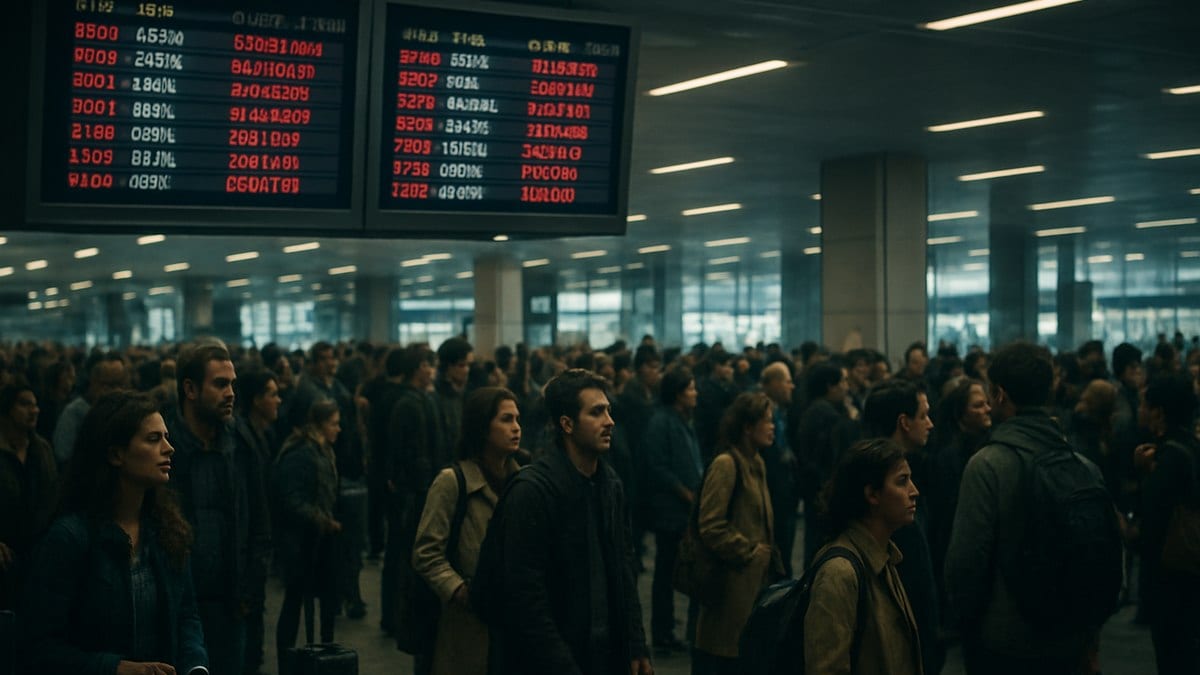
Strikes Across Europe Trigger Mass Cancellations
A wave of industrial action in European aviation is driving a significant share of the April disruptions, with coordinated airport and air traffic control walkouts leading to large-scale cancellations. Published coverage from travel and aviation outlets indicates that Italy, Germany, the United Kingdom, Spain, Belgium, and Portugal have all seen strike-linked schedule cuts this month, affecting both domestic and international services.
In Italy, a nationwide four-hour air traffic control strike on April 10 led to hundreds of cancellations at major hubs including Rome Fiumicino and Milan Malpensa. Reports from specialist travel sites describe more than 400 flights scrapped in a single day, while further stoppages in rail and local transport compressed options for passengers trying to re-route. Guidance circulated by airlines and travel advisors has urged travelers to monitor bookings closely and allow extra time for airport formalities during the strike windows.
Germany has faced parallel turbulence, with walkouts involving staff at leading carriers and airport services. Recent strike actions coinciding with the Easter and early spring holiday periods have produced extensive disruption across the Lufthansa network, where several hundred flights were proactively canceled to avoid day-of-operation chaos. Aviation briefings suggest that although neighboring group carriers attempted to maintain schedules, ripple effects were still felt on shared routes and codeshares.
Further west, coordinated labor actions in the United Kingdom, Spain, Belgium, and Portugal have compounded the pressure. Air travel news sites describe ground handling and security strikes that forced last-minute schedule reductions, particularly at London, Brussels, Barcelona, and Lisbon. Even where full shutdowns were avoided, precautionary capacity cuts on busy corridors added to the mounting tally of interrupted routes.
Middle East Airspace Restrictions Reshape Long Haul Networks
Beyond Europe, geopolitical tensions and airspace restrictions in the Middle East are driving another major block of April route disruption. Since late February, multiple governments have imposed partial or full closures across key flight information regions used by traffic linking Europe and Asia, prompting large detours, cancellations, and schedule thinning that remains visible in early April.
Industry analyses from aviation data firms and consulting groups indicate that tens of thousands of regional flights scheduled through focal hubs such as Dubai, Doha, and Abu Dhabi have been canceled or rerouted since the crisis escalated. While some carriers have shifted to longer polar or central Asian paths to maintain connectivity, others have suspended selected services entirely, citing safety advisories and operational cost pressures.
The impact extends across at least three continents. Published reports from South Asian and Gulf media describe disrupted links between Indian metros and the Gulf, fewer frequencies onward to Europe, and constrained capacity on alternative routings via Turkey and Central Asia. For travelers connecting between Europe, South Asia, and Oceania, these changes translate into longer itineraries, reduced choice of flight times, and a higher risk of missed connections when inbound services are delayed by congested alternative corridors.
Some northern European airlines have positioned themselves as beneficiaries of the reshaped traffic flows, using polar routes that bypass the restricted zones. However, network planners and analysts caution that such gains are uneven and do not compensate for the net loss of capacity on many of the 311 disrupted routes, particularly for secondary cities that depend on Middle Eastern hubs for global access.
Regional Knock-On Effects in South Asia and the Mediterranean
Airspace and scheduling turmoil in the Middle East is causing pronounced knock-on effects at secondary airports, particularly in South Asia and the eastern Mediterranean. Local media coverage from South Asian ports such as Chattogram in Bangladesh notes a pattern of intermittent cancellations and schedule changes on Gulf-bound flights, even as some operations resume following temporary ceasefire developments.
These airports often rely heavily on point to point services to Gulf hubs for labor migration, family travel, and trade, so even modest schedule cuts reverberate quickly through local economies. Travel advisories circulated regionally recommend that passengers on affected routes reconfirm bookings repeatedly and remain prepared for short-notice timetable shifts as airlines adjust to evolving airspace permissions.
In the eastern Mediterranean, security developments and military operations have also constrained airspace and commercial movements. Analysts tracking aviation flows in the region highlight a decline in tourist arrivals at popular island destinations as travelers react to news of nearby conflict zones and route suspensions. While some flagship airports remain open, the combination of reduced frequencies, higher fares on remaining services, and traveler caution is visible in booking data for April.
Across these regions, smaller and leisure focused carriers appear particularly exposed. With limited spare aircraft and thinner balance sheets, they have less flexibility to reassign capacity quickly when a key route is lost. Industry watchers suggest that some of the suspended services counted among the 311 disrupted routes may not return in their previous form if demand fails to recover promptly.
Passengers Confront Longer Delays, Complex Rebooking
For passengers, the most immediate impact of April’s disruptions is felt in longer delays, last minute cancellations, and complex rebooking journeys. Air passenger rights specialists and consumer advocates report a surge in inquiries related to itineraries involving the seven most affected countries, as travelers try to understand their options under EU261, UK261, and equivalent compensation regimes elsewhere.
Where strikes or staffing disputes are at the root of cancellations, publicly available guidance from regulators and advocacy groups often points to defined obligations on airlines to offer re-routing, refunds, and in some cases fixed compensation. However, the situation can become less clear when disruptions stem from government mandated airspace closures or security advisories, which are more likely to be categorized as extraordinary circumstances outside an airline’s direct control.
Rebooking is further complicated by constrained capacity on alternative routings. Network data published by aviation analytics firms shows that key corridors out of Europe into Asia and the Middle East are running near full load factors, leaving fewer spare seats that can be used to move displaced travelers. Some carriers are using larger aircraft on remaining flights or adding ad hoc sectors where feasible, but these measures do not fully offset the loss of frequencies.
Travel experts therefore encourage passengers with April and early May itineraries touching affected regions to build in generous connection times, keep contact details updated within airline bookings, and remain flexible regarding routing and travel dates. Many airlines have published fee waiver policies for voluntary changes on certain routes, though these vary widely in scope and duration.
Uncertain Outlook for Late April and the Summer Season
Looking ahead, the trajectory of disruptions across the 311 affected routes remains uncertain. Labor disputes at European airlines and air navigation providers are still subject to ongoing negotiations, and additional strike dates later in April have been signaled in several countries, including Italy and France. Transport advisory sites outline provisional timetables for upcoming industrial actions, but note that details often change at short notice.
In the Middle East, the persistence of airspace restrictions will depend heavily on geopolitical developments and security assessments by aviation regulators. Industry commentary suggests that even if a durable easing of tensions is achieved, airlines may be cautious about returning immediately to pre crisis routings, particularly on overnight sectors and flights carrying large numbers of transit passengers.
This uncertainty arrives just as airlines finalize schedules for the peak northern summer season. Capacity planning already completed for June to August 2026 assumed a gradual normalization of route networks, and any prolonged disruption into late April and May may force further timetable updates. Travel industry analysts warn that if rerouting and cancellations continue to cluster on certain hubs and trunk routes, fare levels on unaffected services could rise as demand chases limited supply.
For now, frequent checks of flight status, flexible booking strategies, and awareness of passenger rights remain the primary tools available to travelers navigating an April in which 311 routes across seven countries are subject to unusual and evolving levels of disruption.