

More news on this day
Interlocking weather, capacity and geopolitical pressures are converging on global aviation this April, triggering 311 recorded flight delays across seven countries and exposing how vulnerable international air travel remains in 2026.
Get the latest news straight to your inbox!
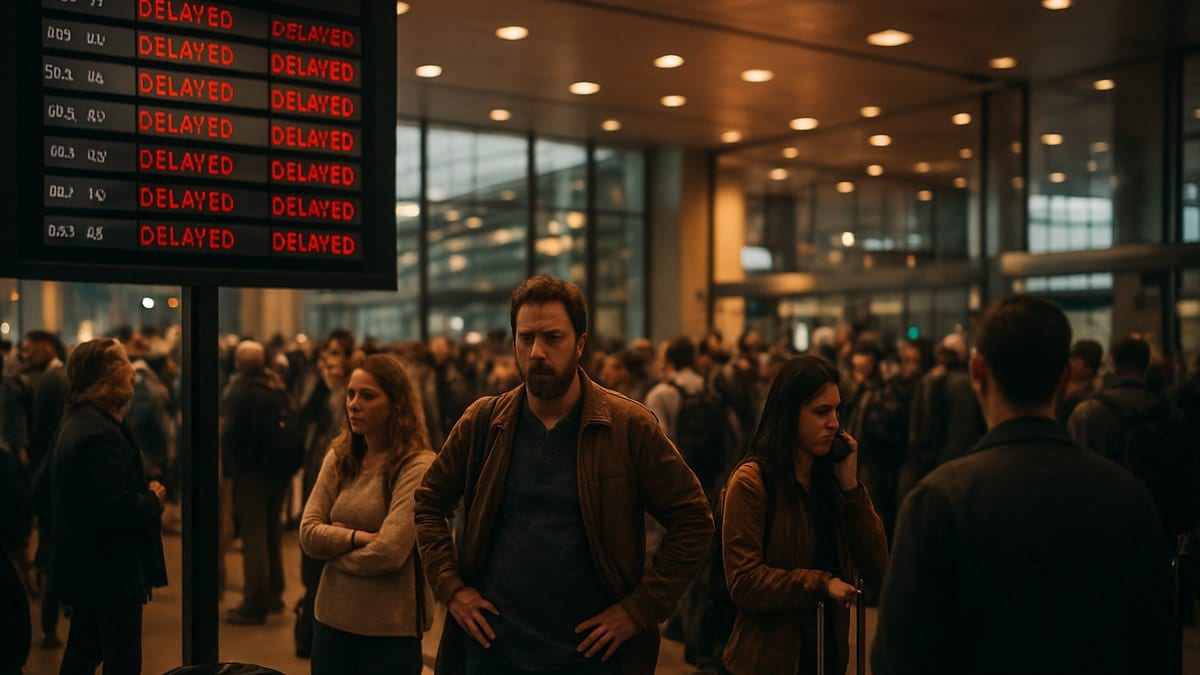
A Patchwork of Disruption Across Seven Countries
Early April data compiled from aviation tracking dashboards and regional media indicates that at least seven countries in Europe, the Middle East, Asia and North America have logged a combined 311 flight delays tied to a single wave of operational disruption. While the figure is modest compared with the thousands of daily schedule changes seen worldwide, analysts note that it reflects a concentrated cluster of knock-on delays linked to the same underlying pressures.
Europe has emerged as one of the most visible trouble spots. Published coverage from regional outlets describes persistent schedule volatility at major hubs in the United Kingdom, France, Germany, the Netherlands and Turkey, with delays spreading along key intra-European and long haul corridors. Reports from April 6 and April 9 highlight passengers facing rolling wait times as crews and aircraft are repositioned and airports work through backlogs.
In North America, publicly available flight statistics for the Easter travel window around April 4 show heavy congestion at large United States hubs. Major airports such as Atlanta, Dallas Fort Worth, Chicago O’Hare and Houston George Bush recorded elevated levels of late departures and arrivals. Although only a portion of those disruptions are counted in the 311-delay snapshot, the same combination of high seasonal demand and limited spare capacity is present.
Further east, airports in parts of the Middle East and Asia continue to face schedule pressures linked to airspace closures and earlier fuel supply shocks. Travel advisories and industry analyses describe constrained operations at Gulf and South Asian gateways that normally act as bridges between Europe, Africa and the Asia Pacific, contributing to a pattern of prolonged ground times and extended routings.
Middle East Airspace Closures Ripple Into April
The most disruptive single factor feeding into April’s delays remains the closure and partial reopening of airspace in the Gulf region following strikes in and around Iran at the end of February. According to publicly available situation reports and regulatory bulletins, multiple Middle Eastern airspace segments either closed outright or imposed severe restrictions, forcing airlines to cancel services or route around affected zones.
By early April, regulators had begun to ease some of the tightest controls, but commercial schedules remained far from normal. One recent analysis of Middle East airspace restrictions notes that a European aviation safety bulletin covering eleven countries in the wider region is currently in force through April 24, sustaining pressure on airlines operating Europe–Asia and Asia–Africa links. Carriers have responded with longer routings, technical stops and reduced frequencies, each of which increases the likelihood of downstream delays.
Gulf hubs that usually function as high-frequency connectors for traffic from Europe, India and Southeast Asia are still handling fewer commercial services than before the conflict. Industry commentary points to continued congestion at alternative routings through Saudi Arabia and other states whose airspace remains open at higher cruising levels, as airlines and air traffic controllers manage unusually dense flows across limited corridors.
This constrained operating environment has translated into a steady stream of delayed services touching airports in at least seven countries during the first half of April. The 311-delay figure incorporates flights that departed late after extended ground handling in the Gulf or that arrived behind schedule at onward destinations following longer flight times around restricted zones.
Europe’s Airports Struggle With Volume and Staffing
European hubs are facing their own set of challenges layered on top of the Middle East disruption. Recent coverage from travel and security advisory firms notes that Europe entered April amid a busy holiday period and an ongoing rollout of new border control technology in the Schengen Area, increasing the complexity of airport operations. At the same time, labor actions and staffing gaps have periodically constrained ground and air traffic control capacity.
Reports from early April detail how a combination of airline staff strikes in France, weather episodes in parts of Western Europe and the redirection of long haul traffic around the Gulf have conspired to push already stretched airports into delay territory. Some airports have seen queues lengthen at security and check in, while others have been forced to operate with tighter runway and air traffic management margins.
Flight tracking snapshots from April 6 and April 9 show that several hundred flights across European airspace operated behind schedule on those dates alone. A portion of those delays fall within the 311 disruptions at the heart of this story, underscoring how a handful of structural stress points can quickly cascade into a larger network issue once aircraft and crews start missing their assigned rotations.
Travel analysis platforms suggest that while outright cancellations in Europe have remained lower than during previous crises, airlines are relying more heavily on rolling delays, schedule adjustments and aircraft swaps to keep services running. For passengers, that means more last minute gate changes, compressed connection windows and extended time spent on the ground waiting for clearance to depart.
North American Hubs Feel the Knock-On Effects
In the United States, early April disruptions have been driven primarily by volume and domestic operational constraints, but the global picture is increasingly intertwined. Business and travel media reports on the Easter travel weekend describe more than five thousand delayed flights in a single day across U.S. airports, with several hundred cancellations added on top. Severe weather in some regions, together with air traffic control staffing limitations, played a central role.
Although only a small fraction of these delays is directly connected to Middle East airspace closures, the network effect is difficult to ignore. Late arriving international flights from Europe and Asia push back subsequent departures from U.S. hubs, while crews that time out on long haul services leave domestic operations with fewer available staff. As aircraft rotate from transatlantic to domestic routes, even minor glitches in one region can ultimately manifest as measurable delays elsewhere.
Industry observers note that North American carriers have moved cautiously when adding capacity for spring and early summer, mindful of the risk that another shock event could further strain operations. The relatively thin buffer built into many schedules means that when an international inbound runs late or requires a diversion to an alternate airport, follow on flights within the United States and to neighboring countries are more likely to depart behind schedule.
Within the 311-delay snapshot, this dynamic is visible in late evening departures from several major U.S. hubs that are scheduled to reposition aircraft for next day international services. Publicly accessible tracking data indicates aircraft arriving late from disrupted corridors, then pushing back late yet again as they embark on their next sector, extending the chain of delays across multiple time zones.
Travelers Confront Longer Journeys and Higher Costs
For passengers moving through the affected seven-country network this April, the most immediate impact of the 311 delays has been longer and more unpredictable journeys. According to recent travel advisories and consumer coverage, flyers transiting Europe and the Middle East on their way to Asia or Oceania are facing extended layovers, last minute rerouting and, in some cases, overnight stays when minimum connection times can no longer be met.
Financial pressure is building alongside the inconvenience. Aviation risk assessments published in March and updated in April highlight a sharp rise in jet fuel prices following infrastructure strikes near key Gulf hubs and continuing restrictions on maritime traffic in the Strait of Hormuz. These higher operating costs are gradually feeding into fares, particularly on long haul routes that are now flying longer tracks to avoid closed or restricted airspace.
Travel finance commentators point out that economy class tickets on certain Europe–Asia and Europe–Australia routes have risen by double digit percentages in just a few weeks, with limited discount inventory remaining for April and early May. While the 311 recorded delays capture only one slice of the disruption story, they sit within a broader context in which travelers are paying more for itineraries that are less reliable than in previous years.
Consumer advocates are advising passengers to monitor airline communications closely, make use of flexible rebooking policies where available and allow additional time at airports, particularly when connecting between different carriers or alliances. The evolving situation across the seven affected countries suggests that while conditions may improve if airspace restrictions ease later in April, the underlying fragility of the global aviation system will continue to expose travelers to schedule shocks throughout the 2026 peak travel season.