

More news on this day
Newly compiled aviation data for April indicates a sharp spike in operational disruption across seven countries, with 311 delayed flights highlighting how fragile global air travel remains amid volatile weather, conflict-related rerouting and capacity constraints.
Get the latest news straight to your inbox!
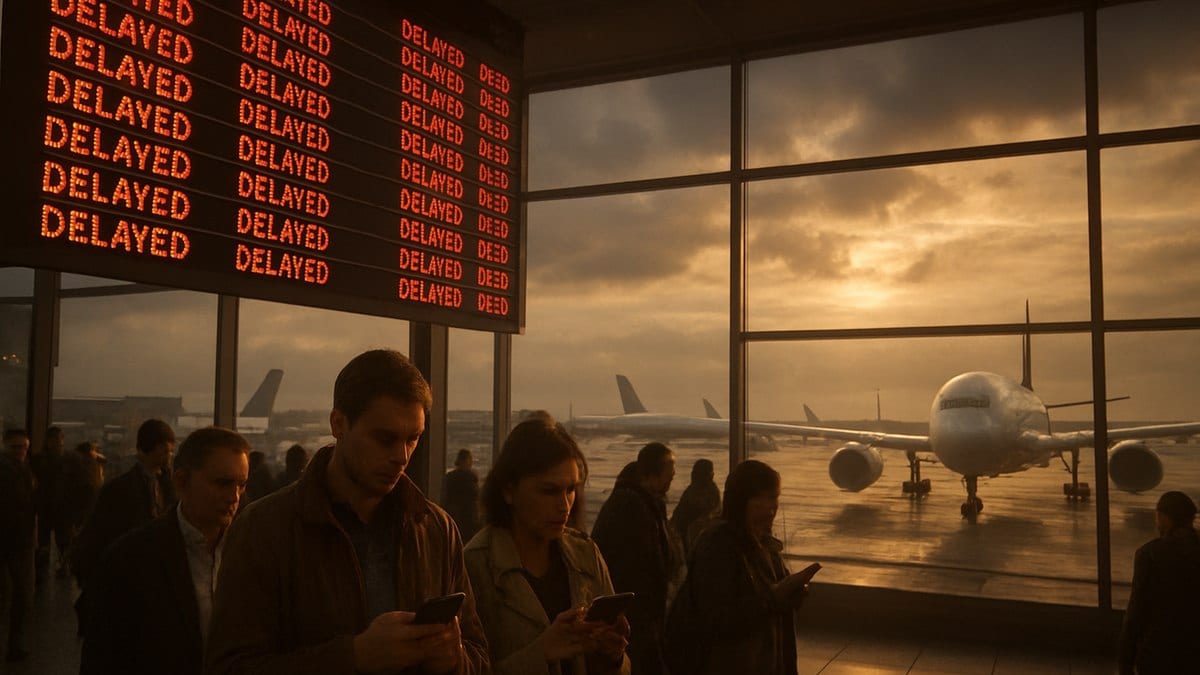
Seven-Nation Snapshot Shows 311 Delays in a Single April Wave
Publicly available tracking data and regional aviation reports for early April 2026 point to a concentrated wave of 311 delays recorded across seven nations in Europe, the Middle East and Asia. While the tally is modest compared with the thousands of daily flights operated globally, analysts note that the cluster reflects an underlying pattern of mounting strain rather than an isolated incident.
The affected countries mirror recent hotspots of disruption, including major hubs in China, Japan, India, Thailand, Singapore and the United Arab Emirates, alongside European gateways already struggling with spring weather volatility and airspace detours. Coverage in travel and aviation outlets describes a patchwork of delays, often in the 30 to 120 minute range, accumulating through the day as aircraft and crews fall out of sequence.
Industry-focused publications that track flight status data report that the 311 delays formed part of a broader April escalation, sitting on top of several days when disrupted services in some regions numbered in the high hundreds or low thousands. Observers point out that such mid scale events are increasingly important to watch, as they often reveal fragile points in airline and airport operations before headline making meltdowns occur.
For travelers, the practical effect of this particular surge was felt most acutely at large connecting hubs, where late arriving aircraft pushed back departure banks and tightened or broke onward connections, particularly on routes linking Europe and Asia via Middle Eastern and Southeast Asian gateways.
Weather, War and Workforce Gaps Combine to Disrupt Routes
Reports from aviation analysts and transport commentators indicate that April’s seven nation disruption was driven by a familiar yet potent mix of factors. In several European and Asian regions, unsettled spring weather brought low visibility, thunderstorms and shifting wind patterns, all of which reduce runway capacity and force air traffic controllers to slow departures and arrivals.
At the same time, the ongoing conflict in and around Iran continues to reshape global air corridors. Publicly accessible overflight data and economic assessments show that airspace closures over parts of the Middle East have diverted long haul services between Europe, Asia and Africa onto longer southern or northern tracks. These diversions add flight time, increase fuel burn and raise the risk that crews will hit duty time limits, which in turn contributes to knock on delays and late aircraft positioning.
Workforce shortages are another underlying theme. Briefings by European and regional aviation bodies over the past year have repeatedly highlighted persistent shortfalls in air traffic control staffing and ground operations capacity, even as passenger volumes return toward or above pre pandemic levels. When demand and schedules are rebuilt faster than staffing, relatively small shocks can quickly translate into system wide disruption.
According to recent performance reviews, airlines have also been flying leaner fleets with tight turnarounds, a strategy that reduces spare aircraft and crew available to absorb irregular operations. Under those conditions, a localized storm cell, a temporary runway closure or a diversion around conflict zones can produce ripple effects that stretch across multiple countries in the same day, as reflected in the seven nation delay pattern.
Asia and Middle East Hubs Bear the Brunt of Cascading Delays
April’s disruption once again underscored the central role of Asian and Gulf hubs in the global aviation network. Travel and tourism outlets documenting daily conditions across the region in recent weeks describe how a mix of high traffic volumes and operational bottlenecks in places such as Shanghai, Guangzhou, Beijing, Tokyo, Singapore, Bangkok, Dubai and Abu Dhabi can rapidly propagate delays.
Published coverage from regional travel media this month highlighted a particularly severe day in which thousands of flights across China, Japan, India, Indonesia, Thailand, Singapore and the United Arab Emirates were delayed or canceled, affecting carriers from Asia, the Middle East and beyond. The 311 delayed flights captured in the seven nation snapshot form a smaller but telling slice of this broader pattern, showing how quickly local issues can spill over borders.
Network planners have long warned that in hub and spoke systems, a delay on an early morning departure can cascade throughout the day as the same aircraft and crew rotate through multiple sectors. Analysts reviewing April’s disruptions note that this dynamic appeared repeatedly, with initial weather or congestion related holds at one airport creating late departures several legs later in a different country.
Because many of the affected hubs serve as key connectors between regional and long haul markets, passengers on routes that were not directly exposed to storms or airspace closures still experienced missed connections, extended layovers or rebookings. This secondary impact is increasingly viewed by consumer advocates as a defining feature of the modern disruption landscape.
European Networks Struggle With Spring Volatility
Across Europe, April has already brought several days of extensive disruption, with aviation trackers and travel news outlets noting repeated clusters of more than 1,000 daily delays at major hubs from London and Paris to Frankfurt, Amsterdam and Nordic capitals. Earlier in the month, data cited by European focused reports pointed to more than 1,200 delays and dozens of cancellations in a single day, followed by another period showing over 1,273 delays and 143 cancellations.
These events have unfolded against a backdrop of increasingly volatile weather and congested skies. The 2025 to 2026 winter and spring period saw a series of strong windstorms and heavy precipitation episodes that strained airports and air traffic management systems. At the same time, detours around conflict affected airspace in the Middle East have altered standard routings into and out of Europe, lengthening block times and complicating schedule planning.
European performance over the past decade has been marked by a steady rise in en route and airport related delay minutes. Regulatory and industry assessments released in late 2025 described how structural capacity limits in some traffic control centers, combined with staffing challenges and infrastructure bottlenecks on the ground, have made it harder to recover quickly once delays begin to build.
Within this context, the seven nation, 311 delay spike slots into a broader narrative of resilience under pressure. The numbers may not rival the most disruptive days on record, but they underline how Europe’s networks, already running close to capacity, are increasingly sensitive to simultaneous shocks in neighboring regions that feed traffic into its hubs.
What Travelers Can Expect as April Disruption Continues
For passengers with upcoming flights in April, the latest wave of disruption is a reminder that irregular operations can arise even without large scale strikes or headline weather disasters. Travel experts cited across multiple outlets advise that flyers treat the present environment as one where elevated delay risk is the norm, especially on itineraries involving multiple connections or routings over or around the Middle East.
Consumer organizations and aviation commentators consistently recommend that travelers monitor their flight status frequently through airline apps and airport information screens, paying particular attention to changes in departure times, gate assignments and aircraft type. Keeping digital and paper copies of boarding passes, booking confirmations and receipts for meals, accommodation and alternative transport remains important for any later compensation or reimbursement claims.
In regions covered by passenger rights frameworks, such as the European Union, travelers on delayed or canceled services may be entitled to assistance, rebooking or financial compensation in certain circumstances, depending on the cause and length of the disruption. Legal analysts stress that rules differ considerably between jurisdictions, and disruptions caused by exceptional circumstances such as severe weather or airspace closures are often treated differently from those linked to airline controllable factors.
With April only just under way, aviation data firms and travel media will be closely watching whether the seven nation burst of 311 delays proves to be an early warning of a more turbulent spring and summer. For now, the pattern reinforces a message that has become familiar to frequent flyers in recent years: global air travel is back in volume terms, but operational stability remains a work in progress.