

More news on this day
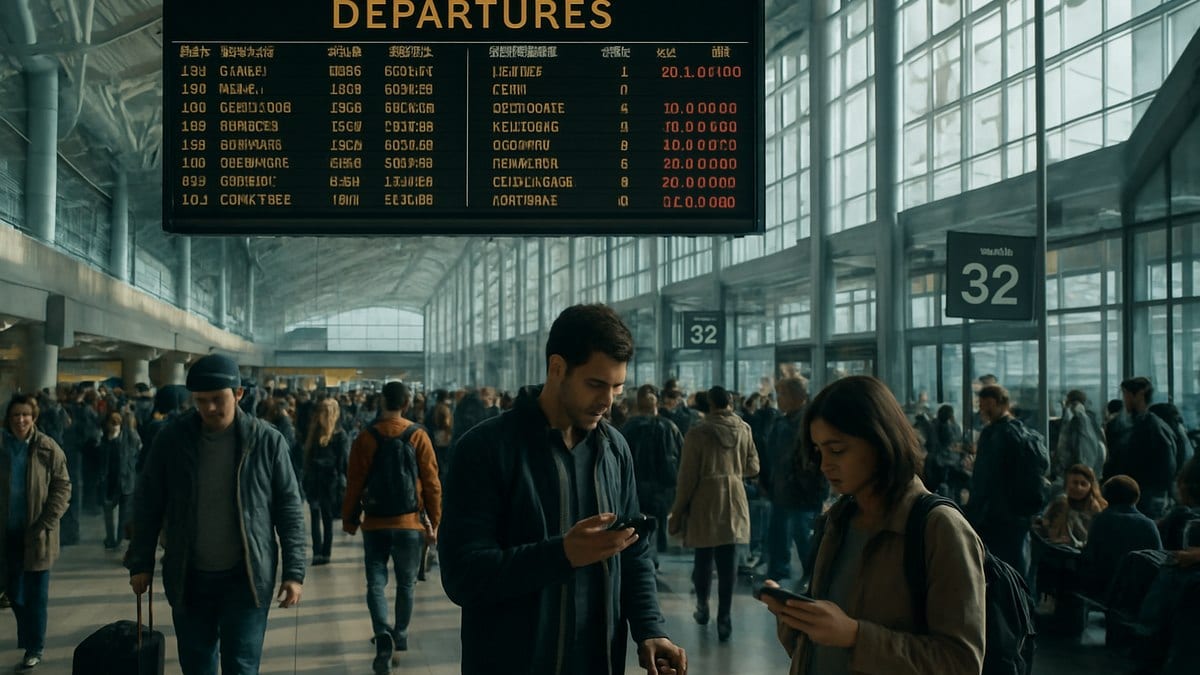
Newly compiled aviation data for April 2026 indicates that at least 311 flights have been delayed across seven countries so far this month, highlighting how quickly local weather patterns, airspace constraints, and airport bottlenecks can ripple through an already stretched global aviation system.
Get the latest news straight to your inbox!
Scattered Disruptions Add Up Across Seven Countries
Publicly available flight tracking summaries and media coverage for April 2026 point to a patchwork of disruption rather than a single, headline-grabbing shutdown. While some airports have recorded heavy congestion, the current picture is one of numerous smaller events which together have produced at least 311 documented delays in seven different countries.
Reports from European hubs describe a series of difficult days at major airports in the United Kingdom, Spain, Denmark, Turkey, the Netherlands, and other states, with delays far outnumbering cancellations. Travel industry bulletins note that on several April dates only a small share of scheduled services were cancelled outright, but hundreds were pushed back by more than an hour, creating missed connections and extended ground times.
Separate coverage from North America indicates that major United States carriers have also contributed to the global total. One large network airline alone has reported more than 300 delayed services in a single operating day in April, illustrating how quickly a bout of congestion at a few hubs can swell aggregate delay statistics even when most flights still depart.
Taken together, these strands of data help explain how the April tally has reached 311 recorded delays across seven countries, without a single defining incident. Instead, the emerging pattern is of multiple, overlapping disruptions driven by localized issues that interact with a tightly coupled global schedule.
Weather, War and Airspace Restrictions Shape April Timetables
Weather remains a central driver of April’s irregular operations. Seasonal storms in parts of Europe and lingering winter systems in North America have produced low visibility, gusting winds, and runway contamination, all of which tend to reduce airport capacity. Meteorological agencies and regional media have documented instances where crosswinds and heavy precipitation forced airports to cut arrival and departure rates, triggering queues both in the air and on the ground.
Beyond weather, airspace closures connected to the conflict in and around Iran continue to distort long haul routings between Europe, Asia, and the Middle East. International business advisories and regional news outlets describe carriers diverting around restricted zones, flying longer tracks through Central Asia or Africa, or in some cases suspending links entirely when detours prove too costly or operationally complex.
These adjustments can translate into knock-on delays far from the underlying conflict. Aircraft and crews that spend additional hours in the air may return to their home bases late, miss scheduled rotations, or breach duty-time limits. In an environment where many carriers are operating dense schedules with limited spare aircraft, even small shocks can cascade into a wave of delayed departures in cities that are not directly affected by conflict or severe weather.
Industry commentators have noted that this combination of meteorological volatility and geopolitical tension is interacting with infrastructure that was already running close to capacity at the start of 2026. As a result, events that might previously have been absorbed with minor schedule tweaks are now more likely to surface in aggregate statistics as clearly measurable flights delayed rather than cancelled.
Europe and North America Carry Much of the Visible Impact
Early April data suggests that European and North American airports account for a substantial share of the 311 recorded delays, even as Asia and the Middle East grapple with their own disruptions. European media describe days when more than a thousand flights across the continent have departed behind schedule, with only a fraction cancelled outright. In that context, a subset of 311 delays tied specifically to the seven identified countries represents only a slice of a wider story.
In the United States, aviation coverage points to particularly difficult operating days at large hubs such as Chicago and Newark, where hundreds of delayed departures have been logged within a single 24 hour period. One major carrier has recorded 311 delayed flights and a smaller number of cancellations on a busy April day, reflecting operational slowdowns that strain passengers and crews but stop short of mass schedule wipeouts.
These figures also underscore how uneven the impact can be across airlines. Some operators have reported relatively few cancellations but very high delay rates, suggesting that they are prioritizing completion of the schedule even at the cost of departures sliding by several hours. Others have opted to trim frequencies outright in order to protect the reliability of remaining services.
For passengers, the distinction often matters little in practical terms. Whether a flight is cancelled outright or simply departs many hours late, connections can be missed, hotel nights lost, and travel plans upended. The accumulating evidence from April 2026 is that travelers on both sides of the Atlantic are encountering these scenarios in higher numbers than airlines and airports had hoped heading into the spring shoulder season.
Knock-on Effects for Long Haul and Connecting Passengers
The 311 documented delays across seven countries in April represent more than isolated schedule irregularities. They also reflect stress across the wider network of connecting flights that stitch together continents. Long haul routes that rely on tightly timed transfers at hub airports are particularly vulnerable when short haul feeder services begin to run late.
Coverage from European travel outlets notes that delays on busy intra-European sectors have complicated journeys for passengers heading onward to Asia, North America, and the Middle East. Missed connections can require overnight stays or reroutings, and in some instances travelers have been rebooked through entirely different hubs to reach their destinations.
In Asia and the Gulf, separate reporting shows that ongoing airspace restrictions and airport capacity challenges have limited the ability of hub carriers to absorb additional disruption coming from Europe and North America. Where flights into major Gulf airports arrive late or operate on lengthened routes, departure banks may be reshuffled, pushing the delay burden onto onward services to South Asia, Southeast Asia, and Africa.
The net effect is that a delay recorded in one of the seven countries counted in the April tally can echo across multiple continents. A single late departure from a European capital may translate into missed flights in Doha or Dubai, altered crew schedules in Manila or Bangkok, and rebooked itineraries back into the United States.
Passenger Rights and Preparation Under Strain
As April’s disruptions accumulate, passenger rights frameworks in key regions are being tested. Guidance from consumer advocates and legal references points out that travelers departing from or arriving in the European Union may be entitled to assistance such as meals, accommodation, and in some cases financial compensation, depending on the cause and length of the delay.
However, publicly available information also makes clear that not all delays count toward compensation. Weather-related disruptions and events linked to wider geopolitical crises are often treated as circumstances beyond the airline’s control, meaning that passengers may receive practical support but not direct payments. In North America and many other regions, rules are looser, focusing on rebooking obligations and customer service commitments rather than fixed cash amounts.
Consumer organizations are therefore encouraging travelers to prepare for continued volatility through April 2026. Recommendations appearing in travel industry coverage include building longer connection windows into itineraries, traveling with essential items in carry-on baggage in case checked luggage is delayed, and monitoring airline apps and airport information screens closely on the day of travel.
The 311 delays registered across seven countries so far this month are a reminder that flight disruption in 2026 is not confined to isolated crisis zones. Instead, passengers face a blend of weather impacts, structural bottlenecks, and geopolitical aftershocks that can turn even routine trips into unpredictable journeys.