

More news on this day
A powerful April storm surge sweeping across the United States is triggering widespread flight delays at six major hubs, snarling spring travel plans for thousands of passengers just as airlines grapple with persistent staffing and capacity pressures.
Get the latest news straight to your inbox!
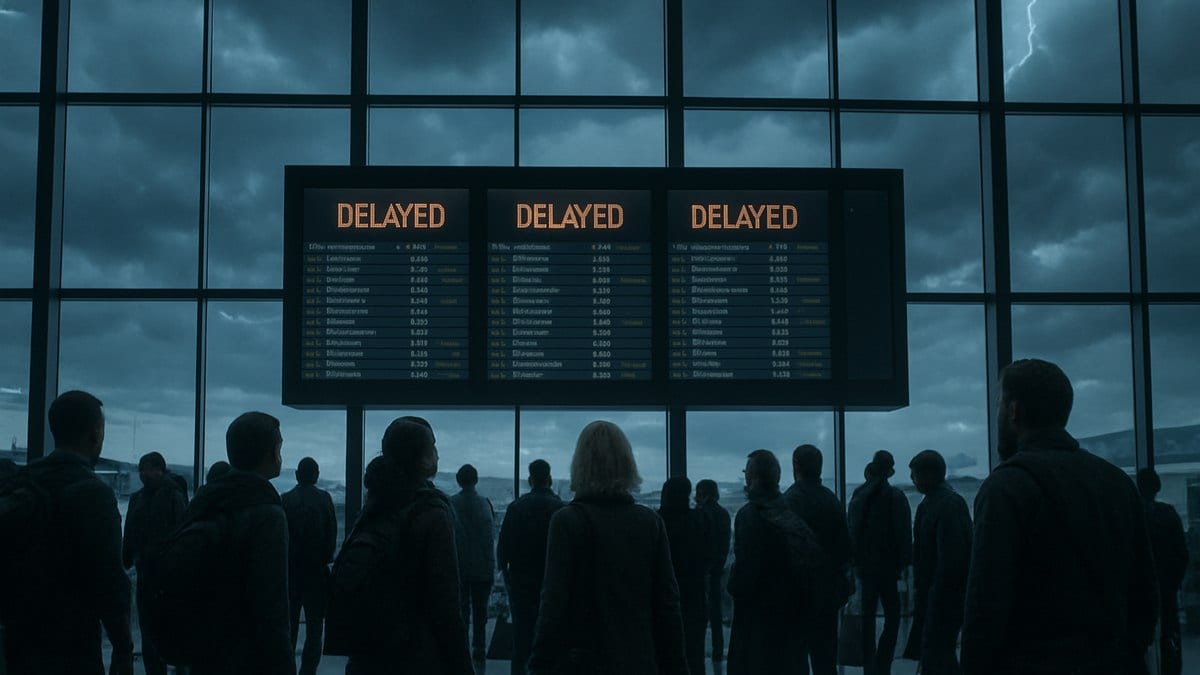
Storm Surge Hits Key Nodes in the U.S. Air Network
Weather models and aviation data indicate that a series of storm cells bringing heavy rain, thunderstorms and strong crosswinds have repeatedly intersected with some of the country’s busiest airports in early April 2026. The resulting surge has disrupted tightly timed arrival and departure banks and forced ground delay programs at several hubs that already rank among the most delay prone in federal performance statistics.
Reports compiled from flight tracking providers and travel industry coverage point to significant knock-on delays at Atlanta, Chicago O’Hare, Dallas Fort Worth, New York area airports, Los Angeles and Miami. These hubs serve as primary connection points for domestic and international traffic, so each hour of reduced capacity has multiplied into missed connections and rolling disruptions throughout the network.
Publicly available data from recent days shows that storms have not been confined to one region, instead marching from the Plains and Midwest toward the Southeast and East Coast while also destabilizing operations along key cross country corridors. That pattern has left airlines managing simultaneous challenges across several hubs rather than a single localized hotspot.
Travel industry analysts note that the April storm surge is arriving only weeks after winter and late season systems caused earlier waves of disruption, leaving crews and aircraft with less margin for error as demand ramps up for spring holidays and early summer travel.
Thousands of Delays Ripple Across Six Major Hubs
Aggregated figures from aviation analytics firms and recent travel coverage indicate that several thousand flights have been delayed nationwide over the past week, with a disproportionate share concentrated at six major hubs affected by the storm surge. At various points this month, Chicago O’Hare, Dallas Fort Worth and Atlanta have each seen hundreds of delayed departures in a single day as thunderstorms and low clouds slowed arrival rates.
New York’s key gateways, including LaGuardia and Newark, have also experienced extended holding patterns and taxi delays when storm bands reached the Mid Atlantic and Northeast. In the Southeast, Miami has reported large numbers of late departures tied to lightning and heavy downpours, while on the West Coast, Los Angeles has seen schedules back up as storms and air traffic management initiatives elsewhere disrupted inbound aircraft flows.
Some travel advisories have highlighted specific snapshots of disruption, such as days when more than 3,000 flights were delayed across the system during severe weather outbreaks, or individual hubs reporting more than 300 delayed flights within a single 24 hour period. Although the precise mix of affected routes shifts with each passing front, the pattern consistently shows the same large hubs absorbing the greatest share of delay minutes.
Because these airports function as central switches for connecting traffic, delays have extended well beyond the immediate storm zones. Passengers departing from smaller regional airports, or even from unaffected states, have encountered late aircraft and rebooked crews originating at one of the six constrained hubs.
Weather, Staffing and Scheduling Strain the System
While the April storm surge is the immediate trigger for the latest wave of delays, operational reports suggest that weather is colliding with deeper structural vulnerabilities in the U.S. aviation network. Travel industry analyses in 2026 have repeatedly pointed to lingering air traffic control staffing shortages, high demand and tight airline scheduling as key factors that turn bad weather into systemwide disruption.
In recent weeks, coverage of federal rulemaking and performance benchmarking has underscored how quickly arrival rates at major hubs must be reduced when thunderstorms or low visibility move in. When air traffic managers limit arrivals into airports such as Chicago O’Hare, Dallas Fort Worth or Los Angeles for safety reasons, flights stack up on the ground at origin airports, and subsequent rotations for those aircraft fall behind schedule.
At the same time, carriers continue to rebuild staffing and adjust schedules following a series of intense winter storms earlier in 2026. Analysts note that crews are still operating close to their duty time limits, meaning that a delay of even an hour or two during a storm can push pilots or flight attendants beyond regulatory thresholds and force last minute cancellations or aircraft swaps.
Industry commentators have also highlighted the role of peak travel periods in amplifying the impact of the April storms. The Easter holiday, early spring break trips and business travel demand have all contributed to fuller flights and fewer empty seats, reducing the flexibility airlines have to rebook disrupted passengers when weather interrupts operations at multiple hubs simultaneously.
Passengers Face Long Lines and Limited Options
For travelers moving through the six most affected hubs, the April storm surge has translated into long security lines, crowded gate areas and uncertainty around departure times. Media coverage and first hand accounts have described terminals where rebooking counters stretched with passengers after banks of flights fell behind schedule, particularly on days when storms lingered over a region for hours.
Given the combination of high load factors and repeated disruption events, many passengers have found that same day alternatives are limited once their original flight is delayed or canceled. Travel service providers report cases where customers were rebooked a full day or more later during the busiest periods, especially on heavily traveled routes linking the major hubs to vacation destinations in Florida, the Caribbean and the Mountain West.
Consumer advocates have renewed guidance that has become more familiar over several recent disruption episodes. Recommendations include building longer connection times into itineraries that pass through Atlanta, Chicago, Dallas, New York, Los Angeles or Miami during active storm patterns, traveling with carry on luggage where possible to ease rebooking, and using airline apps and airport display systems to monitor gate changes and departure estimates in real time.
Some observers also note that travel insurance and credit card trip delay benefits are playing a greater role for frequent flyers this season, as repeat disruption prompts more travelers to seek compensation for hotel stays, meals and alternative transportation when severe weather and operational constraints derail their plans.
What the April Surge Signals for Summer Travel
The clustering of major delay events in the opening weeks of April is prompting questions about how the system will perform during the peak summer months if current patterns continue. Comparative performance data released in recent months has shown that several of the six hubs most affected by the current storm surge already rank among the top U.S. airports for delay frequency.
Analysts following the sector suggest that the April experience may strengthen calls for airlines to build more slack into schedules at the most congested hubs, or to adjust connection times that have grown tighter in recent years. Some commentary in aviation policy circles has pointed to the possibility of additional scrutiny of scheduling practices if disruption metrics remain elevated throughout the spring and early summer.
For travelers, the latest storm surge reinforces a message that has been building since the intense winter storms of early 2026. Published guidance from travel experts emphasizes the value of booking first departures of the day from major hubs when feasible, choosing routings that avoid multiple weather vulnerable nodes on the same itinerary, and leaving buffer time on either end of important trips to account for potential disruption.
With the atmospheric and operational backdrop unlikely to change quickly, the April 2026 delays at six major U.S. hubs are emerging as a preview of how closely weather, staffing and demand will interact across the network in the months ahead, and how important individual planning will be for passengers trying to navigate a volatile travel landscape.