

More news on this day
Spring getaway plans at London Stansted are facing renewed uncertainty in April as workers employed by ABM to assist passengers with reduced mobility have voted for strike action, prompting warnings of fresh delays and disruption at one of the UK’s busiest low cost hubs.
Get the latest news straight to your inbox!
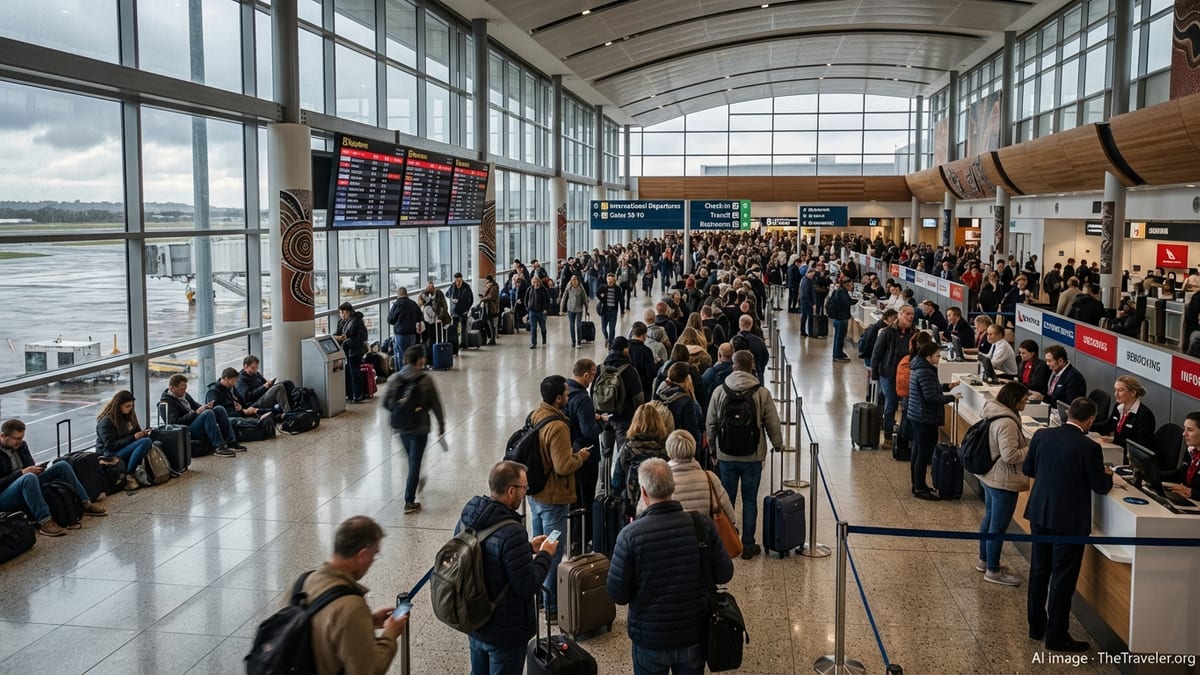
ABM assistance staff back industrial action
According to recent union briefings and industry coverage, members of Unite employed by facilities provider ABM at Stansted have voted in favour of industrial action after a dispute over pay and conditions. The staff involved provide special assistance services, helping passengers with reduced mobility board and disembark aircraft and move through the terminal.
Publicly available information indicates that the ballot followed a breakdown in negotiations over wage offers set against the backdrop of persistent inflation and a wider wave of transport strikes across the UK. The result clears the way for targeted work stoppages in April if no last minute agreement is reached.
While the dispute is confined to a specific contractor, any coordinated walkout by assistance staff is expected to create pressure across Stansted’s tightly timed turnaround operation. Airlines at the Essex airport, including major low cost carriers, rely on these teams to meet boarding deadlines and maintain schedule punctuality.
Reports also note that similar disputes at other European airports in recent months have triggered long queues and missed departures, underlining the potential knock on effect when key ground handling roles are disrupted during peak travel periods.
Potential impact on April flight schedules
Stansted typically experiences a sharp rise in passenger numbers in April as schools break for Easter and leisure demand to Mediterranean and city break destinations accelerates. Any strike by ABM personnel during this window would add to an aviation network that is already under strain from weather, air traffic control issues and separate industrial disputes elsewhere in Europe.
Operational analyses of recent disruption patterns show that relatively small bottlenecks at a single airport can quickly cascade into wider schedule problems. If passengers who require assistance cannot be boarded efficiently, aircraft may miss their departure slots, leading to late arrivals at downstream airports and further delays on subsequent rotations.
Travel data published in early April highlights how delays at major UK hubs have recently climbed into the hundreds of flights per day, often concentrated in the morning and evening peaks. Stansted has so far avoided the worst of the continent wide disruption, but industry observers warn that a coordinated strike by ground staff could shift some of that pressure onto the airport as April progresses.
For individual travelers, even modest timetable slippage can have outsized consequences, particularly for those with tight connections, onward rail journeys or fixed check in times at hotels and cruise departures. Extended waits on board or at the gate are also more challenging for passengers with mobility needs, the very group directly affected by the ABM dispute.
Guidance for passengers traveling through Stansted
Airlines and travel agents are advising customers booked through Stansted in April to pay close attention to pre departure communications, as carriers may adjust schedules or reallocate resources if strike dates are confirmed. Public guidance widely shared in recent disruption events stresses the importance of monitoring flight status through official airline channels on the day of travel.
Passengers who have booked special assistance are being encouraged by consumer advocates to reconfirm their requirements with airlines well before departure. If industrial action proceeds, carriers may seek alternative arrangements with other service providers in the terminal, but capacity could be constrained at peak times.
Travel experts also recommend allowing extra time at the airport, particularly for early morning departures that rely on tightly sequenced boarding processes. Arriving ahead of the usual check in cut off can provide a buffer if queues lengthen at bag drop, security or departure gates due to staff shortages or reconfigured procedures.
Those with flexible itineraries may wish to consider off peak flights where possible, as mid day and late evening departures can sometimes be less exposed to rolling knock on delays that accumulate during the morning rush. However, publicly available data from recent weeks suggests that disruption has at times affected the full operating day when weather and staffing issues coincide.
Part of a wider pattern of aviation disruption
The Stansted dispute is unfolding against a broader backdrop of industrial unrest and operational challenges across European aviation. In recent weeks, ground handling strikes at major Spanish airports and a series of air traffic control stoppages have contributed to hundreds of delays and cancellations on some days, affecting carriers across the continent.
Network reports from aviation bodies show that average delay minutes per flight in Europe have trended higher in the post pandemic period, driven by a combination of staffing shortages, airspace restrictions and infrastructure constraints. When localized strikes are layered on top of these structural pressures, the margin for absorbing disruption becomes increasingly narrow.
Within the UK, Stansted has previously contended with weather related hold ups and isolated ground handling issues, but an organized strike by assistance staff during a peak travel month would test the resilience measures introduced in recent summers. Airlines have invested in better monitoring and contingency planning, yet the complexity of modern air travel means there are limits to how much disruption can be contained within a single airport.
Industry commentators note that the current situation at Stansted illustrates how specialized service providers, such as assistance teams for passengers with reduced mobility, have become critical links in the aviation chain. When pay and staffing disputes arise in these areas, the resulting uncertainty can reverberate far beyond the immediate workforce, shaping travel experiences for thousands of passengers in a matter of days.