

More news on this day
Volatile April weather in the New York region has triggered more than 127 flight delays at John F. Kennedy International Airport in early spring 2026, compounding a season of nationwide disruption just as holiday and spring break travel ramp up.
Get the latest news straight to your inbox!
Stormy Start to April at a Key New York Gateway
Early April 2026 has brought a mix of fast-moving storm systems, heavy rain and strong winds to the Northeast, repeatedly disrupting flight operations at New York area airports. Publicly available flight tracking dashboards and aviation data compiled in recent travel coverage indicate that JFK has recorded well over 127 delayed departures and arrivals on multiple high-impact days, with some clusters of delays pushing the total substantially higher as storms moved through major airline corridors.
The pattern has unfolded against a broader backdrop of national disruption. Independent reporting on early April flight operations points to several thousand delays and hundreds of cancellations across U.S. airports on the most active days, as weather fronts swept from the Midwest to the Eastern Seaboard and intersected with already busy schedules. Within that wider picture, JFK has emerged as one of several pressure points in the New York region, alongside LaGuardia and Newark, where delay counts have consistently reached into triple digits when conditions deteriorate.
Coverage focusing on network-wide disruption highlights how even a few hours of low clouds, embedded thunderstorms or rapid wind shifts can quickly reduce runway capacity at large coastal hubs such as JFK. When air traffic managers slow the rate of arrivals and departures for safety reasons, queues form both in the air and on the ground, creating rolling delays that ripple into later banked departures and onward connections.
Reports also note that April’s unsettled pattern comes on the heels of a turbulent late-winter season, with major February and March storms already straining airline and airport resilience. By early April, crews and aircraft were often operating on tight rotations, leaving less margin to absorb new weather-related slowdowns at JFK and other key hubs.
How April Weather Disrupts JFK Operations
Aviation and meteorological summaries for spring 2026 describe a volatile setup over the Northeast, shaped by lingering winter systems, sharp temperature contrasts and periodic surges of moisture from the south. At JFK, these ingredients have translated into several kinds of operational challenges, including low ceilings, gusty crosswinds and lines of thunderstorms that have forced controllers to adjust arrival and departure flows.
When storms or strong winds move through the New York airspace, air traffic managers frequently implement ground delay programs or temporary ground stops to keep the number of inbound aircraft aligned with available runway capacity. On recent high-impact days in March and April, similar measures at the region’s three main airports led to hundreds of delays, according to national aviation data cited in news and industry reports. At JFK, those constraints have contributed to the tally of more than 127 delayed flights tied directly or indirectly to weather in early April.
Even when severe conditions are relatively short-lived, recovery can take many hours. Once aircraft miss their scheduled slots, crews may time out under duty limits, aircraft may be out of position for later departures and gate space can become scarce as arriving flights bunch up. Observers tracking April’s disruptions note that JFK’s role as a transatlantic gateway means that late-evening departures to Europe and overnight inbound flights are particularly vulnerable when afternoon thunderstorms or evening wind shifts slow operations.
Temperature swings have added another layer of complexity. Forecast discussions from local meteorological outlets in early April highlighted freezes and near-freezing conditions at outlying parts of the New York metro area, including the vicinity of the major airports. While these cold snaps have not replicated the large-scale blizzard conditions seen earlier in 2026, they have contributed to deicing requirements and cautious ramp operations at times, further tightening turnaround windows at JFK.
Nationwide Ripple Effects From a New York Bottleneck
Analyses of delay propagation across the U.S. aviation network consistently show that disruptions at major coastal hubs tend to reverberate across the system. April 2026 has followed that pattern. When JFK slows down because of thunderstorms, low visibility or strong winds, the impact is not limited to New York-bound travelers. Flights from hubs in the South, Midwest and West may be held at the gate, depart late or be rerouted through less congested airports, adding to the total number of delayed operations nationwide.
Recent travel-industry coverage describing April’s “perfect storm” of weather, staffing constraints and infrastructure limits points to rolling clusters of several thousand delays on some days as storms crossed central and eastern states. In that environment, a localized spell of poor weather over New York can quickly translate into missed connections in cities far from the original bottleneck, including smaller regional airports that depend on timely arrivals from JFK to feed their schedules.
Publicly available data indicate that New York area hubs, including JFK, have repeatedly appeared among the top U.S. airports for delays during recent storm cycles. Travel reports published in early April describe days when combined delays at New York airports exceeded several hundred flights, intersecting with peak holiday and spring break traffic. Each such episode has added to pressure on airlines already working with high aircraft utilization and constrained staffing in some operational roles.
The knock-on effects reach international routes as well. When weather holds or ground delay programs affect long-haul departures from JFK, aircraft that would normally return the following day on transatlantic or transcontinental legs can arrive late or be reassigned, thinning capacity in subsequent schedule waves. That dynamic helps explain why passengers flying between overseas cities and smaller U.S. destinations may experience disruption even when local conditions at their home airports are calm.
What Travelers Passing Through JFK Are Experiencing
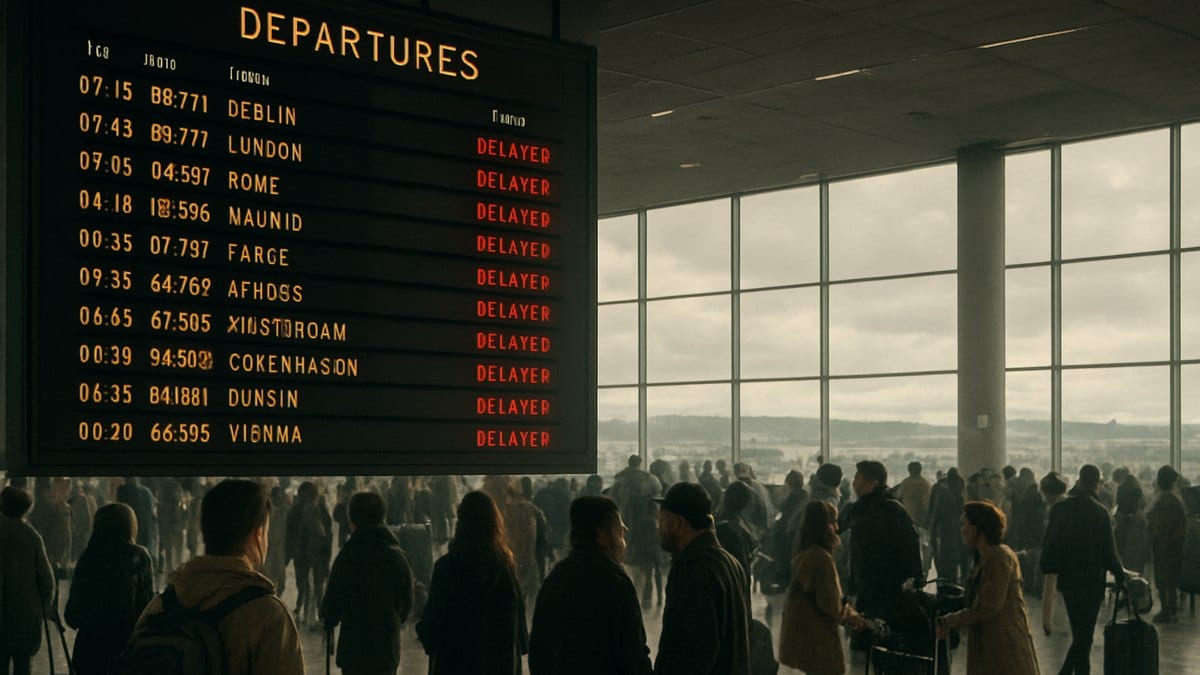
For passengers, April’s disruption at JFK has translated into long waits, changing departure times and a greater risk of misconnected itineraries. Travel advisories and consumer-focused coverage published in recent days describe terminals filling quickly on busy afternoons, with departure boards showing waves of flights pushed back by 30 minutes or more as weather systems brush the region.
Although cancellation counts at JFK during the early April storms have remained below the extreme levels seen during major winter blizzards, the elevated volume of delays has been enough to stretch patience and planning. Even modest schedule changes can cause travelers with tight connections to miss onward flights, especially when routes involve a shift between terminals or a transfer from JFK to another New York area airport.
Passenger accounts shared on public forums and social platforms over the first week of April describe repeated short extensions of delay windows as airlines and air traffic managers reassessed conditions. That pattern, where departure times move in increments rather than with a single long delay, can make it more difficult for travelers to decide whether to pursue alternative routings or seek hotel accommodations during overnight disruptions.
Travel commentators note that, while security lines at JFK have generally remained manageable on some of the affected days, the main strain has appeared at the gate and on the tarmac as crews work through backlogs. Reports indicate that, for many travelers, real-time communication through airline mobile apps and airport displays has been critical to navigating the shifting schedules.
Planning Ahead for an Unsettled Spring Travel Season
With forecasters and climate monitors pointing to an unusually warm and variable start to 2026 across the continental United States, travel analysts expect occasional weather-related disruptions to continue at major hubs such as JFK through the remainder of the spring season. The warmest-on-record conditions from April 2025 through March 2026 have been linked in expert assessments to more frequent swings between unseasonably mild days and abrupt cold fronts, a pattern that often favors thunderstorms, heavy rain and gusty winds during the transitional months.
In response, many travel advisories are emphasizing practical steps for passengers who must connect through weather-sensitive hubs. Common recommendations include booking earlier flights in the day, when schedules are less backed up, building longer layovers into itineraries that pass through airports like JFK, and favoring nonstop routes where possible to reduce exposure to knock-on delays.
Consumer advocates and industry observers also point to tools that can help travelers monitor evolving conditions. Public flight-status dashboards, airline apps and federal aviation system status pages provide snapshots of delay patterns at JFK and other airports, offering clues about whether a localized weather event is likely to trigger broader disruption. During April’s storms, these resources have allowed some passengers to rebook proactively before bottlenecks fully developed.
As the 2026 spring travel period continues, the early April experience at JFK underscores how quickly apparently routine weather systems can escalate into network-wide challenges when intersecting with tight schedules and strong demand. For passengers, that reality means that a margin of extra time and flexibility may be the most valuable asset when flying through New York’s busiest international gateway in the weeks ahead.