

More news on this day
A newly coordinated Arctic Canada Tourism Network is emerging across the country’s far north, linking investments in roads, airfields, cruise itineraries and community projects to open up some of the most remote Arctic regions to international adventure travelers.
Get the latest news straight to your inbox!
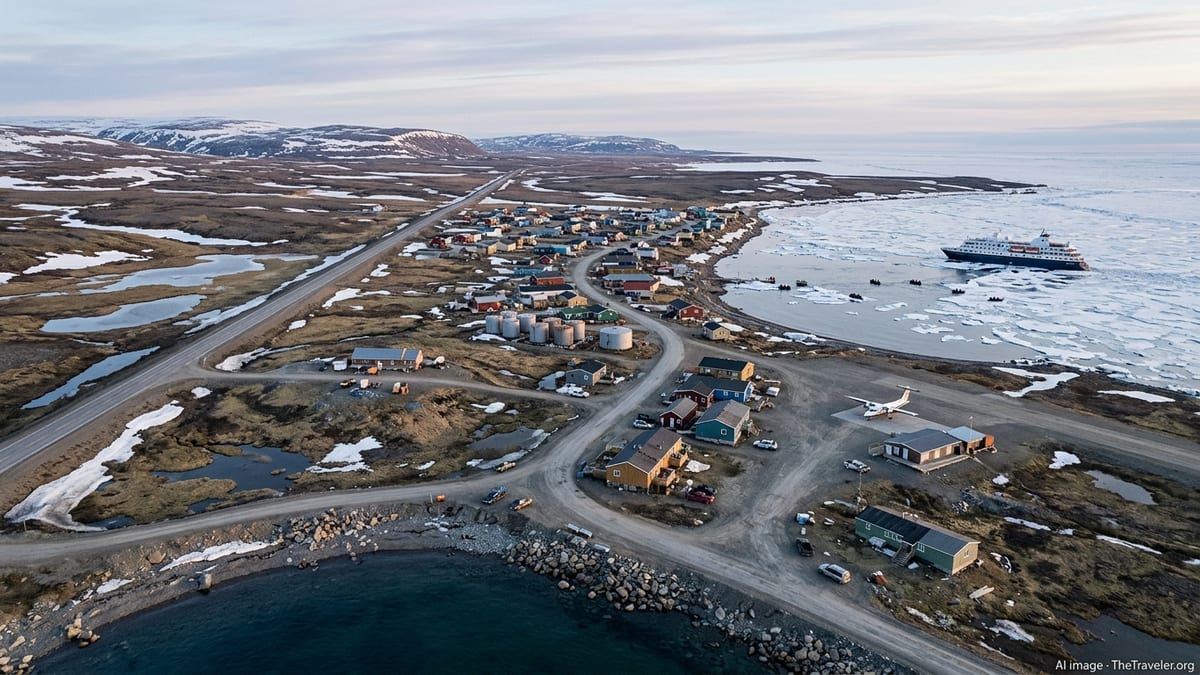
Coordinated Push to Connect Canada’s High Arctic
Publicly available information shows that federal funding programs, territorial initiatives and private expedition operators are increasingly aligned around the goal of improving access to Arctic Canada. Recent policy developments, including a multiyear Arctic Infrastructure Fund focused on dual-use transportation corridors, are expected to support projects that benefit both northern residents and tourism activity across the region.
Reports indicate that the fund, launched in March 2026, is designed to back new or upgraded airports, ports and all-season roads that ease long-standing travel bottlenecks in the North. Eligibility criteria emphasize projects that strengthen reliability of year-round travel, create alternate routes where winter roads are at risk, and improve links to resource and tourism destinations.
In parallel, earlier rounds of investment from the Canadian Northern Economic Development Agency have targeted smaller scale tourism infrastructure and marketing in Yukon, Northwest Territories and Nunavut. These programs have backed initiatives such as community visitor facilities, cultural tourism development and destination branding that together help position the Canadian Arctic as a more accessible and coherent travel region for global visitors.
Analysts note that while these programs originate from different departments and time frames, they collectively function as a de facto Arctic Canada Tourism Network by channeling capital, promotion and route planning toward a shared objective of opening the North.
New All-Season Corridors and Remote Access Routes
Transportation documents highlight that northern travel still relies heavily on costly air links and seasonal ice roads, but a series of new and planned all-season routes is beginning to change that picture. The Inuvik–Tuktoyaktuk Highway in the Northwest Territories, opened in recent years, has already transformed Tuktoyaktuk into a road-accessible Arctic Ocean destination, drawing self-drive visitors and small tour groups eager to reach the end of the continent by land.
Further east, policy briefings and infrastructure updates describe renewed momentum behind major corridor projects such as the Mackenzie Valley Highway and an all-season road from the Arctic coast at Grays Bay towards the Northwest Territories border. These corridors are framed as economic lifelines for remote communities, but they are also anticipated to form the backbone of overland itineraries for off-grid adventure travelers in the coming decade.
Additional proposals, including new connectors between northern Alberta and Saskatchewan, would tighten the web of roads leading toward subarctic and Arctic gateways. While some of these routes remain at the planning or early funding stage, tourism planners are already mapping how overland expeditions, small-group tours and self-guided road trips could link multiple Arctic communities once construction advances.
According to transport reports, these emerging corridors are intended to complement, rather than replace, essential air services. Shorter distances to regional airports and ports can reduce charter costs, making remote hiking, paddling and wildlife expeditions more viable for international visitors.
Cruise and Expedition Operators Expand High Arctic Itineraries
Alongside ground infrastructure, expedition cruise companies are rapidly scaling up their presence in Arctic Canada. New brochures and 2026 season announcements from several operators detail expanded sailings through Baffin Bay, the Canadian Arctic Archipelago and sections of the Northwest Passage, often pairing Canadian ports with Greenlandic communities in integrated Arctic circuits.
Published itineraries for 2026 highlight routes that circumnavigate Baffin Bay, trace historic exploration passages between Greenland and the Canadian High Arctic, and add new embarkation hubs such as Churchill and other northern communities. These voyages typically combine wildlife viewing, glaciated landscapes and visits to Inuit communities, and are marketed to international travelers seeking once in a lifetime polar experiences.
Travel trade coverage notes that Arctic departures are no longer confined to a short midsummer window. Some operators are stretching seasons into early autumn shoulder periods, aiming to balance visitor demand with changing sea ice conditions. This seasonal spread also helps distribute tourism revenue more evenly and can reduce pressure on small communities during peak weeks.
Industry observers point out that as more ships traverse these waters, coordination with northern communities, environmental safeguards and search and rescue capabilities will be crucial. The emerging Arctic Canada Tourism Network concept is seen as a potential platform for aligning cruise scheduling, port calls and local capacity.
Community Tourism Hubs and Indigenous-Led Experiences
Government backgrounders and regional tourism plans indicate that community-level projects are central to the new northern travel routes. Funding has supported interpretive centers, small infrastructure upgrades and destination-development planning in communities from Tuktoyaktuk and Inuvik to Nunavut and Yukon settlements that serve as gateways to remote parks and coastal areas.
Several initiatives spotlight Indigenous-led tourism experiences, from cultural tours and craft markets to guided excursions in traditional territories. In places such as Churchill, Torngat Mountains access points and Baffin Island communities, these offerings are increasingly featured as core elements of Arctic itineraries, not optional add-ons, reflecting traveler interest in learning about Inuit and First Nations cultures alongside wildlife and scenery.
Publicly available information from national park services and territorial agencies shows continuing efforts to improve safety and visitor management in fragile environments. Measures include mandatory escort systems in polar bear country, orientation sessions on environmental respect and partnerships with local guardians who monitor visitor activity around sensitive ecological and cultural sites.
Tourism planners suggest that as access improves, these community hubs will function as anchor points in a northern network, allowing travelers to combine short stays in towns with longer ventures into backcountry and coastal wilderness, while keeping most economic benefits in the region.
Balancing Growth With Arctic Sustainability and Safety
Policy reports and research on Arctic change emphasize that any expansion of northern tourism must contend with a rapidly warming climate, shifting sea ice patterns and heightened safety risks. Transport Canada’s annual reporting notes that northern infrastructure is under pressure from thawing permafrost and more frequent extreme weather, factors that can affect both community resupply and visitor travel.
Climate and ocean monitoring programs underscore that navigation windows through Arctic waters may lengthen in some years, while becoming more unpredictable overall. Expedition operators are responding by designing flexible routes that can be adjusted based on sea ice conditions, while travelers are widely advised to treat itineraries as subject to change.
Observers argue that the emerging Arctic Canada Tourism Network provides an opportunity to embed sustainability at the core of new routes and products. This includes limiting visitor numbers in sensitive locations, supporting low-impact transport options where feasible and ensuring that a meaningful share of tourism revenue stays with local and Indigenous partners.
As new northern routes open and global awareness of the Canadian Arctic grows, travel analysts describe a pivotal moment. If coordinated effectively, the network of roads, air links, ports and community projects now under development could unlock transformative experiences for visitors while strengthening northern communities. If poorly managed, the same forces could strain ecosystems and local services. How this balance is struck is likely to define the next chapter of Arctic Canada tourism.