

More news on this day
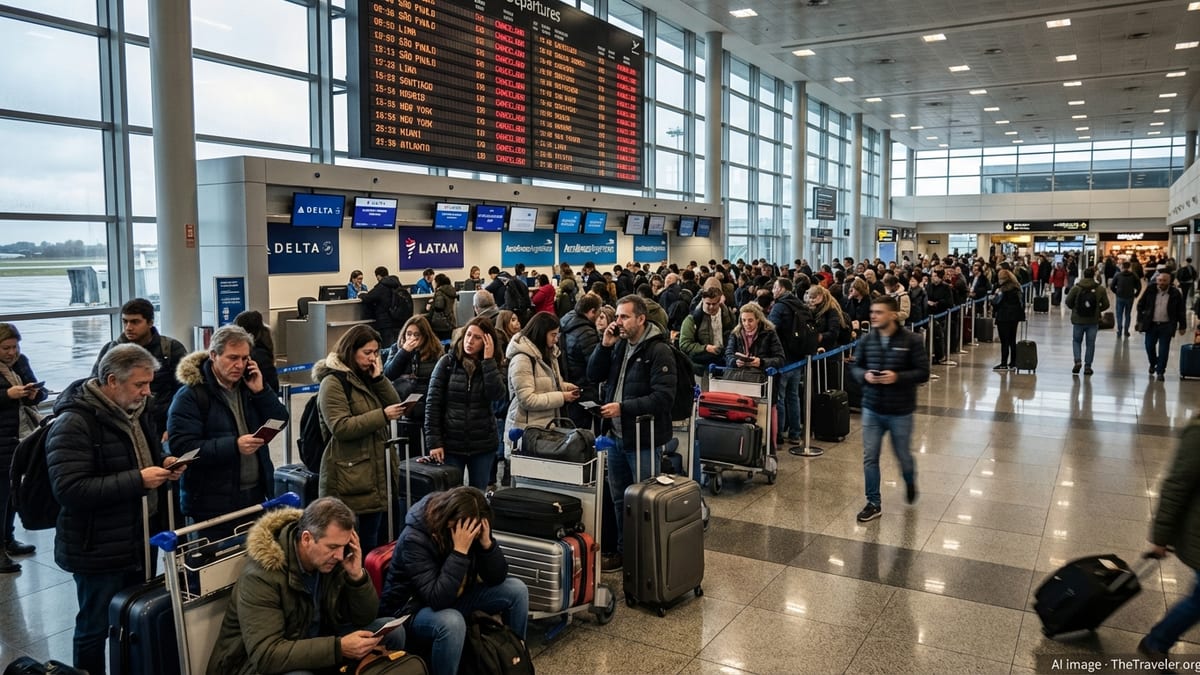
Air travel to and from Argentina is facing a fresh wave of disruption as more than 60 flights are canceled or rescheduled, affecting major carriers including Delta Air Lines, LATAM Airlines, Aerolineas Argentinas and others on busy routes linking Buenos Aires, Córdoba, São Paulo, Lima, Santiago, Madrid and additional hubs across the Americas and Europe.
Labor Unrest Triggers New Wave of Cancellations
The latest round of cancellations is unfolding against a backdrop of widening labor disputes in Argentina’s aviation sector. Following a nationwide general strike backed by the country’s main labor confederation, airline operations have faced rolling disruptions that are now stretching into a second week and spilling over into international networks.
State-owned Aerolineas Argentinas has already acknowledged canceling hundreds of services around the peak of the stoppage, with domestic operations bearing the brunt but a growing number of regional and long haul routes now affected as crews, ground staff and air traffic personnel join coordinated protests. LATAM has also adjusted its schedules to and from Argentina, warning that some flights may operate with altered times or dates while others will not operate at all.
Industry analysts note that the cancellation of more than 60 flights in a short window, layered on top of earlier strike-related disruption, is straining an already tight regional network. Aircraft and crews are out of position, connection banks are being thinned out and airlines are juggling scarce spare capacity as they attempt to shield core routes while still honoring labor obligations and safety rules.
Foreign carriers, including Delta, have been drawn into the turmoil as their services to Argentina rely on local airport operators, ground handlers and navigation staff who are participating in the protests. While some long haul flights are being retimed to avoid strike windows, others have been withdrawn from schedules entirely, narrowing options for travelers trying to reach or leave the country.
Key Routes to Buenos Aires, Córdoba and Beyond Affected
The bulk of the current disruption is centered on Buenos Aires, where both Ministro Pistarini International Airport and Aeroparque Jorge Newbery function as national and regional gateways. Flights linking the Argentine capital with Córdoba, one of the country’s main domestic hubs, have seen multiple cancellations, cutting frequencies on a city pair that typically offers near-hourly connectivity during peak periods.
Internationally, services between Buenos Aires and São Paulo, Lima and Santiago have been particularly exposed. These trunk routes, dominated by LATAM, Aerolineas Argentinas and other regional carriers, are critical for business travelers and for passengers connecting onwards to North America and Europe. The loss of dozens of rotations over several days is leading to missed onward connections, longer travel times and heavier demand on the few remaining seats.
Long haul links to Europe are also feeling the impact, as flights to Madrid from Argentine gateways are adjusted or canceled in response to staff shortages and air traffic control slowdowns. Industry data show that Iberia and other European operators normally run a dense schedule between Argentina and Spain, but ground handling bottlenecks and intermittent work stoppages in Argentina are forcing last minute changes.
Secondary Argentine airports, including popular leisure destinations and regional capitals, are reporting knock-on effects as airlines prioritize aircraft for the highest yielding international sectors. Passengers flying between Buenos Aires and cities such as Bariloche, Mendoza or Salta are encountering abrupt schedule changes as carriers consolidate flights and drop off-peak departures.
Passengers Confront Long Lines, Limited Alternatives
For travelers caught in the middle of the disruption, the most visible consequences are mounting queues at check in and customer service counters, as well as overcrowded departure halls. With more than 60 flights canceled and many others delayed or retimed, rebooking options are increasingly limited, especially on high demand routes to and from Buenos Aires and major South American capitals.
Airlines are advising passengers to monitor flight status closely and to avoid heading to the airport without a confirmed reservation. Same day reaccommodation is becoming harder to obtain, particularly for those traveling in economy cabins or on complex itineraries involving multiple airlines. Some travelers are being offered connections via alternative hubs, adding extra stops in cities such as São Paulo or Santiago in order to reach their final destinations.
Hotel bills and other incidental costs are climbing as travelers spend unexpected nights in transit cities waiting for the next available seat. Local consumer advocates in Argentina report an uptick in complaints from passengers who say they have struggled to access clear information on compensation and care policies, particularly when their tickets involve both local and foreign carriers.
At airports across the region, ground staff are working with skeleton teams during strike windows, compounding delays in baggage handling, security processing and boarding. Even flights that do operate are often departing behind schedule, creating rolling delays that ripple through the network long after walkouts have formally ended for the day.
Airlines Balance Operational Pressures and Labor Demands
Airlines active in the Argentine market are navigating a delicate balance between keeping aircraft in the air and responding to the labor grievances that underpin the current unrest. Unions representing pilots, cabin crew, technicians, air traffic controllers and airport ground workers have voiced concern over wage erosion, staffing levels and proposed changes to labor regulations.
Carrier executives argue that the Argentine aviation sector has only recently begun to recover from the severe downturn triggered by the pandemic and subsequent economic turbulence. They warn that prolonged disruption could deter tourism, undermine business travel and complicate the country’s broader efforts to attract foreign investment, especially if foreign airlines decide to reduce capacity in response to ongoing uncertainty.
Some airlines have introduced temporary schedule reductions to give themselves more room to maneuver operationally, banking aircraft overnight in less affected airports or stretching turnaround times to allow for slow ground services. Others are chartering additional equipment or swapping in larger aircraft on busy routes in a bid to consolidate passengers from multiple canceled flights onto a smaller number of departures.
Behind the scenes, negotiations between unions, airline management and government officials are continuing, with all parties under pressure to find a compromise that restores predictable flight operations while addressing workforce concerns. Industry observers say the outcome will help shape the competitive landscape in Argentina’s aviation sector for years to come.
What Travelers Should Do If Their Flight Is Affected
With disruption likely to persist in the short term, travel experts recommend that passengers to and from Argentina adopt a more cautious and flexible approach to their plans. Those who have not yet departed are being urged to build extra time into itineraries, avoiding tight connections on separate tickets and allowing for the possibility of overnight stays en route.
Travelers whose flights are already canceled or significantly delayed should contact their airline or booking agent as soon as possible, using digital channels where available to avoid long waits at call centers and airport counters. Many carriers are offering one time waivers on change fees or fare differences, allowing passengers to shift travel dates or reroute via alternative cities, subject to seat availability.
Passengers are also encouraged to keep documentation of all out of pocket expenses, such as hotel stays, meals and ground transport, in case they are eligible for reimbursement under airline policies or local consumer protection rules. Insurance providers may require detailed records before processing claims related to strike induced travel disruption.
Looking ahead, frequent travelers to Argentina are watching closely for signs that labor tensions are easing and that flight schedules are stabilizing. Until then, the cancellation of more than 60 flights across a web of routes tying together Buenos Aires, Córdoba, São Paulo, Lima, Santiago, Madrid and other key cities is likely to remain a cautionary example of how quickly regional air travel can be thrown into disarray when industrial action escalates.