

More news on this day
Aruba is stepping into the sustainability spotlight as part of a growing Caribbean-wide push to protect fragile ecosystems while keeping tourism, the region’s economic lifeblood, on a growth trajectory. From new green taxes and tougher building standards to reef restoration and climate resilience plans, a cluster of Caribbean destinations is rewriting the rules of how sun-and-sea vacations should work in an era of rising seas and stronger storms.
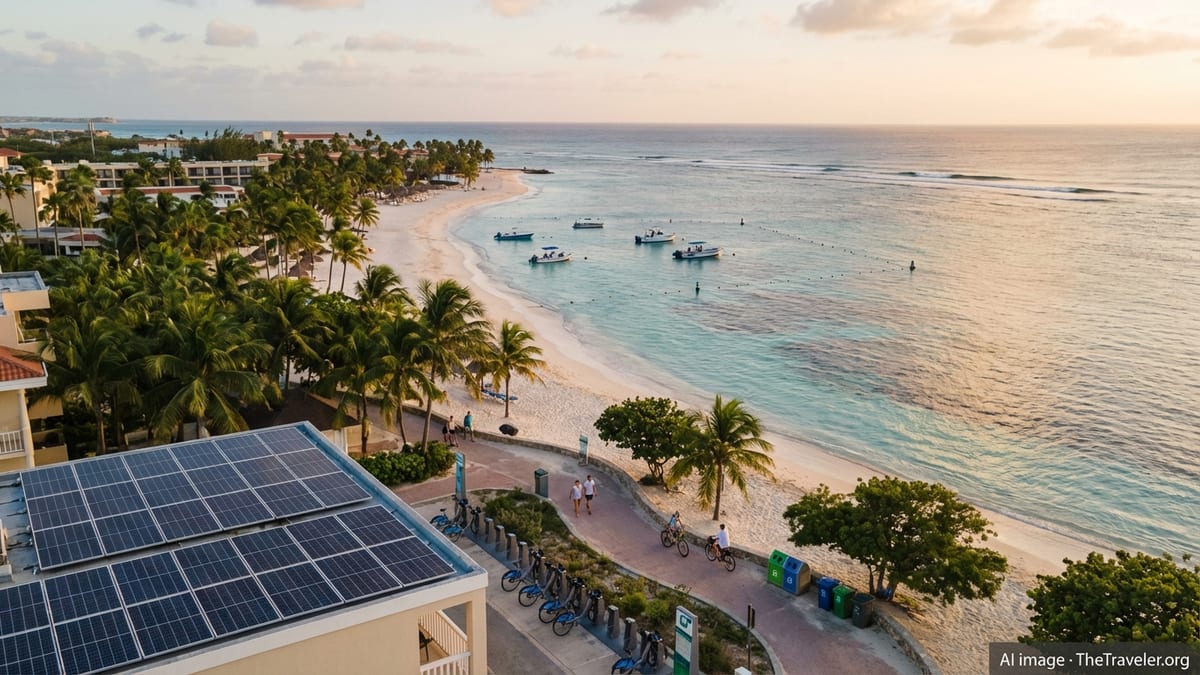
Aruba’s New Sustainability Push Signals A Regional Turning Point
Aruba’s tourism leaders have spent the past year quietly reshaping the island’s development model, positioning it as one of the Caribbean’s most forward-leaning destinations on climate and conservation. The government and the Aruba Tourism Authority are promoting a vision in which every major project, from airport expansion to hotel upgrades, is evaluated through the lens of resource efficiency, climate resilience and community benefit.
That shift was on display when Aruba’s delegations joined global forums such as Climate Week in New York, using the stage to highlight initiatives like the “Aruba Promise,” a framework that ties tourism promotion to environmental protection and cultural preservation. Officials describe it as a commitment not just to welcome more visitors, but to attract travelers who value low-impact experiences and are willing to contribute directly to conservation and local livelihoods.
Behind the policy language, there is a clear strategic goal. Aruba is betting that a greener, more carefully managed tourism economy will help the island withstand climate shocks, avoid overtourism flashpoints seen elsewhere, and maintain its marketing edge as travelers grow more climate conscious. In doing so, it is aligning itself with a broader regional effort to recast sustainability as a competitive advantage rather than a constraint.
From Green Fees To Climate Plans: How Caribbean Islands Are Rewriting The Rules
Across the Caribbean, governments are rolling out a patchwork of new financial tools and policies designed to make tourism pay for its environmental footprint. Aruba introduced a dedicated sustainability fee on air arrivals in 2024, channeling the revenue into critical infrastructure such as sewage treatment and wastewater management, which are essential to protecting coral reefs and bathing waters as visitor numbers increase.
Other islands are pursuing similar strategies. Jamaica, Barbados, the Dominican Republic and the Bahamas have all updated or expanded tourism-related levies in recent years, earmarking funds for beach conservation, climate adaptation projects and improved public services in high-traffic resort zones. The trend marks a clear shift away from relying solely on general tax revenue, toward ring-fenced funds that link each hotel stay or airline ticket to specific environmental outcomes.
Regional institutions are complementing these national moves with broader frameworks. The Caribbean Tourism Organization has embraced sustainability as its central theme, while new climate action plans for tourism emerging from regional blocs are giving governments and private operators a shared set of targets on emissions, biodiversity protection and disaster resilience. For travelers, the result is a new normal: slightly higher entry costs, but the promise that their spending is helping to safeguard the very landscapes they come to enjoy.
Aruba’s Hotels, Airport And Operators Turn Sustainability Into Daily Practice
On the ground in Aruba, the sustainability agenda is no longer abstract. Major resorts are installing solar arrays, phasing out single-use plastics, and investing in advanced water systems that reduce reliance on the island’s energy-intensive desalination plants. Several properties have introduced on-site composting and food waste diversion programs, turning kitchen scraps into fertilizer for gardens or feed for local farms, and cutting the volume of material sent to limited landfill space.
Water management has become a particular focus on an island where rainfall is scarce and demand from visitors is high. Boutique hotels and large chains alike are turning to technologies such as reverse osmosis systems, gray water recycling and smart irrigation to reduce consumption. These efforts not only protect local aquifers and coastal waters, they also insulate operators from future price shocks as utilities factor climate volatility into their tariffs.
Aruba’s airport has also emerged as an unlikely sustainability showcase. Its current expansion program is being built to rigorous green-building standards, incorporating energy-efficient design, extensive natural lighting and systems to cut water use and improve indoor air quality. The facility is pursuing high-level environmental certifications, a first for a Caribbean hub of its size, and is promoting sustainability weeks, cleanups and educational events to bring airline staff, concessionaires and travelers into the conversation.
Jamaica, Puerto Rico And The Dominican Republic Turn To Resilience And Community
While Aruba refines its green transition, larger Caribbean tourism engines are racing to weave resilience and community protections into their own growth plans. Jamaica, which has spent recent years recovering from powerful storms and flooding, is investing in stronger coastal defenses, updated building codes for hotels and attractions, and community-based tourism schemes that spread visitor spending beyond traditional resort belts.
Puerto Rico, still grappling with the long tail of hurricanes and infrastructure crises, has become a test case for how to balance mass tourism with local quality of life. Grassroots campaigns and cultural leaders on the island are pushing for visitor education, stricter enforcement of environmental rules, and tourism strategies that prioritize housing affordability, neighborhood character and access to public space for residents.
The Dominican Republic, one of the region’s fastest-growing destinations, is expanding its use of environmental fees and impact assessments as it pushes ahead with new airports, marinas and hotel complexes. Authorities are pairing that growth with stricter requirements on wastewater treatment, mangrove and dune preservation, and storm-resilient design, in an effort to avoid the long-term costs that can follow unchecked coastal development.
Barbados, Bahamas And Regional Bodies Embrace Nature-Positive Tourism
Smaller but influential nations such as Barbados and the Bahamas are positioning themselves as champions of “nature-positive” tourism, where development is tied to the restoration of ecosystems rather than their depletion. Coral reef nurseries, seagrass protection zones and marine parks are becoming central features of destination marketing, as well as tools for protecting shorelines from erosion and storm surge.
Barbados has emerged as a diplomatic and policy hub, hosting regional tourism meetings and environmental accords that place sustainability at the heart of strategy. From tax incentives for green building to pilot projects on electric public transport serving resort corridors, the island is using its profile to argue that climate-smart infrastructure is essential to keeping tourism viable in the face of sea-level rise.
In the Bahamas, attention is turning to the heavy footprint of cruise tourism on ports and fragile marine habitats. New tiered cruise taxes, investments in shore-power capabilities and stricter waste-handling rules are aimed at reducing pollution while encouraging lines to support local excursions and small businesses, rather than confining spending to enclaves removed from everyday Bahamian life.
Why Sustainable Tourism Is Now A Survival Strategy For The Caribbean
For Caribbean leaders, the flurry of sustainability initiatives is not simply about branding. With tourism accounting for a major share of gross domestic product in many islands, climate change has become an existential economic issue. Stronger hurricanes, coral bleaching, coastal erosion and water scarcity all threaten the assets that underpin the region’s appeal and the livelihoods of hundreds of thousands of workers.
That reality has shifted the conversation from whether to pursue sustainability to how fast and how far to go. Officials increasingly describe green tourism not as a niche product but as a basic condition for long-term competitiveness. Cleaner beaches, healthier reefs and authentic cultural experiences are seen as critical in attracting higher-spending, repeat visitors who are seeking more than generic resort stays.
At the same time, there is recognition that sustainability must extend beyond the environment to address social equity. Initiatives that support local entrepreneurs, protect cultural heritage and improve infrastructure in communities where tourism workers live are gaining prominence. The emerging model is one in which tourism growth is measured as much by its impact on residents’ quality of life as by raw arrival numbers.
What Travelers Need To Know Before Booking A Greener Caribbean Getaway
For visitors planning trips to Aruba, Jamaica, Puerto Rico, the Dominican Republic, Barbados, the Bahamas and neighboring islands, the new era of sustainable tourism will be felt in subtle but important ways. Travelers can expect to encounter transparent environmental fees on airline tickets or hotel bills, clearly labeled as contributions to reef protection, wastewater upgrades or climate adaptation projects.
Many destinations are also rolling out guidelines for responsible behavior, from reef-safe sunscreen recommendations and limits on plastic use to codes of conduct for visiting sensitive cultural or ecological sites. Hotels and tour operators are highlighting certifications, conservation partnerships and community programs, giving travelers more information to align their spending with their values.
The growing emphasis on sustainability does not mean sacrificing comfort or enjoyment. Instead, visitors are likely to see cleaner beaches, better-maintained parks and nature reserves, and a wider range of locally owned dining, accommodation and excursion options. The message from tourism officials is that by embracing these changes, travelers can help ensure the Caribbean remains both a dream vacation destination and a livable home for generations to come.
Aruba’s Role In Accelerating The Next Phase Of Caribbean Tourism Growth
As Aruba steps forward with its own sustainability fee, green airport expansion and hotel-level innovation, it is being watched closely by neighboring islands looking for practical blueprints. The island’s compact size and tourism-heavy economy make it a kind of laboratory for testing policies that could later be scaled up across the region, from data-driven water management to islandwide plastic reduction campaigns.
Aruba’s close collaboration with regional organizations and international partners is helping to align its efforts with broader Caribbean strategies, avoiding a patchwork of conflicting rules that might confuse travelers or dilute impact. By sharing lessons on what works and what does not, it is contributing to a collective regional learning curve on sustainable tourism.
For now, the trajectory is clear. Aruba is no longer just a postcard image of white sand and turquoise water; it is part of a wider Caribbean story about adaptation, responsibility and the reinvention of a vital industry under pressure. The coming seasons will show whether these ambitious sustainability initiatives can deliver on their dual promise: protecting some of the world’s most celebrated coastlines while keeping the flow of visitors, and the jobs they support, on an upward path.