

More news on this day
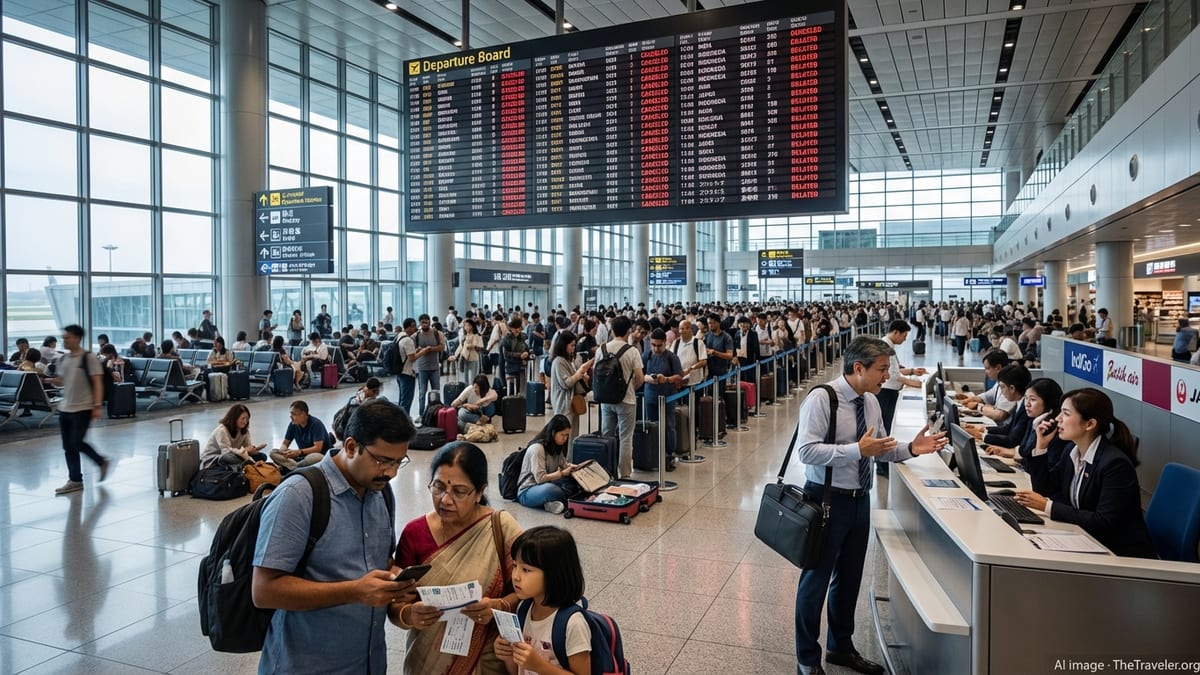
Hundreds of air travelers were stranded across Asia on April 12, 2026, as data from flight-tracking platforms and industry reports indicated at least 445 cancellations and 3,839 delays affecting key hubs from Tokyo and Beijing to Jakarta, Jeddah, and Dubai.
Get the latest news straight to your inbox!
Widespread Disruptions From Northeast Asia to the Gulf
Publicly available aviation data for April 12 suggests a highly fragmented operational picture across Asia, with disruptions stretching from Japan and Singapore through China and Thailand to Saudi Arabia and the United Arab Emirates. Reports indicate that a total of 445 flights were cancelled and 3,839 delayed over the course of the day, leaving airport terminals crowded and schedules in disarray.
China Eastern, Batik Air, SpiceJet, ANA Wings and several regional and Gulf carriers appeared among the most affected operators in the available statistics. While the overall number of grounded aircraft remains fluid as airlines adjust their timetables, the figures point to one of the most severe single-day interruptions to Asian air travel since regional instability and fuel market volatility began escalating earlier this year.
Jakarta, Beijing, Tokyo, Jeddah and Dubai emerged as key pressure points in the network, with secondary hubs in Southeast and East Asia absorbing knock-on effects. Travelers connecting between Asia, the Middle East and Europe faced extended layovers, last-minute rerouting and, in some cases, overnight stays as airlines struggled to reposition aircraft and crews.
The latest disruption follows several weeks of elevated delay and cancellation levels across the region, underlining the difficulty airlines and airports face in restoring predictable operations while geopolitical tensions, airspace constraints and higher operating costs persist.
Jakarta, Beijing and Tokyo Shoulder Heavy Operational Strain
In Northeast Asia, flight-status dashboards for Beijing and Tokyo showed extensive delays throughout Sunday’s peak periods, with ripple effects spreading across domestic and regional routes. Beijing’s dual-airport system, already managing an uptick in schedule complexity, saw dozens of flights listed as late or cancelled, putting additional pressure on ground handling and passenger services.
Tokyo’s airports also featured prominently in disruption tallies, with regional carriers such as ANA Wings among those facing schedule adjustments. Tight turnaround times on short-haul routes magnified the impact of even minor delays, leading to rolling knock-ons across evening departures and inbound connections.
Further south, Indonesia’s main gateway at Jakarta Soekarno–Hatta continued to experience heavy congestion. Earlier coverage of regional performance this year has repeatedly flagged Jakarta as a hotspot for delays, particularly for carriers such as Batik Air and other low-cost operators that rely on high aircraft utilization. The April 12 figures suggest that the latest wave of disruptions compounded those seasonal and structural challenges.
For passengers, the concentration of delays and cancellations in these major nodes meant missed onward connections, rebookings onto already crowded services, and increased competition for limited hotel capacity around the airports.
Saudi Arabia and UAE Hubs Hit as Middle East Pressures Persist
In the Gulf, publicly available reports on operations in Jeddah and Dubai pointed to continuing volatility linked to wider regional instability and constrained airspace. While the number of flights directly cancelled within Saudi Arabia and the UAE on April 12 was smaller than earlier in the crisis, the hubs’ role as long-haul connectors ensured that any schedule disruption had outsize global repercussions.
Jeddah’s King Abdulaziz International Airport, a critical gateway for religious traffic and South Asia connections, experienced renewed strain as selected flights were grounded and others subject to significant delays. Passengers traveling from South and Southeast Asia toward the Middle East reported extended waiting times as airlines recalibrated routings and crew schedules.
Dubai, one of the world’s busiest international hubs, continued to face a mix of direct delays and indirect constraints. Recent policy decisions limiting foreign airline capacity into the city, combined with reroutings around sensitive airspace, have reduced the flexibility of carriers that rely on Dubai as a transit point. The April 12 figures indicate that these structural limits, when combined with day-of-operations issues, translated into longer queues at departure gates and more frequent gate-change announcements.
Airlines using Jeddah and Dubai as connection points between Asia, Europe and Africa have been repeatedly adjusting timetables in recent weeks, and the latest wave of disruptions suggests that passengers can expect an extended period of irregular operations rather than a quick return to normal schedules.
Airlines Grapple With Fuel Costs, Airspace Constraints and Capacity Caps
The cumulative data emerging from April’s travel period points to a convergence of pressures behind the 445 cancellations and 3,839 delays recorded on April 12. Aviation and business media across the region have highlighted three recurring themes: elevated jet fuel prices, airspace closures or restrictions, and regulatory limits on capacity at certain hubs.
Higher fuel costs, driven in part by disruptions to energy shipments through key maritime choke points, have already prompted some Asian and Middle Eastern airlines to cut frequencies, trim unprofitable routes or suspend services to certain destinations. These longer-term adjustments reduce operational slack, meaning that when weather, technical issues or crew shortages arise, there are fewer spare aircraft and crews available to absorb the shock.
At the same time, ongoing airspace constraints over parts of the Middle East have pushed many long-haul flights onto longer routings, increasing block times and narrowing connection windows in hubs like Dubai and Jeddah. Even small deviations from schedule can cascade into missed curfews or duty-time limits for crews, which in turn trigger cancellations or extended delays later in the day.
Capacity caps at some airports, including recently imposed limits on foreign airline operations into the UAE, add a further layer of rigidity. Carriers such as SpiceJet and other Indian and Southeast Asian operators that depend heavily on Gulf connections have less ability to add recovery flights or consolidate disrupted passengers, intensifying the impact on travelers when large-scale operational issues arise.
Travelers Face Long Queues, Tight Connections and Uncertain Itineraries
For passengers across Asia and the Gulf, the April 12 disruption translated into a familiar set of practical challenges: crowded terminals, long queues at service desks and uncertainty over when, or even if, they would reach their destination. Social media posts and local news coverage throughout the day highlighted images of departure boards dominated by red and amber status notifications.
Travel advisories and consumer reports increasingly urge passengers to check flight status repeatedly in the 24 hours before departure, arrive at airports earlier than usual and, where possible, build longer connection buffers into multi-leg itineraries through hubs such as Beijing, Tokyo, Jakarta, Jeddah and Dubai. Those recommendations appeared especially relevant on April 12, as even passengers on early-morning departures encountered knock-on delays from overnight disruptions.
Industry analysts note that while operational resilience in Asia has improved since the height of the pandemic, the combination of geopolitical risk, fuel price volatility and tight capacity means that shock events can still cause rapid and wide-ranging disruption. The day’s tally of 445 cancellations and 3,839 delays illustrates how quickly localized issues in a few key hubs can spill over into a continent-wide challenge.
With airlines and airports warning that schedule adjustments are likely to continue in the weeks ahead, travelers using affected carriers such as China Eastern, Batik Air, SpiceJet, ANA Wings and others are being advised by publicly available guidance to remain flexible, monitor notifications closely and be prepared for last-minute changes, particularly on routes touching the Middle East and major Asian hubs.