

More news on this day
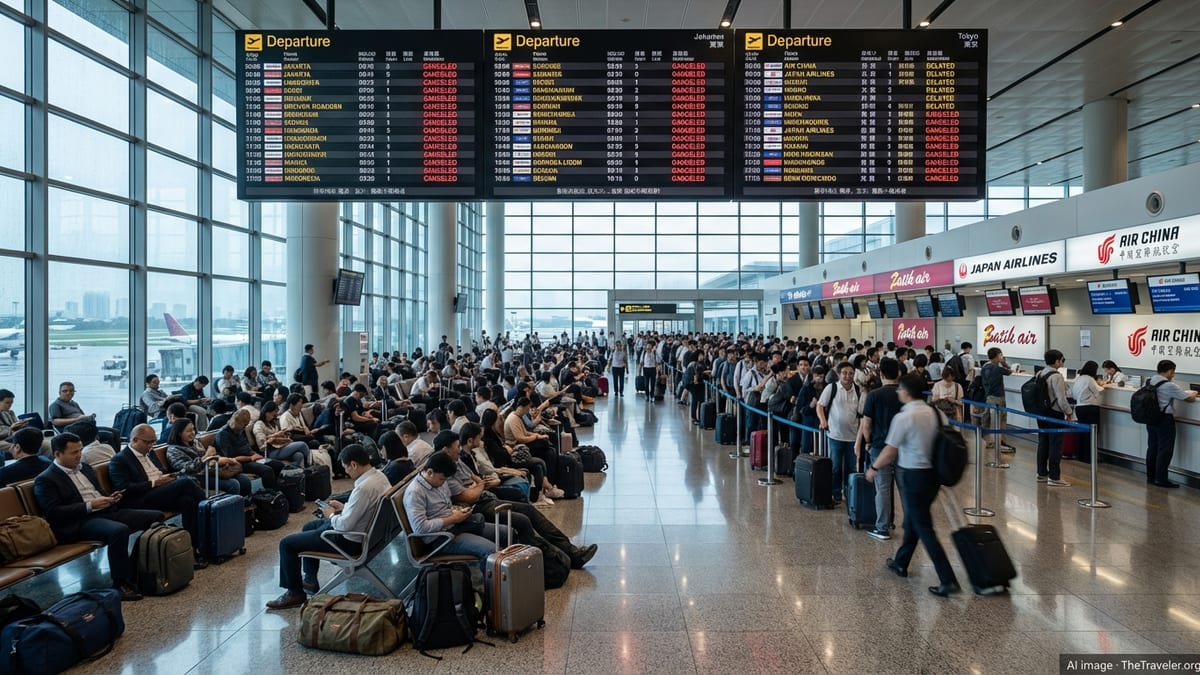
Thousands of travelers across Indonesia, Japan and China are facing a bruising week of disruption as Batik Air, Japan Airlines and Air China cancel 36 flights and alter at least 271 schedules across key hubs in Jakarta, Tokyo and Beijing, leaving stranded passengers scrambling for answers and forcing airlines and airports to mount an urgent operational response.
Three Major Carriers, Three Key Hubs, One Spreading Disruption
The latest wave of disruption centers on three of Asia’s busiest travel gateways: Jakarta’s Soekarno Hatta International Airport, Tokyo’s Haneda and Narita airports, and Beijing Capital and Daxing. Across these hubs, Batik Air, Japan Airlines and Air China have each rolled out targeted cancellations and schedule adjustments as they try to steady their operations in the face of mounting delays reported across the region in recent days.
In Indonesia, Batik Air has confirmed 36 outright cancellations on domestic and regional routes, many clustered around Jakarta and its key connections to Makassar and Manado, alongside a broader pattern of knock-on delays. In Japan, operations by Japan Airlines have been hampered by consecutive days of congestion and weather-linked issues at Haneda, Narita, Sapporo and other airports, prompting a series of timetable changes and aircraft swaps. In China, Air China is adjusting frequencies on select Beijing routes as it navigates tight aircraft availability and evolving demand on trunk and connecting services.
These actions are unfolding against a backdrop of wider turbulence in Asian aviation. Over the past week, airports from Bangkok and Kuala Lumpur to Shanghai and Tokyo have reported thousands of delays and dozens of cancellations involving multiple carriers, suggesting that the problems now hitting Jakarta, Tokyo and Beijing are part of a broader strain on crews, fleets and airport capacity rather than a single isolated incident.
For travelers, the immediate impact is visible on departures boards: a cluster of cancelled Batik Air services around Jakarta, rescheduled Japan Airlines flights on both domestic and regional sectors out of Tokyo, and re-timed or temporarily suspended Air China departures from Beijing. Less visible, but just as disruptive, are the missed connections and cascading delays these changes trigger across airline networks and alliance partners.
How Batik Air’s 36 Cancellations Are Rippling Across Indonesia
Batik Air has been among the hardest hit carriers in the current disruption cycle. Data from recent days show 36 of its flights scrubbed entirely, largely on domestic routes linking Jakarta to Makassar, Manado and other major cities, with additional delays recorded at hubs in Jakarta and secondary airports. The cancellations follow a period of heightened operational pressure on Indonesian carriers, with multiple days of regional delays and capacity constraints reported across Southeast Asia.
Passengers departing Jakarta have reported sudden schedule changes, including same-day notifications that their Batik Air services were either cancelled or retimed. While some travelers have been shifted to later flights or rerouted via alternative Indonesian hubs, seat availability has been tight, particularly on peak daytime departures and heavily booked weekend services to popular destinations such as Bali and Sulawesi.
The disruption has also exposed underlying vulnerabilities in Indonesia’s aviation system. Carriers such as Batik Air, which operates a mixed Airbus and Boeing narrowbody fleet and serves dense domestic corridors, depend on high daily aircraft utilization. When even a handful of aircraft are out of rotation for technical checks, weather diversions or crew-time limitations, the knock-on effects can cascade through the schedule, forcing cancellations in order to reset operations.
Authorities and airport operators in Indonesia have urged passengers to reconfirm itineraries before heading to the airport, especially for flights touching Jakarta and other major nodes. Travelers with tight connections to international departures, including onward services to Kuala Lumpur, Singapore, Bangkok and beyond, are being advised to leave extra buffer time or, where possible, rebook to more stable departure windows.
Tokyo’s Schedules Under Strain as Japan Airlines Adjusts Operations
In Japan, a series of recent operational challenges has pushed airlines into repeated schedule changes. Japan Airlines, already dealing with days of elevated delays at Tokyo’s Haneda and Narita airports, as well as at Sapporo, Sendai and other regional gateways, has now temporarily suspended or retimed a portion of its flights in an effort to restore reliability. Recent tallies across Japanese airports show hundreds of delays and dozens of cancellations spread among multiple carriers, with Japan Airlines prominently affected alongside partners and rivals.
The problems have been particularly acute at Haneda, where tight slot controls and heavy traffic mean even minor disruptions can quickly ripple into large-scale delays. Weather variations, runway inspections and aircraft rotations have all contributed to congestion, while strong demand during late winter travel peaks has left limited room to absorb last-minute changes. Narita, the primary international gateway for Tokyo, has also been contending with schedule shifts as airlines adjust long-haul and regional connections.
For Japan Airlines passengers, the most visible changes have been retimed domestic flights and adjustments to regional services linking Tokyo with cities such as Sapporo, Fukuoka and Okinawa, as well as selected East Asian routes. Some flights have been consolidated, with passengers moved from multiple lightly loaded services onto a smaller number of departures, while others have been shifted by several hours to better align with aircraft and crew availability.
The Japanese government, mindful of a series of headline-grabbing disruption episodes over recent winters, has recently moved to strengthen airport resilience, including plans to subsidize new snow-removal equipment across domestic airports to mitigate weather-related delays. While those measures are aimed at longer-term stability rather than today’s immediate challenges, they underscore how seriously authorities are now treating the threat of recurring flight chaos to Japan’s tourism and business travel ambitions.
Air China Tightens Its Schedule in Beijing Amid Regional Pressure
In Beijing, Air China has begun trimming and reshaping parts of its network as it responds to continued constraints on long-haul capacity and uneven post pandemic recovery on some international sectors. While the current focus is not on mass cancellations, the carrier is suspending certain lightly booked flights, consolidating frequencies on overlapping routes, and retiming departures to improve aircraft utilization and connection windows.
Industry data show that traffic between China and a number of long haul markets, including the United States and parts of Europe, remains below pre crisis levels, even as domestic and short haul demand has returned more robustly. Air China and its competitors have been gradually ramping up services but remain cautious about restoring full schedules, particularly on routes where demand is sensitive to economic sentiment or lingering travel restrictions.
For travelers using Beijing Capital or the newer Daxing airport as transit points, the practical effect has been a series of schedule changes communicated in the days and hours before departure. Some passengers have been shifted to alternate flights on the same day, while others have been offered rebooking options via different Chinese gateways or alliance partners. In a network as interconnected as Air China’s, even a modest reduction in frequencies can lead to misaligned connections, especially for itineraries involving North America or Europe.
The timing of these adjustments coincides with a broader recalibration of China’s international aviation links. Carriers on both sides of the Pacific are still negotiating frequencies and market access, and shifts in Air China’s timetable from Beijing are resonating through global booking systems. Passengers bound for or transiting through the Chinese capital in the coming days are being urged to monitor booking apps and airline notifications closely for last minute updates.
Stranded Passengers Face Long Queues, Patchy Information and Tight Rebooking Windows
For travelers caught in the middle of these disruptions, the common experience is one of uncertainty. At Jakarta’s Soekarno Hatta, passengers on cancelled Batik Air services have reported long lines at ticket counters and inconsistent information about rebooking or compensation. Some have been issued same day alternatives only to discover that subsequent connecting flights were already fully booked, forcing overnight stays or complete itinerary overhauls.
In Tokyo, crowded customer service desks at Haneda and Narita have struggled to keep pace with demand as delays stack up through the day. Travelers report waiting over an hour in line to speak with airline staff, only to find that the next available seat on a Japan Airlines or codeshare service might not depart until late in the evening or even the following day. While self service kiosks and mobile apps can process some changes, complex multi segment tickets often still require human intervention.
In Beijing, where schedule changes by Air China are more focused on retiming and consolidation than mass cancellations, passengers have nonetheless faced tight rebooking windows. Those with tight connections have been particularly vulnerable, with small delays on inbound flights causing missed onward services and, in some cases, the loss of same day alternatives. Language barriers and differing rules for tickets purchased through third party agents have added to the confusion.
Across all three hubs, hotel availability near the airports has tightened as stranded travelers seek last minute accommodation. While some airlines are offering vouchers in line with their internal policies or local regulations, others are limiting assistance, especially where disruptions are framed as weather or air traffic control related. Passengers are advised to keep all receipts for meals, transport and lodging, as these may be needed if they later pursue claims through customer relations channels or travel insurers.
What Travelers Need to Know About the Affected Routes
The most heavily affected routes in Indonesia are domestic sectors operated by Batik Air to and from Jakarta, including services to Makassar, Manado and other key regional cities, as well as selected connections that feed onward international flights via Indonesian and regional hubs. Passengers booked on these sectors in the coming days should expect the possibility of retimings or aircraft swaps even if their flights are still listed as operating.
In Japan, disruption is concentrated on flights touching Tokyo’s Haneda and Narita airports, though ripple effects are being felt at Sapporo, Sendai, Fukuoka and Okinawa as well. Japan Airlines passengers on domestic trunk routes, regional services within Northeast Asia, and some longer haul departures timed to connect with delayed feeders should check status repeatedly in the 24 hours before departure and consider building extra connection time into their plans where feasible.
From Beijing, schedule adjustments by Air China are focused on selective suspensions and timetable changes rather than a blanket reduction in flying. Travelers on routes connecting Beijing with other major Chinese cities, as well as international destinations in East and Southeast Asia, Europe and North America, should pay close attention to any notifications from the airline or travel agents, particularly where their itinerary relies on short connection windows.
Importantly, the situation is fluid. Airlines may restore some flights or adjust timings as crew and aircraft availability improve, while additional services could still be cut if delays continue to accumulate. Even passengers whose flights remain unchanged should be prepared for congestion at check in, security and immigration, as well as potential gate changes and slight departure or arrival shifts.
Your Rights and Options if Your Flight Is Canceled or Delayed
Passenger rights across Indonesia, Japan and China are governed by a mix of national regulations, airline policies and, in some cases, international conventions. Unlike in parts of Europe, there is no single unified regime across Asia that guarantees cash compensation for most delays, but travelers do generally have a right to be carried to their final ticketed destination on the next available flight operated by the airline or, where applicable, a partner carrier.
If your Batik Air flight from Jakarta is canceled, the airline should offer either rebooking at no additional fare or a refund of the unused portion of your ticket. For Japan Airlines passengers departing Tokyo, options typically include free rebooking within a certain date range or rerouting via alternative airports where capacity permits. Air China passengers impacted by schedule changes in Beijing may be offered similar choices, though the specifics will depend on fare rules and whether the ticket was purchased directly or via a third party.
Travelers whose itineraries include multiple carriers on a single ticket, such as a Japan Airlines sector feeding a long haul partner flight, should contact the airline that issued the ticket, which is usually identified on your booking confirmation. That carrier is generally responsible for coordinating changes across all segments. Where flights are part of an alliance or codeshare arrangement, additional rebooking possibilities may exist beyond what is immediately visible in a single airline’s app.
Many passengers also hold travel insurance policies that provide coverage for significant delays, missed connections and unexpected overnight stays. Policy terms vary widely, but keeping documentation of any disruption including airline messages, boarding passes, cancellation notices and receipts for meals and hotels will be essential when filing a claim. Where airline support is limited, insurance may be the only route to recovering out of pocket costs.
Practical Steps to Navigate Jakarta, Tokyo and Beijing During the Disruptions
With cancellations and schedule changes continuing to filter through reservation systems, the most important step for travelers is to stay ahead of the information curve. Check your flight status repeatedly, starting 24 hours before departure and again before leaving for the airport. Use airline apps or call centers where possible, but be prepared for longer than usual wait times, particularly during peak hours at Tokyo and Jakarta.
When traveling through affected hubs, arrive earlier than usual. At Jakarta’s Soekarno Hatta, domestic terminals can become congested as multiple flights are retimed and passenger flows bunch up around similar departure windows. In Tokyo and Beijing, allow additional time to clear security and, if necessary, passport control, especially if your itinerary involves transfers between terminals or between Haneda and Narita in the Tokyo area.
Pack essential items including medications, chargers, a change of clothes and basic toiletries in your carry on in case checked baggage becomes separated from you during an unplanned overnight stay or reroute. Keep printed or downloadable copies of your itinerary, e ticket receipts and any travel insurance documentation, as airport staff may have limited access to reservation details during peak disruption periods.
Finally, where you have flexibility, consider voluntarily moving to less congested travel days or off-peak times. Rebooking to early morning or midday flights, or shifting your travel by a day, may reduce the risk of being caught in the worst of the backlog as Batik Air, Japan Airlines and Air China work to stabilize schedules in Jakarta, Tokyo and Beijing over the coming days.