

More news on this day
Thousands of travelers across Asia faced long queues, missed connections, and unplanned overnight stays as nearly 200 flights were canceled and more than 2,600 delayed at major hubs including Tokyo, Bengaluru, Jakarta, Abu Dhabi, Bangkok, and Singapore, disrupting operations for All Nippon Airways, China Eastern, Gulf Air, Saudia, and several other carriers.
Get the latest news straight to your inbox!
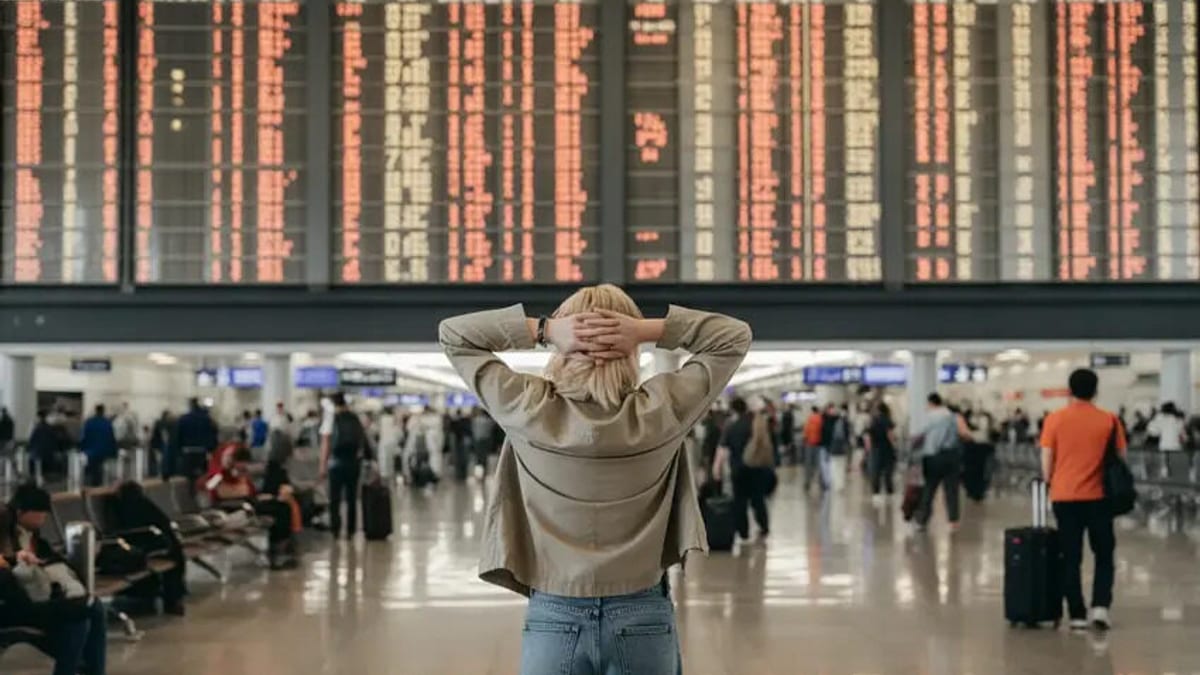
Image by Global Travel Alerts, Advisories, International Travel Alerts
Widespread Disruption Across Asian and Gulf Gateways
Publicly available flight-tracking data and regional media coverage indicate that airports in Thailand, Singapore, Japan, Indonesia, Qatar, and neighboring states have experienced an intense wave of cancellations and delays, with a combined 195 flights grounded and roughly 2,660 running late over a short period. The scale of the disruption has effectively turned some of Asia’s busiest transfer hubs into holding areas for stranded passengers.
Major international gateways such as Tokyo’s Haneda and Narita, Bengaluru’s Kempegowda International Airport, Jakarta’s Soekarno Hatta, and Abu Dhabi International have reported departure boards dominated by delayed notices. In Bangkok and Singapore, images and accounts shared via social media and local outlets describe check-in halls crowded with travelers waiting for rebooking, meal vouchers, or hotel arrangements as schedules slip by hours.
The ripple effect has extended well beyond the region. Long-haul routes connecting Asia with Europe, the Middle East, and North America have been hit by missed connection windows, aircraft and crew out of position, and rolling delays, particularly on itineraries reliant on single-stop connections through hubs in Qatar and the Gulf.
Operational data collated by aviation analytics providers suggests that while outright cancellations represent a smaller fraction of affected services than delays, the grounded flights carry an outsized impact by displacing entire planeloads of passengers and swallowing up scarce rebooking inventory in peak travel periods.
All Nippon, China Eastern, Gulf Carriers and Saudia Among Those Hit
Among the airlines most visibly affected are Asia’s and the Gulf’s major network carriers. All Nippon Airways has seen schedule disruption on services touching Tokyo, with late-arriving aircraft and revised routings contributing to knock-on delays across its domestic and regional network. Japanese media reporting on the congestion around Tokyo’s airports highlights passengers facing extended waits for alternative departures and onward domestic segments.
China Eastern has been contending with delayed and canceled services on cross-border routes linking East Asia, Southeast Asia, and the Middle East. According to airline schedule trackers, some China Eastern connections through hubs such as Shanghai have been forced into longer ground times as aircraft arriving late from disrupted sectors in Southeast Asia cycle back into service.
Gulf-based airlines, including Gulf Air and Saudia, have also been drawn into the disruption pattern. Flights operating through Doha and Abu Dhabi have faced adjustments related to airspace restrictions and complex rerouting across parts of the Middle East, lengthening flight times and tightening crew duty margins. In several cases, these factors have pushed services beyond legal operating limits, resulting in cancellations or overnight delays that cascade into the next day’s schedule.
In Saudi Arabia, public flight-status dashboards show selected Saudia services to and from Asian destinations posting multi-hour delays or marked as canceled. With many passengers relying on connections via Jeddah, Riyadh, Doha, or Abu Dhabi to continue onward to Europe or Africa, even a single missed leg can translate into prolonged waits for scarce replacement seats.
Tokyo, Bengaluru, Jakarta and Other Hubs Struggle With Capacity
Tokyo’s dual-airport system has been operating close to capacity, and reports from local aviation watchers note that even modest timing disruptions can quickly spill over into wider congestion. On days when irregular operations hit both long-haul and domestic banks, aircraft may be held on the ground awaiting slots, and inbound flights can be forced into extended holding patterns, burning further into crew limits.
In India, Bengaluru has seen growing prominence as a South India hub, and the current wave of delays has brought that growth-related strain into sharp focus. Domestic and regional connections feeding long-haul services can easily unravel when one or two critical departures slip by several hours, leaving passengers misaligned with their onward legs and forcing airlines to rebuild itineraries on the fly.
Jakarta’s Soekarno Hatta, long known for congestion and complex ramp operations, is similarly vulnerable when weather, airspace constraints, or technical issues collide. Indonesian aviation and travel forums have carried accounts of flights sitting at gates for extended periods awaiting new departure slots or crew clearances, particularly on international routes linking Jakarta with Gulf and Northeast Asian hubs.
Abu Dhabi’s role as a bridge between Asia and Europe means that any backlog in its departure and arrival banks reverberates widely. Publicly available airport information shows peaks of delayed departures to Asian cities including Tokyo, Bangkok, and Jakarta lining up alongside equally affected westbound services, leaving little flexibility for airlines to recover their rotations without tactical cancellations.
Weather, Airspace Constraints and Tight Schedules Drive the Chaos
A confluence of operational pressures appears to be driving the current turmoil. Aviation bulletins and regional news coverage point to adverse weather in some parts of Asia, continuing airspace restrictions in segments of the Middle East, and heavily banked schedules at major hubs as key contributors. Each factor on its own can typically be absorbed by airline contingency plans, but together they have strained networks to the point where recovery is slow and uncertain.
Airspace advisories have forced some carriers to adopt longer routings that skirt restricted zones, particularly on flights linking Asia with Europe via the Gulf. These deviations can add significant block time, stretching crew duty periods and leaving less slack in tightly choreographed schedules. When those same flights depart late due to upstream delays in Tokyo, Bengaluru, or Jakarta, the compounded impact often leaves airlines with little choice but to delay further or cancel entirely.
Monsoon-related storms, fog, or localized thunderstorms around major hubs such as Bangkok, Singapore, and parts of Japan can also interrupt operations. Even temporary ground stops or reduced arrival rates at a single airport can cascade into missed slots and repositioning challenges across multiple airlines and continents.
Industry analysts note that many carriers in Asia and the Gulf continue to operate with lean spare capacity following the rapid post-pandemic rebound. With fewer standby aircraft and crews available than before global travel disruptions, airlines have less room to absorb sudden schedule shocks, making day-long and even multi-day ripple effects more likely.
Impact on Passengers and What Travelers Can Expect Next
For passengers, the immediate impact has been mounting uncertainty. Travelers departing from or connecting through Tokyo, Bengaluru, Jakarta, Doha, Abu Dhabi, Bangkok, and Singapore have reported missed weddings, business meetings, and holidays, as well as extended waits in transit hotels and terminal seating areas as they monitor departure boards for updates.
Consumer-rights organizations and travel advocates in several countries are drawing renewed attention to passenger protection frameworks. In Thailand, for example, publicly available guidance from aviation regulators sets out entitlements to meals, accommodation, and ground transport when delays extend overnight, while European and United Kingdom regulations provide compensation and care in certain circumstances for affected itineraries touching their jurisdictions.
However, the extent of passenger rights often depends on whether disruptions are deemed to arise from extraordinary circumstances such as airspace closures or severe weather. Legal commentary and travel advisories note that in such cases, monetary compensation may not apply, even though airlines remain responsible for basic care obligations like food and lodging when travelers are stranded away from home.
Travel planners suggest that, in the near term, passengers flying through the most heavily affected hubs should build additional buffer time into itineraries, keep a close watch on flight status tools, and prepare for the possibility of last-minute rerouting. With aircraft and crews still cycling back into normal patterns after this latest wave of disruption, schedules across Asia and the Gulf are expected to remain fragile before gradually stabilizing in the days ahead.