

More news on this day
Thousands of travelers across Asia faced significant disruption today as major hubs in Thailand, Japan, Hong Kong, mainland China, Malaysia, and Türkiye reported 307 flight cancellations and 2,797 delays, disrupting operations for Cathay Pacific, AirAsia, Malaysia Airlines, Pegasus Airlines, and other carriers from Bangkok to Tokyo.
Get the latest news straight to your inbox!
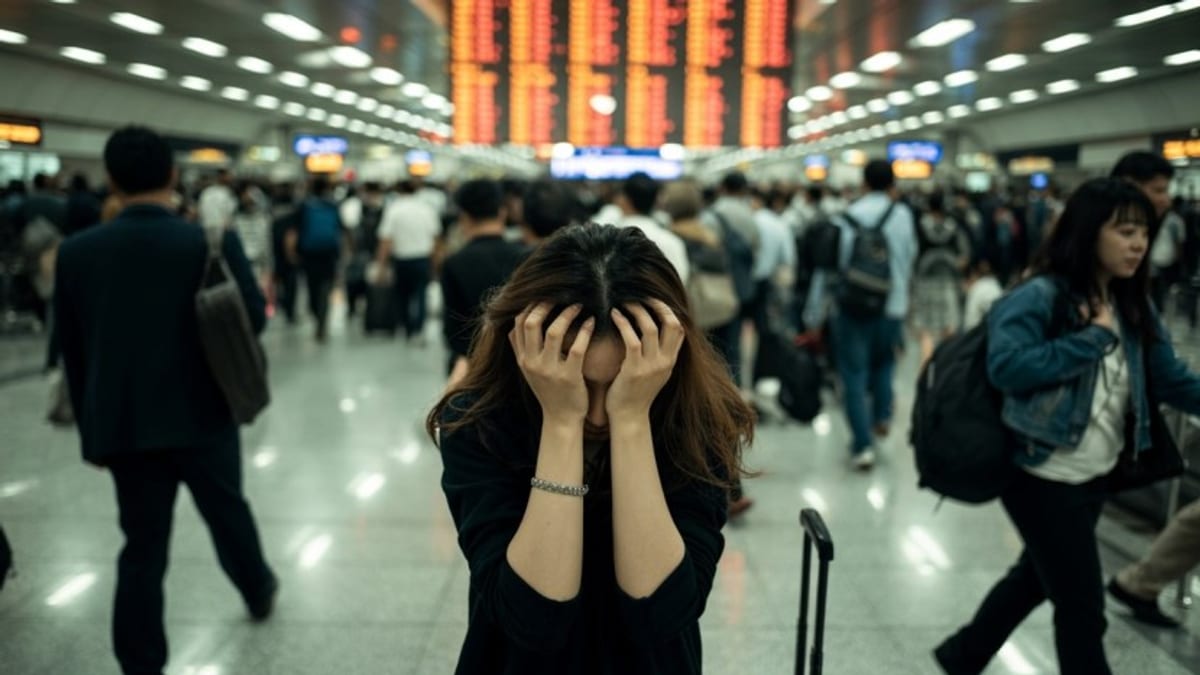
Image by Travel And Tour World
Major Asian Hubs Experience Severe Operational Disruption
Publicly available flight-tracking dashboards and airport status boards indicate that a wave of cancellations and delays has rippled across some of Asia’s busiest aviation hubs. Large international airports in Bangkok, Tokyo, Hong Kong, major cities in mainland China, Kuala Lumpur, and Istanbul are among those showing unusually high numbers of grounded or heavily delayed departures and arrivals.
The tally of at least 307 canceled flights and 2,797 delayed services represents one of the most acute single-day disruptions in the region in recent months. Passenger traffic levels in late March are typically high as travelers move between business trips, regional holidays, and long-haul connections, amplifying the impact of any operational disturbance.
Across affected airports, departure boards showed long sequences of services pushed back by more than an hour, with some routes experiencing rolling delays throughout the day. Arriving flights also faced knock-on schedule issues, complicating the ability of airlines to rotate aircraft and crews in line with normal timetables.
While conditions varied by airport, the pattern of simultaneous disruption across multiple countries placed additional pressure on regional connections, particularly for travelers relying on single-stop itineraries through Asia to Europe, the Middle East, and North America.
Airlines From Full-Service Giants to Low-Cost Carriers Hit Hard
The disruption affected a broad range of airlines, from full-service network carriers to low-cost operators. According to aggregated schedule and status data, Cathay Pacific, AirAsia, Malaysia Airlines, and Pegasus Airlines were among the most heavily impacted, alongside other regional and international carriers operating through the same hubs.
Cathay Pacific’s network, strongly centered on Hong Kong with dense links to Japan, mainland China, and Southeast Asia, appeared particularly vulnerable to delays as congestion built up at multiple points in its route map. Publicly available information showed a clustering of late departures and arrivals on short- and medium-haul routes that normally operate with tight turnarounds.
AirAsia and Malaysia Airlines, both key players at Kuala Lumpur and secondary airports in Malaysia and Thailand, also recorded significant schedule disruption. For AirAsia, which relies on fast aircraft utilization and frequent departures on popular regional city pairs, extended delays on a single aircraft could cascade across several subsequent flights.
In Türkiye, Pegasus Airlines operations feeding and distributing traffic through Istanbul were similarly affected by the broader regional turbulence. As flights arriving late from Asia and the Middle East fed into European and domestic connections, passengers reported missed onward services and longer-than-expected waits in terminal areas, according to travel community posts and shared flight screenshots.
Knock-On Effects From Weather, Congestion, and Network Imbalances
Although a single unified cause has not been identified in publicly accessible reports, multiple operational stressors appear to be contributing to today’s disruption pattern. Weather-related constraints around some Asian hubs, combined with airspace congestion and tight aircraft and crew scheduling, are likely playing a role in the scale of delays recorded.
Even modest temporary slowdowns in departure or arrival rates at key airports can trigger significant knock-on effects when schedules are already dense. Once early-morning and mid-morning waves of flights are pushed back, aircraft rotations for the rest of the day often run behind schedule, and spare capacity to recover the timetable becomes limited.
Regional interdependence is also a key factor. Long-haul flights arriving late into Bangkok, Tokyo, Hong Kong, or Kuala Lumpur can disrupt onward services throughout Southeast and Northeast Asia, as well as connecting flights to Europe and the Middle East. This interconnected network structure means localized issues can quickly develop into a wider pattern of delay and cancellation.
Operating conditions in and around Türkiye add another layer of complexity. Istanbul acts as a gateway between Asia and Europe, and disruptions on Asia-bound or Asia-originating flights can ripple through Pegasus Airlines and other carriers’ networks, complicating recovery efforts throughout the day.
Stranded Passengers Face Long Queues, Rebooking Challenges
For travelers caught in the disruption, the impact has been immediate and often stressful. Social media posts and traveler forum discussions describe long queues at airline service desks in several major airports, as passengers seek rebooking options, hotel vouchers, or alternative routings to reach their destinations.
Reports from Bangkok and Tokyo highlight crowded departure halls and gate areas where passengers waited for rolling updates on revised departure times. In Hong Kong and Kuala Lumpur, images shared online show clusters of travelers gathered around information screens as new estimated times of departure were repeatedly revised.
Travelers on multi-leg journeys, particularly those connecting between Asia and Europe via hubs in Türkiye or other Middle Eastern and Central European cities, faced a heightened risk of missed connections. Some described needing to purchase last-minute tickets on alternative airlines or accept significantly longer routes to reach home or continue with planned itineraries.
Consumer advocates and travel commentators frequently advise passengers affected by large-scale disruption to document delay times, keep all receipts related to unexpected accommodation and meals, and check the applicable passenger-protection rules and compensation frameworks in the countries whose carriers or airports are involved.
What Travelers Should Do If Flying Through the Region
Publicly accessible flight-status tools and airline advisories indicate that schedules remain fluid across the affected hubs, particularly at peak times. Travelers scheduled to fly today or in the coming 24 to 48 hours through Bangkok, Tokyo, Hong Kong, major Chinese gateways, Kuala Lumpur, or Istanbul are being urged by travel industry commentators to monitor their flight status frequently.
Passengers are generally advised to check both airline apps and airport departure boards before leaving for the airport, and to allow additional time for check-in, security screening, and immigration in case terminals remain busy from residual disruption. For itineraries involving self-arranged connections on separate tickets, experts often recommend building in longer layovers when transiting through hubs currently experiencing irregular operations.
Those yet to start their journeys may find that some airlines offer voluntary rebooking, flexible travel dates, or options to reroute via less congested hubs, depending on fare rules and cabin class. Travel agents and online booking platforms can sometimes assist in identifying itineraries that avoid the most affected connection points, though availability may tighten as passenger volumes increase.
With aviation networks across Asia operating close to capacity at peak travel periods, today’s pattern of 307 cancellations and 2,797 delays underlines how quickly conditions can deteriorate when several operational pressures collide. Industry observers note that travelers transiting the region in the coming days should remain prepared for last-minute schedule changes and have contingency plans in place where possible.