

More news on this day
Passengers across Indonesia, China, Japan and connecting markets are facing mounting travel disruption as Batik Air, Chengdu Airlines and ANA Wings record 51 cancellations and 143 delays across Jakarta Soekarno-Hatta, Chengdu and Tokyo airports, according to aggregated flight-tracking data and aviation operations reports.
Get the latest news straight to your inbox!
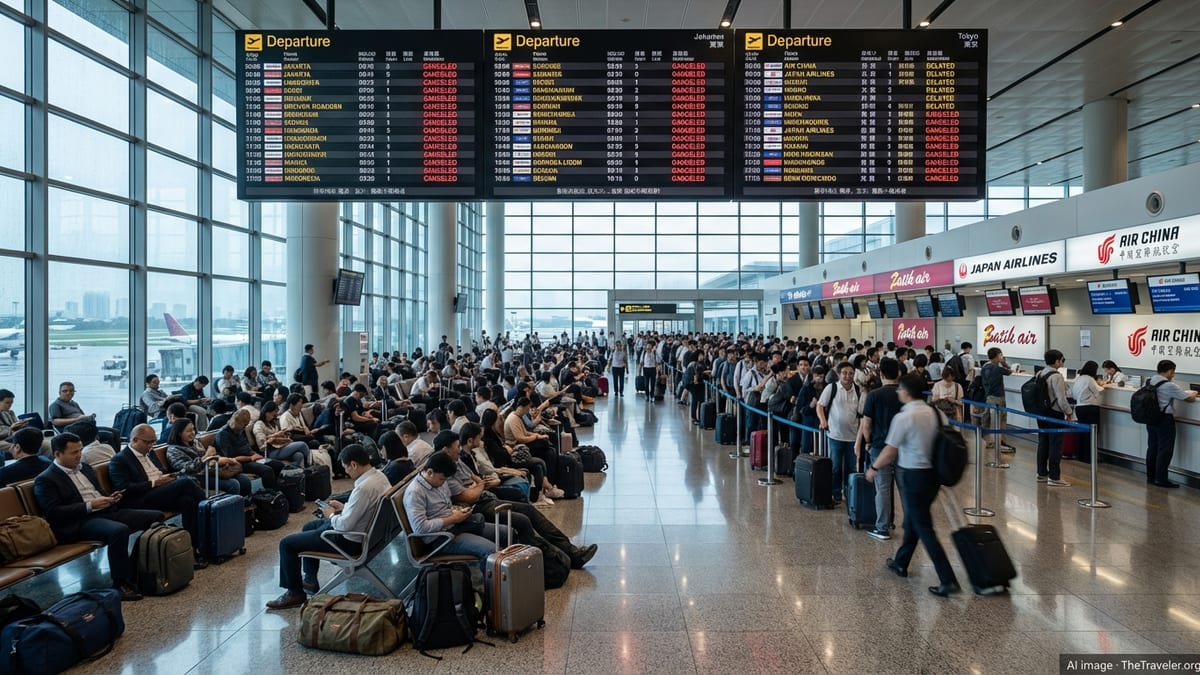
Ripple Effects Across Three Key Asian Hubs
The latest wave of disruption is centered on Jakarta’s Soekarno-Hatta International Airport, Chengdu’s major airports in western China and Tokyo’s busy metropolitan system. Publicly available flight-status boards and specialist aviation trackers indicate that dozens of departures and arrivals operated by Batik Air, Chengdu Airlines and ANA Wings have been scrubbed or pushed back by several hours, creating knock-on delays well beyond the region.
Jakarta Soekarno-Hatta, Indonesia’s primary international gateway, has seen a cluster of Batik Air cancellations and late-running services on domestic and regional routes. Delays at this hub tend to cascade quickly because many flights feed morning and late-evening banks, leaving travelers on multi-leg itineraries particularly exposed when a single aircraft goes out of rotation.
In China, Chengdu’s role as a western gateway for domestic and international traffic has amplified the impact of disruptions at Chengdu Airlines. A mix of schedule adjustments, weather-related constraints and tight aircraft utilization has contributed to a spike in late departures and missed connections, with some passengers facing extended waits before seats become available on alternative services.
Tokyo’s airports, served extensively by ANA Wings on domestic routes, have also reported elevated delay levels. Operational data shows that late-arriving aircraft from regional cities are feeding into congested departure banks at Haneda and Narita, resulting in rolling pushbacks that spill into evening peaks and affect onward international travel.
Why Cancellations and Delays Are Surging Now
A combination of structural and short-term factors appears to be driving the current disruption. Airlines across Asia have been operating close to capacity as demand recovers and grows, leaving limited slack in fleets and crew rosters when weather, airspace constraints or technical issues arise. When multiple carriers face pressure at once, even modest schedule changes can trigger disproportionate operational stress.
Recent regional patterns reported by aviation analytics providers highlight ongoing turbulence in Asia’s air travel network, including route cuts between China and Japan, rerouting around Middle East airspace and higher fuel costs. These pressures have encouraged carriers to fine-tune schedules and utilization, which can deliver efficiency in stable conditions but reduces resilience when a hub experiences adverse weather or traffic restrictions.
For Batik Air at Jakarta, publicly available incident records and performance reviews show that operational robustness has periodically come under scrutiny in recent years, increasing passenger sensitivity to any sign of irregular operations. When several flights are canceled or held for extended periods at Soekarno-Hatta, the effects are immediately visible in crowded terminals and long queues at service counters.
Chengdu Airlines’ challenges are layered onto a Chinese domestic network that has repeatedly dealt with weather and air-traffic-control bottlenecks. When constraints in western China coincide with tight connections to trunk routes, delays at Chengdu can quickly spill over into flights serving major coastal cities and onward international links.
How Stranded Passengers Are Being Affected
Travelers caught in the current wave of disruption report missed connections, unplanned overnight stays and difficulty securing timely rebooking options, particularly on peak travel days. At Jakarta, passengers on Batik Air domestic links to cities such as Surabaya, Makassar and Palu have faced the prospect of losing same-day onward connections on separate tickets, adding financial and logistical strain.
In Chengdu, the mix of domestic and international traffic has resulted in some overseas passengers being stranded in transit after inbound flights arrived too late for onward departures. Publicly shared accounts describe waits of six hours or more in crowded boarding areas while travelers attempt to secure replacement itineraries through airline apps, call centers or ground staff.
Tokyo’s experience has been slightly different but no less disruptive. With ANA Wings operating a dense network of regional links into the capital, late-running flights from outstations have left travelers arriving into Tokyo after their long-haul connections have already departed. This pattern has been particularly challenging for passengers on separate bookings or tight minimum connection times, who often have fewer contractual protections.
Accommodation and meal support has varied by carrier and jurisdiction. In some cases, passengers report receiving hotel and meal vouchers when overnight delays occurred, while others note that they were advised to make their own arrangements and seek reimbursement later under local consumer regulations or airline policies.
What Travelers Can Do If Their Flight Is Affected
Travel and aviation experts suggest that passengers with imminent itineraries through Jakarta, Chengdu or Tokyo adopt a more defensive approach to planning while disruption levels remain elevated. This includes monitoring flight status closely in the days and hours before departure, using both airline channels and independent flight-tracking services to spot early signs of irregular operations.
For those booked on Batik Air, Chengdu Airlines or ANA Wings, publicly available guidance indicates that rebooking options are typically more flexible when a cancellation or significant delay is announced in advance rather than at the gate. Travelers who see their flight marked as heavily delayed or canceled are often better positioned if they contact the airline promptly via app or call center rather than waiting in physical lines that can rapidly lengthen during mass disruptions.
Passengers on multi-ticket itineraries are urged to pay particular attention, since protections are often weaker when separate bookings are involved. Travel advisories and consumer advocates consistently recommend building generous buffers between unrelated tickets, especially when connecting through busy hubs such as Jakarta Soekarno-Hatta, Chengdu or Tokyo, where immigration, security and terminal transfers can take longer than scheduled.
Where local regulations provide for assistance or compensation, travelers are encouraged to keep documentation of delays, expenses and communications. While Asia’s consumer-protection framework is more fragmented than regimes in Europe or some other markets, national rules in Indonesia, China and Japan set baseline expectations for care in the event of long delays or overnight disruptions.
Implications for Regional and Long-Haul Travel
The cluster of 51 cancellations and 143 delays attributable to Batik Air, Chengdu Airlines and ANA Wings at key Asian hubs highlights how fragile regional connectivity remains, even as overall traffic volumes continue to grow. Disruptions on short-haul feeder routes can rapidly compromise long-haul journeys, particularly when capacity is already tight on trunk services linking Asia with Europe, the Middle East and North America.
Industry observers note that repeated irregular operations can influence traveler behavior over time, with some passengers opting for more direct routings, longer connection windows or carriers perceived as having stronger operational records. If disruption persists, airlines may face pressure to introduce additional buffer into schedules or deploy spare aircraft where possible, which can increase costs and potentially translate into higher fares.
For now, publicly available operational data suggests that schedules at Jakarta, Chengdu and Tokyo remain vulnerable to further shocks, whether from weather, airspace changes or technical issues. Travelers planning upcoming journeys through these hubs are being urged by travel portals and aviation analysts to factor in the possibility of extended delays and to prepare contingency plans in case their flights are among the growing list of cancellations and late departures.