

More news on this day
Thousands of air travelers across Asia and the Middle East faced severe disruption today as publicly available flight-tracking data indicated that 4,319 flights were delayed and 189 were cancelled across major hubs in Thailand, Singapore, Japan, the United Arab Emirates, India, Indonesia and China, impacting operations for carriers including Etihad Airways, Japan Airlines, Air China, Thai Airways and others at airports in Beijing, Tokyo, Dubai and beyond.
Get the latest news straight to your inbox!
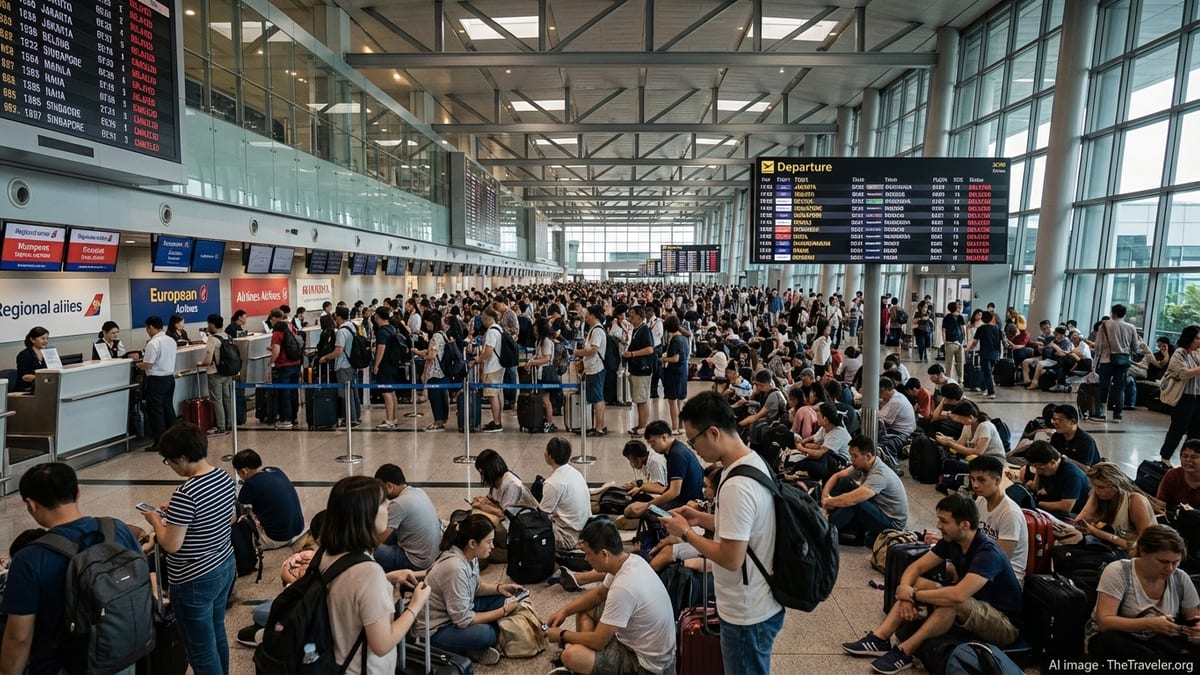
Wave of Disruptions Hits Key Asian Gateways
Aggregated data from aviation monitoring platforms for April 10, 2026, indicate that flight operations across multiple Asian hubs have been heavily affected, with large concentrations of delays and cancellations at airports in China, Japan, Southeast Asia and the Gulf. The disruption mirrors patterns reported earlier in the week, when thousands of passengers were stranded as China, Thailand, Japan, Singapore, India and Indonesia registered several thousand delays and more than one hundred cancellations in a single day.
Recent reports on regional performance describe delay-heavy disruption profiles, where the vast majority of affected services depart late rather than being outright cancelled, creating rolling congestion through the day at hub airports such as Bangkok Suvarnabhumi, Beijing’s airports, Singapore Changi, Jakarta Soekarno Hatta and Delhi. A similar pattern was recorded last week, when coverage highlighted more than 3,200 delays and over 130 cancellations in a single trading day across major Asian gateways, leading to extended queues and missed connections for travelers.
In parallel, long haul networks linking Asia with Europe, the Middle East and North America have experienced knock-on effects from wider geopolitical tensions and airspace restrictions. Industry-focused outlets have reported sustained cancellations on West Asia routes, with Indian airlines alone withdrawing more than ten thousand flights to the region since late February, while some Gulf and European carriers have announced targeted suspensions or reroutings of services as conflict pressures intensify.
Carriers and Routes Under Strain
The latest disruption has hit a broad mix of full service and low cost airlines. Publicly available airline and airport data for early April show operational challenges for flag carriers such as Japan Airlines, Air China and Thai Airways, as well as Gulf-based operators including Etihad, which rely on smooth hub operations in Tokyo, Beijing, Bangkok and Dubai to support connecting traffic across Asia, Europe and Africa.
Earlier this week, specialist aviation coverage detailed how carriers including Batik Air, IndiGo, Air China and FlyDubai were affected when nearly 3,900 flights were delayed and more than 260 cancelled in a single day across China, Japan, Singapore, India and Saudi Arabia. These disruptions were concentrated at hubs such as Tokyo, Shanghai, Kolkata and Abu Dhabi, illustrating the vulnerability of dense connecting networks when a combination of airspace constraints, weather variability and crew positioning issues collide.
Regional and leisure-focused airlines continue to adjust schedules in response to cost and capacity pressures. In Thailand, recent reporting has highlighted route suspensions and fare increases by carriers such as Thai Airways and Thai AirAsia X amid a sharp rise in fuel prices, while airport bulletins across Southeast Asia and the Gulf have pointed to waves of cancellations and special operations approvals as authorities and operators work to maintain minimum connectivity on key routes.
Operational Pressures Behind the Numbers
A combination of structural and short term factors appears to be driving the spike in delays and cancellations. Industry bulletins and travel trade reporting for March and early April reference persistent airspace closures over parts of the Middle East, which have forced lengthy detours for flights connecting Europe and Asia and reduced available capacity on traditional Gulf hubs. Analysts have linked these changes to a surge in global cancellations, with one travel trade outlet noting that worldwide cancellations in March rose by more than 100 percent year on year as conflict-related restrictions took hold.
Within Asia, airline scheduling remains under strain following recent regulatory changes and high profile operational crises. In India, a major carrier’s scheduling disruption in late 2025 was followed by adjustments to pilot duty time rules that increased crew rest requirements, tightening the margin for recovery when flights are delayed. Meanwhile, carriers across Thailand, Indonesia and other Southeast Asian markets are contending with higher fuel costs and strong post pandemic demand, which have encouraged tight, utilization heavy schedules that leave little room to absorb disruption.
Weather patterns and localized incidents continue to play a role as well. Recent coverage of cancellations at hubs such as Seoul Incheon, Lhasa, Vientiane and Kunming has underlined how storm activity, airport constraints and the operational limitations of high altitude or congested airports can quickly cascade into missed slots and rolling delays across an airline’s network. When such localized issues coincide with broader airspace or staffing constraints, networks across multiple countries can be affected in the same operating day.
Impact on Passengers From Beijing to Dubai
For travelers, the operational complexity behind today’s statistics has translated into missed holidays, disrupted business trips and long waits in crowded terminals. Reports from flight tracking dashboards and travel news outlets describe passengers stranded at Beijing and Shanghai airports as late running inbound services disrupt onward connections to regional destinations, while travelers transiting in Tokyo, Singapore and Bangkok face tight or missed connections after inbound flights from Europe and North America arrive behind schedule.
In the Gulf, public reporting on schedule changes and cancellations shows how reduced operations on some West Asia routes and ad hoc “exceptional” flights have made itineraries less predictable. Passengers using Dubai and Abu Dhabi as connecting points between Asia, Europe and Africa face a heightened risk of last minute rebookings when upstream flights from South and Southeast Asia are delayed or rerouted around conflict zones, affecting carriers such as Etihad and partner airlines.
Travel trade outlets have also documented rising fares and reduced seat availability on alternative routings as passengers seek to avoid some Middle Eastern hubs. Examples include itineraries from Europe to India that now route via Bangkok or Singapore instead of Gulf hubs, often at higher prices, and US Asia journeys that have shifted through Tokyo or Taipei when disruptions hit Seoul or the Gulf. These shifts contribute to load pressures on carriers such as Japan Airlines and other Asian network airlines, amplifying the impact of even modest day of operations delays.
What Travelers Can Do Amid Continuing Volatility
Consumer advocates and travel industry publications continue to recommend that passengers take a proactive approach when disruption levels are elevated across a region. Guidance commonly emphasizes monitoring airline apps and flight tracking tools closely in the 24 hours before departure, enabling travelers to spot creeping delays and rebooking options earlier, particularly when connecting through busy hubs such as Beijing, Tokyo, Singapore, Bangkok, Dubai, Delhi or Jakarta.
Publicly available advice also stresses the importance of understanding airline and regulatory compensation frameworks in each market. In Europe, for example, specific rules can entitle passengers to compensation and care during extended delays or cancellations when the cause is within an airline’s control, while in Asian and Middle Eastern markets support policies often vary by carrier. Travelers are generally encouraged to retain boarding passes, document delay timings and keep receipts for essential expenses incurred while waiting for rebooking.
With aviation data and recent reporting pointing to continued volatility linked to conflict related airspace changes, higher fuel prices and tight airline staffing, travel industry observers suggest that disruption may remain a recurring feature for passengers flying through Asian and Gulf hubs in the coming weeks. Against this backdrop, flexible itineraries, longer connection windows and careful monitoring of flight status information are likely to remain essential tools for travelers navigating one of the world’s busiest air traffic regions.