

More news on this day
Global travel technology giant Amadeus is reporting solid growth in air bookings powered by a resurgent Asia-Pacific market, even as repeated weather and operational disruptions in the United States weigh on demand and complicate recovery patterns across North America.
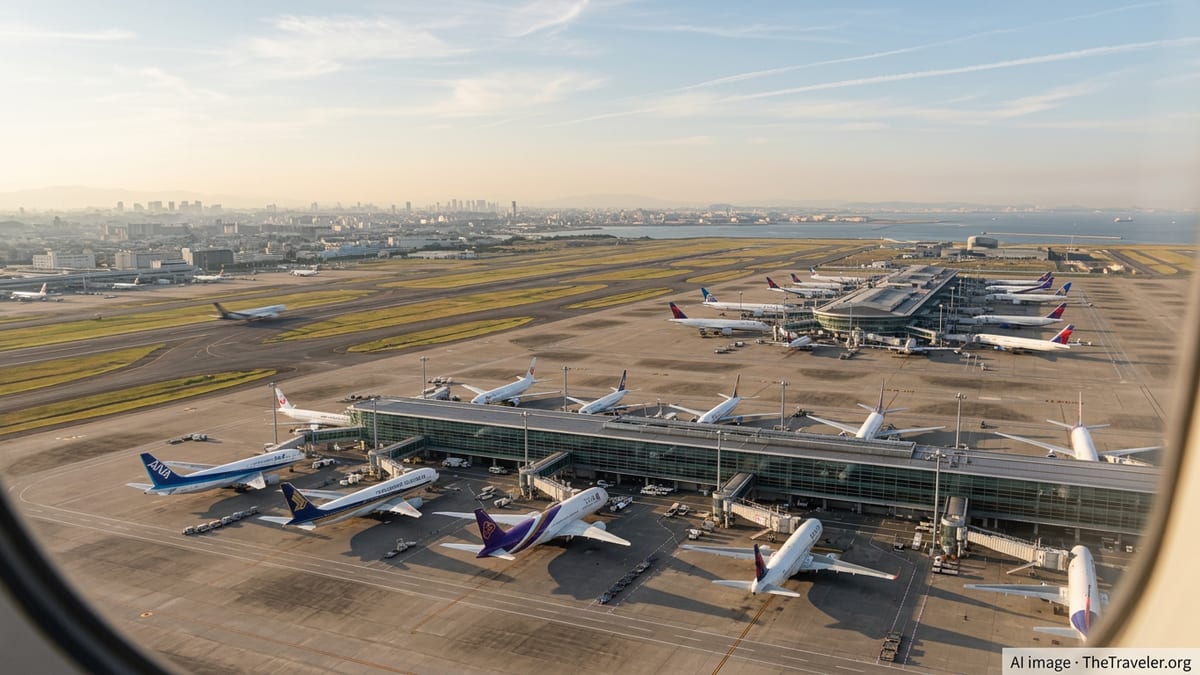
Asia-Pacific Emerges as Amadeus’ Growth Engine
Amadeus executives say Asia-Pacific has firmly taken the lead as the company’s fastest-growing air booking region, underscoring how the global centre of gravity for air travel demand is tilting toward the East. Recent disclosures show double-digit year-on-year gains in Asia-Pacific air bookings, well ahead of the low single‑digit increases recorded in Europe and North America.
The rebound reflects both the late reopening of many Asian markets after the pandemic and a wave of structural demand. Major hubs such as Bangkok, Singapore and Tokyo are seeing sustained traffic from regional leisure travellers, long-haul tourists and a growing middle class eager to travel internationally. Amadeus data for the latest quarter points to Asia-Pacific booking growth of around 12 percent, making it the standout contributor to global volumes.
Secondary and emerging cities across Asia are also playing a larger role in Amadeus’ network, with rising point-to-point demand to and from destinations in Thailand, Vietnam and Indonesia. This broad-based expansion means Asia-Pacific is no longer just about a handful of mega-hubs, but a dense web of routes that is increasingly critical to airlines and intermediaries plugged into the Amadeus platform.
The strength of Asia-Pacific is helping offset softer conditions in other regions, turning the geography mix of Amadeus’ air distribution business into a strategic advantage. With Asian carriers adding capacity and new routes, the company is capturing both leisure and corporate travel demand that is outpacing the global average.
U.S. Disruptions Pressure North American Bookings
By contrast, Amadeus’ latest figures point to weaker momentum in the United States, where air travel has been repeatedly disrupted by winter storms, severe weather systems and isolated operational breakdowns. Executives have cited an uptick in cancellations and a series of airline incidents that temporarily dampened travel appetite on key domestic and transcontinental routes.
This “softness” in U.S.-origin bookings has not derailed overall growth, but it has limited North America’s contribution relative to Asia-Pacific. Flight disruptions have triggered short-term booking pauses and higher cancellation rates, with knock-on effects for connecting itineraries that rely on major U.S. hubs. While rebooking and recovery efforts have generally restored traffic, the cumulative effect has been to flatten what might otherwise have been a more robust rebound.
The United States remains one of Amadeus’ largest markets by absolute volume, supported by a dense network of domestic carriers, global alliances and online travel agencies that feed bookings into the system. However, recent months have illustrated how vulnerable this volume is to wave after wave of disruption, from weather to airspace constraints and aircraft availability challenges.
For corporate travel managers and agencies that rely on Amadeus, the volatility has meant more time spent managing schedule changes and less predictable patterns in advance bookings. That has put additional emphasis on tools that support disruption management and real-time re-accommodation of travellers, areas where Amadeus has been investing heavily.
Global Bookings Still Edge Higher
Despite the headwinds in the U.S., Amadeus’ overall air bookings have continued to trend upward. The company reported year-on-year growth of about 3.3 percent in the most recent quarter, with full-year bookings up 2.8 percent, signalling that global demand for air travel is still expanding, albeit at a more measured pace than during the immediate post-pandemic surge.
Industry analysts note that the current environment is characterised by uneven regional dynamics. Asia-Pacific and parts of Western Europe are driving growth, while Latin America and some Middle Eastern and African markets have seen modest declines in Amadeus volumes. Against this backdrop, even modest global booking growth is viewed as a sign of resilience in the face of geopolitical tensions, airspace closures and lingering supply chain constraints in aircraft manufacturing.
Amadeus has also highlighted steady gains in average revenue per booking, supported by a richer mix of ancillary services and premium content. As airlines continue to unbundle fares and add optional services, each individual booking can generate more revenue for the technology provider, even when the underlying volume growth slows.
For travellers, this means that while the number of people flying is rising gradually, the cost and complexity of each trip may feel higher. Dynamic pricing, surcharges and capacity constraints on certain long-haul routes are contributing to elevated fares, particularly in premium cabins to and from Asia-Pacific hubs where demand is outpacing supply.
Middle East Disruptions Redirect Flows to Asian Hubs
The broader geopolitical backdrop is amplifying Asia-Pacific’s role in global air traffic flows. Recent closures and restrictions affecting key Middle Eastern hubs have forced carriers to cancel or reroute services, particularly on Europe–Asia and Europe–Australia corridors. That in turn has channelled more passengers through Asian and European gateways that remain fully operational.
Reports of surging fares on Europe–Asia routes, in some cases climbing several hundred percent on short notice, illustrate how quickly supply and demand can become imbalanced when major hubs are taken offline. Non-Gulf carriers in Asia, including airlines based in Singapore, Hong Kong and Bangkok, have seen a spike in bookings from travellers seeking alternatives to disrupted connections.
For Amadeus, these shifts show up as increased booking volumes on itineraries that rely on Asia-Pacific and European hubs instead of traditional Middle Eastern waypoints. The rerouting is also driving more complex multi-stop itineraries, further underscoring the value of robust global distribution systems that can reassemble viable journeys in real time.
Industry observers caution that such traffic shifts may prove temporary if Middle Eastern operations normalise, but the current situation is reinforcing the strategic importance of diversified routings and multiple hub options. It also highlights Asia-Pacific’s ability to absorb displaced demand and maintain connectivity even when other parts of the global network come under stress.
What Travellers and the Industry Should Watch Next
Looking ahead, the key question for Amadeus and its airline partners is whether Asia-Pacific’s surge can continue to outweigh disruptions and demand softness in the U.S. and other regions. For now, strong outbound travel from major Asian economies and rising intra-Asia tourism suggest that momentum will remain favourable, particularly if airlines can add capacity and stabilise schedules.
Travellers planning long-haul trips should be prepared for elevated fares on certain Asia-related routes, especially where capacity is constrained or traffic has been rerouted away from disrupted hubs. Booking further in advance, considering secondary airports and mixing carriers within alliances can help secure more options in an environment where popular non-stop services are filling quickly.
Within the industry, attention is likely to focus on how U.S. carriers and airports manage upcoming weather seasons and operational resilience. A stretch of relatively disruption-free months could help North American bookings regain ground and restore more balanced growth across Amadeus’ global portfolio. Conversely, another cycle of severe disruptions would further entrench Asia-Pacific’s role as the primary growth driver.
For now, the picture is clear: Asia-Pacific has become the engine pulling Amadeus’ global air bookings forward, while a more fragile and interruption-prone U.S. market reminds airlines, airports and travellers alike that the recovery in air travel is still a work in progress.