

More news on this day
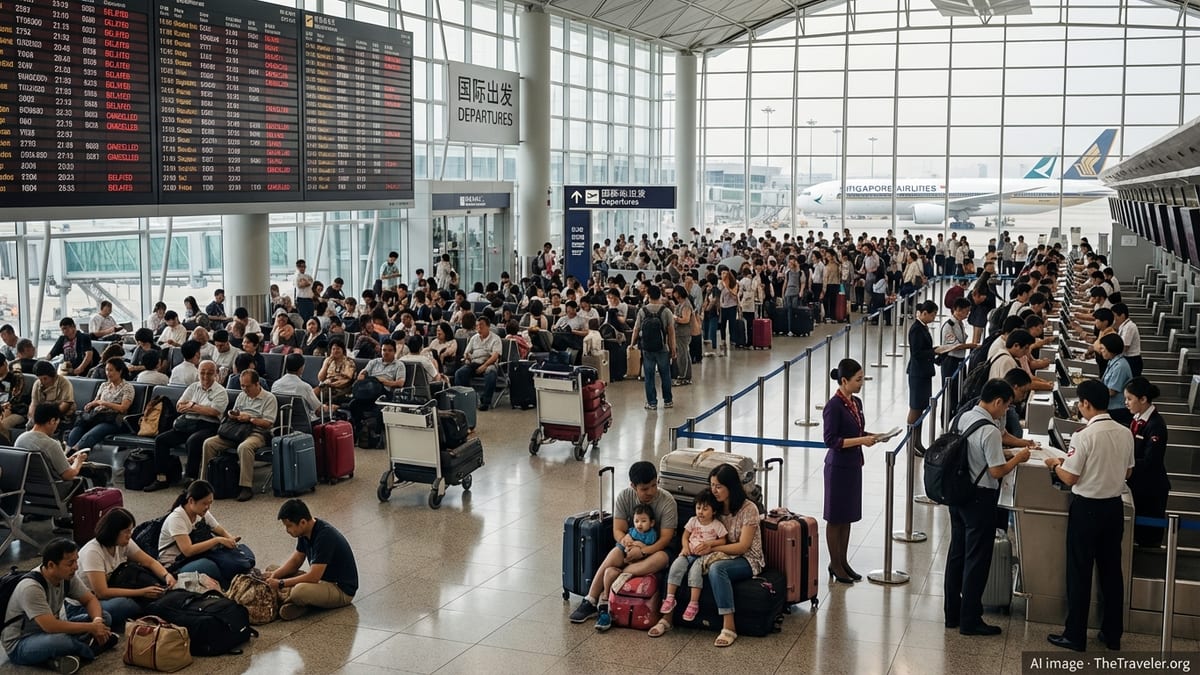
Asia’s aviation grid is facing a fresh bout of disruption as ongoing Boeing 787 safety inspections trigger hundreds of delays and at least 35 cancellations across major hubs in Malaysia, Indonesia, Singapore, Thailand, China and Japan, snarling operations at airports from Jakarta and Phuket to Kagoshima and Osaka and disrupting services on carriers including Batik Air, AirAsia, Garuda Indonesia, Jetstar, ANA Wings and Chengdu Airlines.
Wave of Disruptions Builds on Earlier Asian Flight Chaos
The latest 787-linked disruption comes on the heels of a bruising week for Asian air travel, with regional operations already stretched by weather systems and congestion. Data compiled by aviation trackers and industry outlets shows a sharp spike in delays on February 27 and February 28, when more than 1,400 flights were delayed and close to 100 were cancelled across China, India, Indonesia, Japan and Malaysia, including at Jakarta, Fukuoka, Kuala Lumpur and Yining.
On Friday, February 27, a cluster of cancellations hit Indonesia and Malaysia in particular, leaving passengers stranded at Jakarta and Bali as Batik Air, AirAsia, Jetstar and several international carriers cut over 50 flights serving routes to Singapore, Sydney, San Francisco and other long haul destinations. Those schedule cuts, driven largely by network imbalances and aircraft availability, formed the backdrop for the newer 787 specific holds now spreading across the region.
By Saturday, February 28, the disruption widened, with more than 2,000 delays and close to 60 cancellations reported across 11 Asian airports. Kuala Lumpur recorded the highest number of delayed departures, while Jakarta logged the most outright cancellations as airlines struggled to rotate aircraft and crew. Japan’s domestic network also came under pressure, with airports from Kagoshima and Fukuoka to Tokyo’s Haneda reporting a growing mix of delayed and cancelled services.
Aviation officials in several countries have warned that even relatively small clusters of 787 groundings can reverberate across mixed fleets, forcing last minute schedule swaps onto other aircraft types and feeding into an already fragile on time performance picture for the region.
Jakarta, Phuket, Kagoshima and Osaka Feel the Strain
Jakarta’s Soekarno Hatta International Airport remains one of the main pressure points, reflecting its role as a hub for both domestic links and long haul flights across Asia and beyond. Recent data highlight Jakarta as the single airport with the highest number of cancellations in the current disruption cycle, with Batik Air and Garuda Indonesia among the hardest hit as they juggle fleet checks, technical inspections and knock on delays from other Asian hubs.
Thai resort gateways have not been spared. Phuket, already heavily trafficked during the Northern Hemisphere winter, has seen mounting delays as Thai and foreign carriers reassign aircraft, consolidate frequencies and, in some cases, cancel lower demand rotations when spare widebody capacity is tied up by 787 inspections. That has left holidaymakers facing long lines, rolling departure time changes and overnight hotel stays while they await rebooking.
In Japan, the impact has been most visible along the southern and western domestic corridors. Kagoshima and other regional airports such as Yakushima and Tsushima have reported a string of disruptions tied to the wider network strain, while Osaka’s Kansai and Itami airports are contending with delayed inbound aircraft from Southeast Asia and China. Even where flights are not directly operated by 787s, the ripple effects of equipment changes higher up the network have led to gaps in aircraft and crew availability on shorter routes.
Airport managers in these cities describe an operational environment where ground staff are racing to reposition passengers and luggage as schedules are rewritten multiple times a day. Many airlines have resorted to rolling waivers, offering rebooking without fees on selected routes, but those measures have not eliminated bottlenecks at transfer points when connecting flights are also running late or cancelled.
Carriers Across the Region Grapple With Fleet and Crew Constraints
For individual airlines, the latest wave of 787 driven checks is colliding with broader operational constraints. Batik Air, which has already faced high cancellation and delay counts in Jakarta and Makassar this week, is now working through complex fleet rotations as it shuttles aircraft between domestic and regional routes. The carrier’s schedule planners are attempting to preserve key trunk services while trimming frequencies on secondary routes where possible.
Low cost giant AirAsia, which recorded one of the largest delay volumes in Kuala Lumpur and other hubs this week, has been particularly vulnerable to knock on effects, given its tight turnarounds and high aircraft utilisation. While most of its fleet is made up of single aisle jets, disruptions on shared airport infrastructure and connecting partner services have forced the airline to pad schedules and occasionally cancel lightly booked flights to protect overall network integrity.
Japan focused operators are also feeling the strain. ANA Wings, a regional affiliate operating dense domestic schedules, has seen mounting delays at airports such as Fukuoka and Kagoshima as the broader ANA Group adjusts to aircraft availability and traffic flow restrictions. At the same time, budget carrier Jetstar and China based Chengdu Airlines have reported cancellations and delays on routes touching popular leisure destinations including Osaka, Phuket and Singapore, as they work around both 787 inspections and weather related congestion in Chinese airspace.
Garuda Indonesia, which uses widebodies on key regional and long haul routes, faces the delicate task of balancing regulatory compliance with the need to protect revenue on premium markets. Industry analysts say that when widebody utilisation dips suddenly, it can force difficult decisions about which city pairs lose frequencies or overnight services, with knock on consequences for feeder traffic from smaller airports across Indonesia and the wider region.
Passengers Confront Lingering Uncertainty and Long Recovery Timelines
For travellers, the practical impact of the 787 related checks is felt less in technical details and more in hours spent in terminal seating and check in queues. At Jakarta, passengers have reported departure times rolling back in 30 or 60 minute increments throughout the day, turning what should have been short hops to regional cities into all day ordeals. Similar scenes have been reported from Phuket and Osaka, where substitution of smaller aircraft has also led to involuntary downgrades and passengers being bumped to later flights.
In Japan’s regional airports, local tourism operators worry that repeated cancellations and delays, even on domestic legs such as Kagoshima and Yakushima, could discourage short break travel during what is typically a busy early spring period. Hoteliers in coastal Thailand and island destinations in Indonesia are also monitoring cancellation patterns closely as late arriving guests force last minute changes to room allocations and excursions.
Industry planners caution that the recovery from this latest bout of disruption may be uneven. While some airports are able to clear backlogs relatively quickly once aircraft are cleared to return to service, others remain dependent on complex connecting traffic flows that can take days to stabilise. If further technical directives on the 787 fleet or adverse weather systems emerge in the coming weeks, the current pattern of rolling delays and sporadic cancellations could persist well into March.
Until the inspection cycle is complete and schedules are fully reset, airlines across Asia are quietly advising passengers to build extra time into itineraries, avoid tight connections where possible and to rely on official airline channels and apps for the latest information as departure boards across the region remain volatile.