

More news on this day
Thousands of air travelers were left stranded on Monday as a fresh wave of flight cancellations and delays rippled from Jakarta and Hong Kong to Tokyo, Lianjiang and New York, with Batik Air, All Nippon Airways, Cathay Pacific and China Express Airlines scrapping 71 services and delaying 331 more across key routes in Asia, North America and Australia.
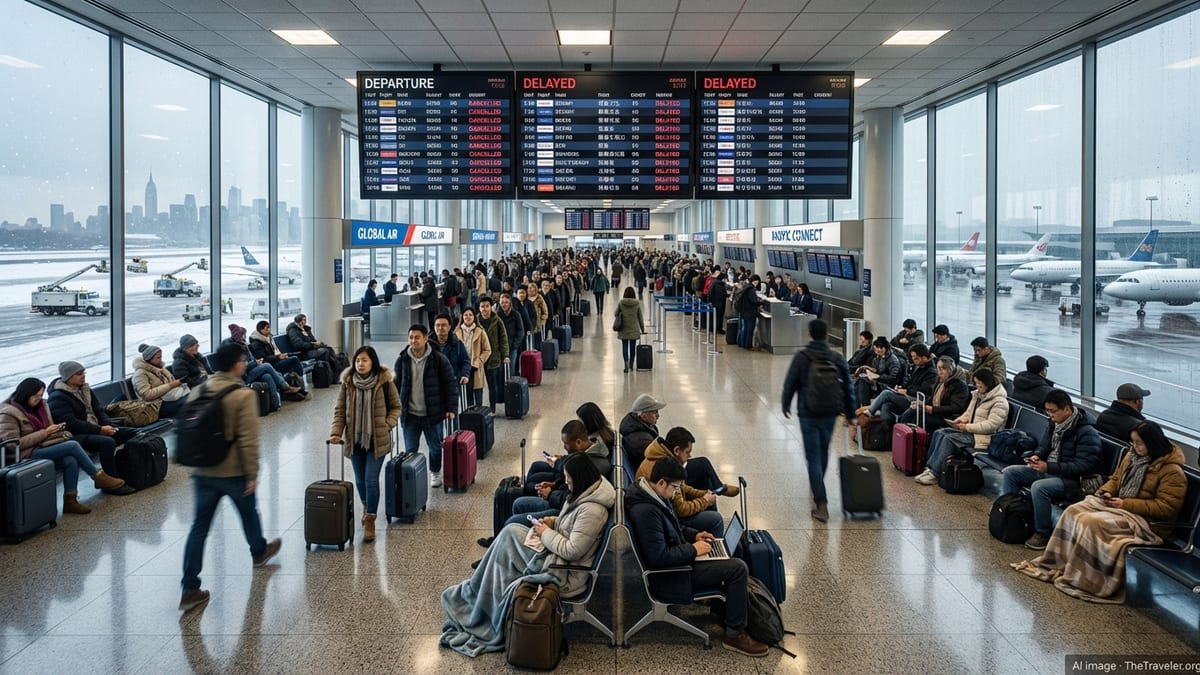
Weather Turmoil and Congested Skies Trigger New Wave of Disruptions
The latest round of disruption unfolded on February 23 as severe winter weather in the northeastern United States collided with lingering storms and operational bottlenecks across Asia. Aviation data providers reported thousands of cancellations nationwide in the US following a powerful Nor’easter, while airports from Jakarta to Hong Kong and northern China continued to battle knock-on delays from a week of heavy rain, low visibility and strong crosswinds.
Against that backdrop, at least 71 flights operated by Batik Air, All Nippon Airways, Cathay Pacific and China Express Airlines were cancelled, with a further 331 delayed, according to regional aviation summaries and airline advisories. The impact was felt far beyond the individual carriers’ hubs, affecting code-share partners, connecting itineraries and onward travel worldwide.
While the raw numbers are a fraction of the thousands of flights grounded globally by storms, the concentration of these cancellations on high-demand international and regional routes magnified the disruption for travelers. Popular business and leisure corridors linking Jakarta, Tokyo, Hong Kong, Lianjiang and New York were among the most heavily affected, creating queues at check-in counters and packed airport lounges as passengers scrambled to rebook.
With airlines juggling weather constraints, air-traffic flow restrictions and aircraft positioning challenges, industry analysts warned that irregular operations are likely to ripple through schedules for several more days. Travelers heading into or out of the affected regions were urged to treat departure times as provisional and to monitor airline notifications closely.
Jakarta and Southeast Asia Feel the Strain as Batik Air Cuts Services
In Indonesia, Batik Air once again found itself at the center of regional disruption as convective storms and persistent heavy rain around Jakarta’s Soekarno-Hatta International Airport reduced visibility and intermittently slowed departures. The carrier cancelled and delayed several domestic and short-haul international flights, including services linking Jakarta with secondary Indonesian cities and neighboring Southeast Asian hubs.
Recent days have already seen Batik Air trim schedules after bouts of severe weather across Indonesia and nearby Malaysia. Industry observers say the latest disruptions underscore how quickly dense short-haul networks can unravel when storms linger over major hubs. Each cancellation or extended delay in Jakarta reverberates across turn-around dependent routes, leaving aircraft and crews out of position for subsequent legs.
Passengers at Soekarno-Hatta reported long lines at rebooking counters through Monday morning as ground staff tried to consolidate travelers onto remaining services. Some were offered hotel vouchers, while others chose to connect via alternative Indonesian or regional carriers to reach destinations such as Bali, Surabaya and Kuala Lumpur.
Tourism operators in Indonesia noted that while the number of Batik Air cancellations is limited in absolute terms, it hits at a sensitive time for the sector. Domestic demand has been recovering strongly, and the current spell of unreliable schedules risks denting traveler confidence heading into the next holiday period.
Tokyo and Wider Japan Network Squeezed as ANA Adjusts Operations
All Nippon Airways, one of Japan’s largest carriers, also reported a cluster of cancellations and delays focused on key domestic and trans-Pacific routes. Weather-related restrictions and air-traffic control flow measures led to schedule adjustments at Tokyo’s Haneda and Narita airports, as well as at regional gateways in Hokkaido and Kyushu.
Flights linking Tokyo with North American cities including New York and other East Coast hubs came under particular strain as the Nor’easter snarled US operations. A number of services were delayed at origin or forced into late arrival slots, which in turn disrupted onward connections for passengers traveling onward within Japan or to other parts of Asia.
Within the country, ANA also had to trim some flights between Tokyo and regional cities as aircraft and crew rotations were adjusted to absorb disruptions in the international network. Travelers reported crowded customer-service desks and rapidly changing departure boards at both Haneda and Narita as the airline sought to consolidate lightly booked flights and preserve capacity on the busiest routes.
Japan’s tourism and business communities have become accustomed to winter-weather disruptions, particularly on northern routes, but the timing of this latest wave has highlighted the vulnerability of long-haul corridors that depend on tight coordination between Japanese and US hubs. Industry insiders say it may take several days for ANA and its partners to restore normal punctuality on the most affected routes.
Hong Kong Hub Under Pressure as Cathay Pacific Manages Dual-Region Storms
Hong Kong International Airport, one of Asia’s busiest hubs, faced fresh operational pressure as Cathay Pacific juggled weather-related difficulties on both sides of its network. In North America, heavy snow and blizzard conditions around New York and Boston prompted widespread cancellations and delays, forcing the carrier to activate special ticketing guidelines and fee waivers for affected passengers.
Inbound and outbound flights between Hong Kong and the northeastern United States were among those disrupted, with knock-on effects for connections from cities across Asia. Travelers arriving from Southeast Asia, mainland China and Japan to connect onward to US destinations discovered that their onward legs had been delayed, rerouted or cancelled outright, forcing many to overnight in Hong Kong.
Cathay Pacific’s operations at its home hub were further challenged by tight turnaround times and limited spare aircraft. Ground staff prioritized rebooking long-haul passengers and re-accommodating those stranded mid-journey, with airline lounges filling quickly and hotel capacity near the airport stretched by evening.
The carrier’s decision to offer flexible rebooking for North American services was welcomed by travel agents and frequent flyers, but the move also prompted a surge in itinerary changes that added further complexity to already strained operations. Cathay’s experience this week illustrates how a localized weather event in the US can quickly echo across Asia’s interconnected aviation system.
Northern China and Lianjiang See Cascading Delays from China Express
Further north, airports across parts of China continued to struggle with a mix of low clouds, fog and lingering snow, resulting in another challenging day for regional carriers. China Express Airlines, which operates extensive networks from smaller cities to major hubs, reported dozens of delays and a series of cancellations affecting airports in provinces such as Heilongjiang and Inner Mongolia.
Among the airports hit were key regional gateways and emerging coastal cities including Lianjiang, where limited runway and terminal capacity magnify the impact of each disrupted flight. When aircraft that should be cycling through multiple short-haul legs each day are grounded or significantly delayed, local travelers can see an entire day’s schedule effectively wiped out.
Passengers in northern cities described departure boards dominated by red and yellow status indicators, with estimated departure times pushed back repeatedly. Some travelers chose to abandon their trips altogether, while others tried to re-route through Beijing, Shanghai or Guangzhou, adding extra flight segments and hours to journeys that would normally take less than half a day.
For China’s domestic tourism industry, which relies heavily on frequent and predictable regional services, the China Express delays and cancellations are a fresh setback following earlier weather disruptions this month. Local business groups have called for improved de-icing infrastructure and more resilient contingency planning at secondary airports to help limit future fallout.
New York and US Northeast Grind to a Halt Amid Record Cancellations
In the United States, the epicenter of Monday’s aviation chaos remained the snowbound Northeast corridor, where a powerful winter storm brought blizzard conditions and high winds from Washington to Boston. New York’s major airports saw a particularly steep rise in cancellations, with a large share of scheduled flights scrubbed as runways were cleared and visibility plunged.
The shutdown in New York rippled across international networks, including those of ANA and Cathay Pacific, whose jointly served routes rely on tight connectivity between Asian and American hubs. Long-haul services that did arrive were frequently delayed, and aircraft often faced extended ground times while airport crews worked to clear stands and taxiways.
Domestic US operators issued multiple travel waivers for customers flying into or through the affected region, encouraging passengers to postpone nonessential trips or rebook later in the week. Despite those proactive steps, airlines and airport authorities warned that the backlog of displaced travelers could take several days to clear, especially on popular transcontinental and transatlantic routes.
For Asia-based passengers heading to New York and other East Coast cities, the storm’s timing was especially disruptive. Many had already begun their journeys before the scale of the Nor’easter became clear, only to find themselves stranded at intermediate hubs in Tokyo, Hong Kong or on the US West Coast while waiting for onward services to resume.
Knock-On Effects Touch Australia and Wider Asia-Pacific Routes
Although the immediate weather impacts were concentrated in Asia and North America, the disruption radiated outward along global route networks, touching travelers as far away as Australia and the South Pacific. Services between Asia and Australian cities, already operating within tight schedule windows, felt the strain as aircraft arrived late from storm-affected regions or were reassigned to cover disrupted long-haul rotations.
Some Asia–Australia flights operated with significant delays, while others were lightly re-timed to allow for crew rest compliance and aircraft maintenance checks after irregular operations. Travelers in Sydney and Melbourne reported last-minute gate changes and shifting departure estimates as airlines attempted to re-synchronize their fleets.
Travel agents in Australia said they had seen an increase in calls from customers booked to transit through Hong Kong, Tokyo and other Asian hubs on their way to Europe or North America. Many sought to bring trips forward or push them back by several days to avoid the worst of the disruption, highlighting how events thousands of kilometers away can reshape travel decisions across the region.
The broader Asia-Pacific aviation market, which has been steadily rebuilding capacity, now faces the prospect of several days of schedule instability. While airlines are practiced in responding to seasonal storms, the overlapping nature of the latest disruptions has tested contingency plans and underscored the need for real-time coordination across alliances and joint ventures.
Airlines and Airports Rush to Recover as Passengers Seek Clarity
By Monday evening local time in Asia, airlines and airports were shifting from immediate crisis response to the complex task of recovery. Restoring normal schedules will require repositioning aircraft, reallocating crews and clearing a large backlog of rebooked and standby passengers, all while monitoring weather forecasts for any new disturbances.
Carriers including Batik Air, ANA, Cathay Pacific and China Express urged passengers to rely on official channels such as airline apps, SMS alerts and airport information screens rather than third-party trackers alone. They also reminded travelers to ensure contact details are current in booking profiles so that rebooking offers and schedule changes can be communicated quickly.
Industry experts say that, while no airline can fully shield passengers from the impact of severe weather, improvements in data sharing between airports, meteorological agencies and carriers have helped operators make earlier decisions on proactive cancellations, reducing last-minute chaos at the gate. The challenge now lies in communicating those decisions clearly and providing acceptable alternatives.
For the thousands of people whose trips were cut short, delayed or rerouted, the latest disruptions are an unwelcome reminder of aviation’s ongoing vulnerability to extreme weather and congested airspace. For the industry, they serve as another stress test of operational resilience in a world where a storm in New York or northern China can strand travelers as far away as Jakarta, Tokyo, Hong Kong, Lianjiang and beyond within a single day.