

More news on this day
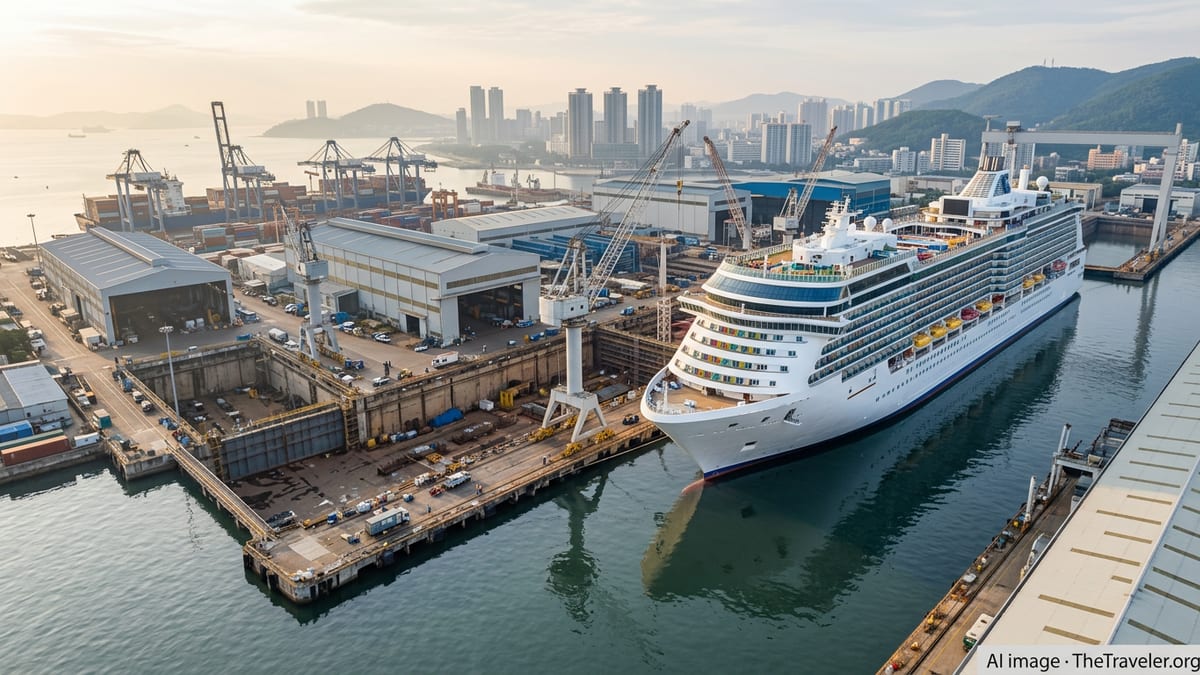
Asia’s shipyards are taking center stage in global cruise shipbuilding as operators look east for new vessels, cost efficiencies, and green technologies, and a new wave of specialist advisors such as Ocean Ventures Advisory moves in to help them navigate the changing landscape.
Get the latest news straight to your inbox!
Asia’s Shipbuilding Dominance Reaches the Cruise Sector
Publicly available industry data shows that Asian shipyards, led by China and South Korea, now control the majority of global newbuilding activity by tonnage, after years of growth driven by container ships, tankers, and gas carriers. Recent reports indicate that Chinese yards alone have accounted for well over half of worldwide ship deliveries, new orders, and orderbook volume, cementing a 16-year lead in core shipbuilding metrics.
Until recently, cruise ships were a notable exception, with most large oceangoing vessels built in European yards. That balance is starting to shift. Analysts point to a surge in complex, high-value projects in Asia, with cruise vessels and other passenger ships making up a growing share of the global orderbook. Maritime market reviews highlight an overall revival in cruise newbuilding since 2024, with Asian yards increasingly competing for contracts in this premium segment.
For cruise operators, the attraction is a combination of capacity, price, and schedule. After pandemic-era pauses, European yards face crowded slots, while Asian builders are offering earlier delivery windows and substantial experience gained in sophisticated vessel classes such as LNG carriers and large car carriers. This dynamic is prompting both established global brands and regional cruise lines to consider placing first-time orders in Asia.
At the same time, geopolitical and regulatory factors are reshaping where ships are ordered and built. Measures targeting vessels owned, operated, or constructed in specific countries have injected new risk into shipyard selection. Advisory firms now play a growing role in helping cruise lines weigh these considerations and diversify their construction footprints without compromising on technical or environmental standards.
China and Japan Emerge as Cruise Shipbuilding Testbeds
China’s ascent in shipbuilding has now reached the cruise segment. Government-linked industrial strategies have prioritized the development of large, domestically built cruise ships exceeding 100,000 gross tons, with the first such vessels recently entering commercial service. Policy papers tracking the country’s “high-end equipment” goals note that these projects are seen as proof points that Chinese yards can handle some of the most complex civilian vessels in the world.
In parallel, China’s broader orderbook for advanced, low-emission ships is expanding. Data published in 2024 and 2025 indicates that Chinese yards secured a dominant share of global “green ship” orders, including dual-fuel and alternative-fuel designs. This experience, industry analysts say, is directly transferable to next-generation cruise ships that must comply with tightening emissions rules and fit into operators’ net-zero road maps.
Japan, while smaller in overall market share than China, continues to carve out a niche in cruise and premium passenger ships. Cruise vessels such as AIDAprima and AIDAperla, built in Nagasaki, signaled the country’s capability to deliver large, European-operated ships with complex hotel and leisure features. More recently, Japanese yards have focused on sophisticated regional ships, including the forthcoming Asuka III, billed in corporate communications as one of the largest cruise ships ever built for the domestic market.
Industry observers note that the combination of China’s scale and Japan’s track record in high-spec passenger vessels gives Asia a balanced portfolio that appeals to different operator profiles. Mass-market global brands can look to large Chinese yards for series construction and cost efficiencies, while luxury and destination-focused operators may prefer Japanese or specialized Southeast Asian yards for smaller, boutique ships tailored to regional deployment.
Ocean Ventures Advisory’s Role in Guiding Cruise Operators East
As more cruise companies weigh Asian newbuilds, specialist consultancies have emerged to interpret market signals and de-risk decisions. Ocean Ventures Advisory has positioned itself in this space, presenting itself as a bridge between global cruise operators, Asian shipyards, and technical partners. Publicly available company information and trade coverage describe its focus on strategy, shipyard selection, and project oversight for complex passenger-ship investments.
Advisory mandates typically start with a comparative assessment of yards across China, Japan, South Korea, and other Asian countries. Factors include experience with passenger accommodation, class and safety records, labor stability, and the ability to integrate hotel, entertainment, and digital systems that define modern cruise brands. Ocean Ventures Advisory and similar firms analyze these variables alongside financing, export-credit options, and regulatory exposure tied to each jurisdiction.
Once a preferred yard is identified, advisors help structure technical specifications that balance ambition with buildability. This often means moderating highly customized designs to fit the yard’s strengths while preserving key brand elements such as signature atriums, specialty dining clusters, and open-deck layouts. In the current environment, decarbonization features are another priority, from shore-power connectivity and advanced waste-heat recovery to readiness for future alternative fuels.
Market reports suggest that advisory firms are also increasingly involved after delivery, monitoring performance of Asia-built cruise ships over their first seasons in service. Feedback on hotel operations, vibration and noise, and energy efficiency is looped back into subsequent newbuild projects. This iterative approach is intended to shorten the learning curve for yards that are relatively new to large-scale cruise work, while giving operators greater confidence that teething issues will be managed transparently.
Design, Sustainability and Technology Drive Newbuild Choices
While cost remains a major incentive to build in Asia, cruise operators are emphasizing design flexibility and environmental performance in new contracts. Global regulatory frameworks on carbon intensity and potential future fuel mandates are pushing lines toward dual-fuel engines, optimized hydrodynamics, and advanced energy-management systems. Asian shipyards, which have already delivered large numbers of LNG and alternative-fuel cargo vessels, are marketing this experience as a strategic advantage for cruise projects.
In practical terms, that translates into newbuild concepts that integrate waste-heat recovery, air lubrication for hulls, and extensive use of shore power while in port. Hotels and public spaces are being designed around lower energy consumption, including more efficient HVAC systems, LED lighting, and smart cabins that respond to occupancy. Advisors such as Ocean Ventures Advisory play a role in aligning these technical packages with each brand’s guest-experience standards and maintenance capabilities.
Digitalization is another area where Asian yards are investing heavily. Yard presentations and technical materials highlight integrated control systems, predictive maintenance platforms, and extensive sensor networks as standard features on new large vessels. For cruise operators, whose ships function as floating resorts with complex logistics, these systems promise tighter control over fuel usage, route optimization, and supply chains. Advisory firms work with operators to specify data interfaces, cybersecurity protocols, and long-term support arrangements from technology vendors.
Interior design is evolving alongside the technology. Many Asia-built ships are being conceived for deployment in the region’s own cruise markets, with features that appeal to Asian travelers, such as expanded family cabins, regional dining concepts, and wellness-focused public spaces. International brands commissioning ships in Asia increasingly request interiors that can resonate equally well in Asian homeports and on global itineraries, adding another layer of design coordination between operator, yard, and advisory teams.
What Cruise Operators Need to Watch Next
Looking ahead to late 2020s deliveries, industry forecasts point to continued growth of Asia’s role in cruise shipbuilding, but with notable uncertainties. Order data through 2025 shows overall newbuild volumes easing from recent peaks amid higher interest rates and macroeconomic headwinds, even as the share of complex, high-value vessels remains elevated. Cruise lines are expected to be selective, placing fewer but more advanced ships into their fleets.
Operators considering Asian newbuilds are monitoring several variables closely. These include evolving maritime regulations, potential trade measures affecting ships built in certain countries, and the capacity of yards to sustain quality as orderbooks stretch. Ocean Ventures Advisory and similar consultancies are likely to focus their guidance on scenario planning, allowing cruise companies to model how different regulatory or geopolitical paths could affect the lifetime economics and deployment flexibility of a new vessel.
Regional cruise demand in Asia is another key factor. Pre-pandemic projections for markets such as China, Japan, and Southeast Asia suggested strong long-term growth. Recovery has been uneven, but port development, infrastructure investment, and increasing interest from younger travelers continue to underpin optimism. Ships built in Asian yards and tailored to regional tastes may be well placed to capture that demand once travel patterns stabilize.
For now, the trend line is clear: Asia is no longer only the world’s workshop for cargo ships. It is rapidly becoming a central stage for the next generation of cruise vessels, offering operators new choices in where and how their fleets are built. With technical complexity and regulatory scrutiny rising, advisory specialists like Ocean Ventures Advisory are emerging as key navigators in this eastward shift.