

More news on this day
Flight operations at Hartsfield-Jackson Atlanta International Airport faced another difficult stretch today, with publicly available tracking data indicating 177 delays and 34 cancellations affecting some of the busiest routes in the United States.
Get the latest news straight to your inbox!
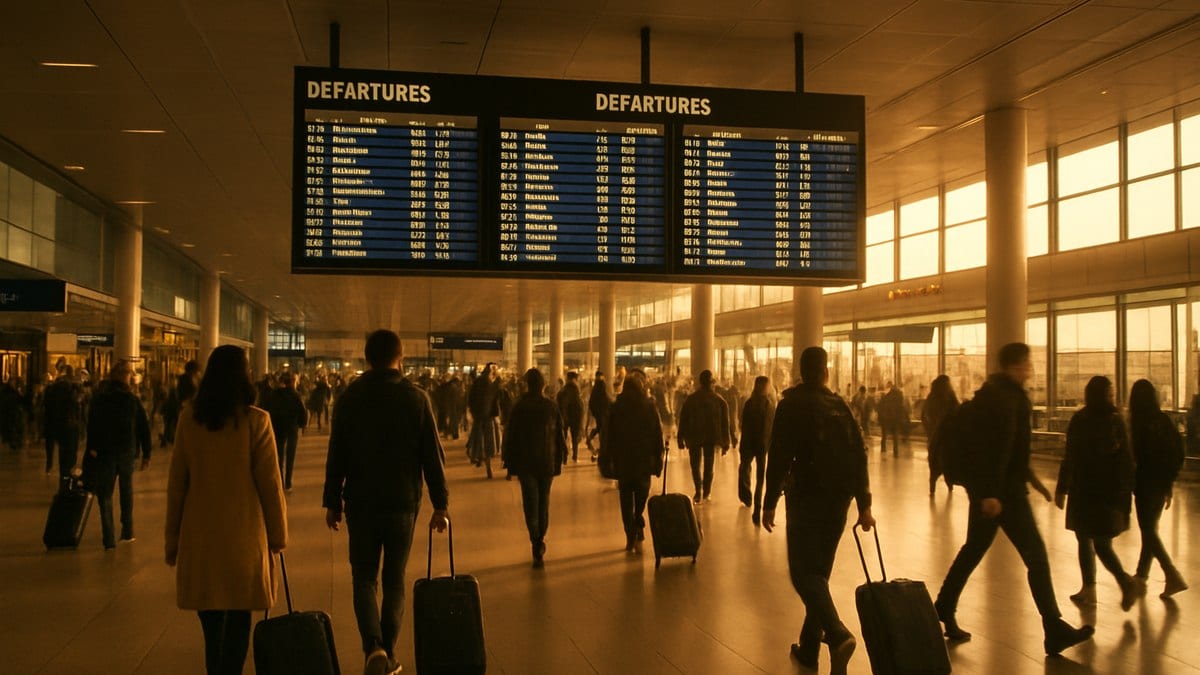
Heavy Disruptions at the World’s Busiest Hub
The latest operational snapshot shows Atlanta once again at the center of a nationwide disruption pattern, with scores of flights departing late or scrubbed entirely across the day. The 177 delays and 34 cancellations reported place additional pressure on what is already one of the world’s busiest passenger hubs, amplifying congestion at gates, security checkpoints and baggage areas.
Published aviation data and media coverage describe a familiar picture for travelers moving through Atlanta on peak days in early April 2026. Flights bound for major cities such as Chicago, New York, Orlando, Dallas and Washington have been among those most affected, with late inbound aircraft cascading into further schedule slippages on outbound legs. For many travelers, even relatively short initial delays have been enough to break onward connections and force same-day itinerary changes.
While today’s totals are lower than the most severe episodes seen over recent months, they still represent a substantial operational hit across a single hub. With Atlanta serving as a primary connecting point for the southeastern United States and beyond, disruptions there tend to ripple well outside the region, touching airports across the Midwest, Northeast, West Coast and smaller secondary markets.
Weather, Congestion and Network Knock-On Effects
Reports indicate that a blend of spring storm systems, airspace congestion and tight aircraft rotations has contributed to the spike in disruptions. Even when conditions immediately over Atlanta appear manageable, unsettled weather across other parts of the national network can prevent aircraft and crews from arriving on time, leading to late departures or cancellations from the hub.
Travel and aviation outlets have recently highlighted how storms tracking through the Midwest and Mid-Atlantic can strain operations at multiple hubs on the same day. When those systems intersect with already busy schedules and high passenger loads, the margin for recovery shrinks quickly. A delay affecting a single aircraft early in the day can multiply into missed slots, forced crew rest periods and aircraft out of position for subsequent departures.
Industry analysis has also pointed to continuing logistical challenges across the U.S. aviation system, including staffing limitations in some operational roles and infrastructure constraints at major hubs. These pressures mean that when irregular operations occur, recovery can take longer than before the pandemic, especially on complex connecting banks built around tight turnaround times.
Major Routes and Travelers Most Affected
Today’s disruptions in Atlanta appear to have hit a familiar set of high-demand domestic corridors. Flights linking Atlanta with Chicago, New York-area airports, Florida leisure gateways such as Orlando, and key business destinations including Dallas and Houston feature prominently among the delayed and canceled services. These routes are heavily relied upon by both connecting and origin-and-destination passengers, magnifying the impact when schedules slip.
Travel coverage over recent weeks has noted that even relatively modest disruption at Atlanta can significantly affect nearby regional airports. When a bank of Atlanta-bound departures from smaller cities is delayed or canceled, travelers may find that the next available option is not until late in the day or even the following morning, particularly on routes with only a few daily frequencies.
For those already in transit, missed connections have been a recurring theme. Passengers aiming to connect in Atlanta to long-haul flights or onward domestic services frequently face rebooking onto later departures, overnight stays or alternative routings through other hubs. In some cases, travelers re-routed away from Atlanta to avoid one bottleneck have encountered congestion at secondary hubs also dealing with the same nationwide weather patterns and operational strain.
What Today’s Numbers Reveal About a Wider Pattern
Although 177 delays and 34 cancellations represent a single day’s cross-section at Atlanta, they fit into a broader pattern of flight disruption seen across multiple regions in early April 2026. Recent travel-industry reporting has described comparable waves of delays and cancellations at major Canadian hubs, at Washington Dulles International Airport and at significant airports across Asia and the Middle East, underscoring that the strain is global rather than isolated.
Analysts observing these trends point to a convergence of factors: persistent weather volatility, higher operating costs, tight staffing, and growing passenger demand that has pushed many carriers to operate close to capacity. When something goes wrong, from a line of thunderstorms to an unexpected maintenance issue, there is less slack in the system to absorb the shock without visible disruption.
In Atlanta’s case, its role as a central connector means it often appears prominently in disruption statistics even on days when local skies are relatively clear. Carriers operating through the hub rely on intricate aircraft and crew rotations that span multiple cities and time zones. Any break in that chain upstream can materialize at the Atlanta end as a delayed or canceled departure, even when local operations teams are otherwise prepared to move flights on schedule.
Navigating Delays: Practical Steps for Passengers
For travelers passing through Atlanta during periods of disruption, preparation and flexibility remain the most effective tools. Travel outlets routinely recommend monitoring flight status frequently on the day of departure, using airline apps and airport information displays to track changing departure times, gate swaps and potential rebookings.
Passengers with tight connections at Atlanta may benefit from reviewing alternative routing options before they arrive at the airport, particularly on days when broader nationwide disruption is reported. Building in longer layovers, where possible, can help reduce the risk that a single late arrival disrupts an entire journey.
Consumer advocates also advise becoming familiar with the terms of airline contracts of carriage and any protection offered by credit card or standalone travel insurance policies. Depending on the cause of a delay or cancellation and the specific provider, travelers may be eligible for meal vouchers, hotel accommodation or reimbursement of certain incidental expenses when disruptions are within the carrier’s control.
With spring travel demand projected to remain strong, today’s figures in Atlanta suggest that further bouts of disruption are likely in the weeks ahead. For now, publicly available data and recent coverage portray an aviation system that continues to operate under heavy strain, where even a single day involving 177 delays and 34 cancellations at one key hub can send ripples across the wider network.