

More news on this day
Australia’s decision not to send a naval vessel to help secure the Strait of Hormuz, despite United States appeals for a broader maritime coalition, is sharpening debate over how middle powers should respond as Iranian threats escalate, commercial shipping comes under fire and global oil markets brace for further disruption.
Get the latest news straight to your inbox!
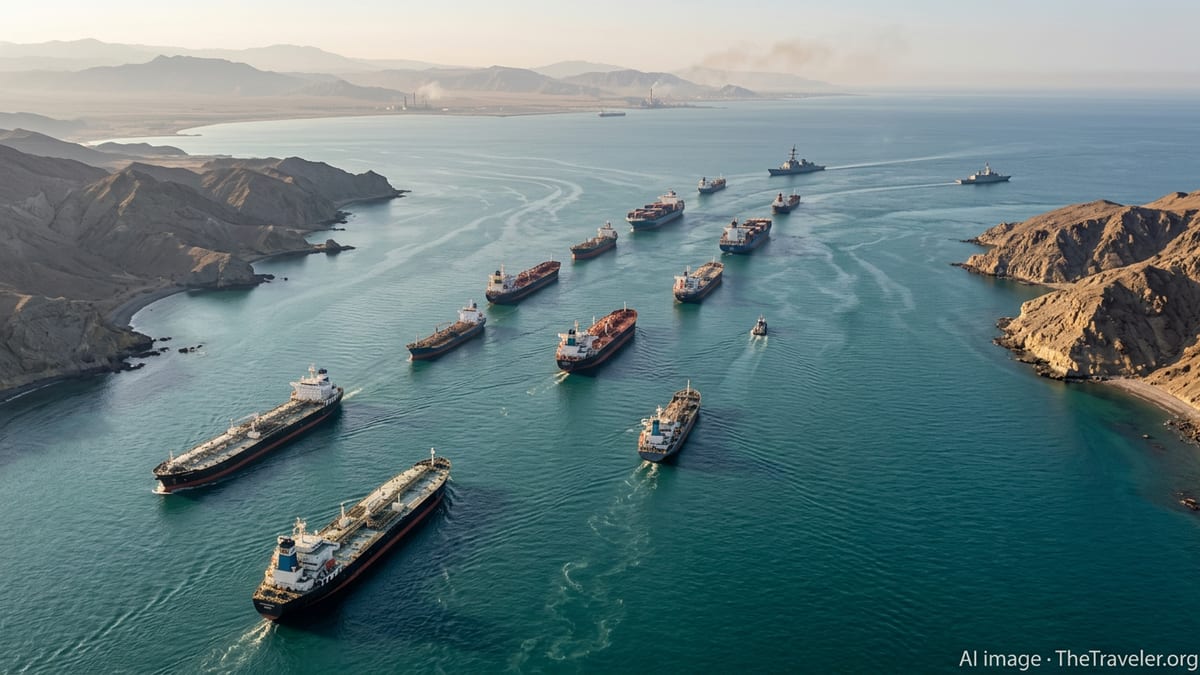
Canberra Draws a Line on Direct Naval Involvement
Recent Australian media and policy commentary indicate that the government has rejected a request from Washington to deploy a warship to the Strait of Hormuz, opting instead for limited support in the form of personnel and intelligence sharing. The stance marks a clear boundary between backing US objectives and assuming front-line roles in one of the world’s most volatile maritime flashpoints.
Publicly available information shows that Australia has already contributed staff officers to a separate US-led maritime security initiative in nearby waters, while stopping short of sending a major surface combatant into the narrow shipping lane off Iran’s coast. Analysts note that this calibrated posture allows Canberra to signal solidarity with partners without being drawn too deeply into the emerging war in the Middle East.
The decision contrasts with Australia’s involvement in earlier frameworks such as the International Maritime Security Construct, where it committed a frigate and aircraft to patrol Gulf sea lanes in 2019. Observers say today’s more cautious approach reflects both the scale of current hostilities and a sharper focus on Australia’s own regional obligations in the Indo-Pacific.
Domestic debate has also sharpened around the risks of placing an Australian vessel within range of Iranian drones, missiles and naval mines at a time when Tehran has warned that oil shipments linked to the United States and its allies are “legitimate targets” in the strait.
Iranian Threats Turn Hormuz Into a Global Chokepoint
The Strait of Hormuz has again become the center of global concern as Iranian forces and allied militias step up pressure on merchant shipping. Live coverage from outlets including ABC News Australia and the Guardian has detailed a spate of incidents in March in which bulk carriers and oil tankers were struck or forced to divert, while Iranian officials reiterated warnings that they would not allow oil to transit if conflict with the United States and Israel deepened.
Regional reporting indicates that Iranian Revolutionary Guard units have tested or deployed naval mines and fast-attack craft in the narrow waterway, amplifying the risk to commercial ships. US-focused defense analysis has described recent American strikes against Iranian mine-laying vessels, underscoring the heightened tempo of covert and overt military activity in and around the strait.
Policy briefings from international think tanks describe the current crisis as the most serious challenge to freedom of navigation in Hormuz in years, occurring alongside ongoing Houthi threats in the Red Sea and Gulf of Aden. The dual-front disruption has stretched naval resources and complicated route planning for shipping companies already facing higher insurance costs and security surcharges.
For countries heavily reliant on Middle Eastern energy, this evolving threat environment has revived long-standing fears that any sustained closure or partial blockage of Hormuz could trigger a rapid and destabilising spike in global energy prices and prompt emergency stockpile releases.
Oil Markets on Edge as Supply Routes Are Redrawn
Energy market specialists note that at least a fifth of the world’s traded oil normally flows through the Strait of Hormuz, making even short-lived disruptions highly consequential. Reports from trade and infrastructure analysts in recent days describe how tanker owners are reassessing transit decisions, with some vessels delaying departures, rerouting, or sailing with additional private security on board.
Analysis from industry-focused outlets indicates that war risk premiums in the region have surged, with insurers sharply increasing costs for voyages that pass close to Iranian-controlled waters. These cost pressures are already filtering through to refiners and, ultimately, consumers, feeding broader inflation concerns that extend far beyond the Middle East.
International bodies such as the International Energy Agency have moved to calm markets by coordinating releases from strategic petroleum reserves, according to recent news coverage. However, commentators warn that such measures can only partially offset sustained disruptions if mines, missile attacks or further tanker seizures significantly limit export volumes from Gulf producers.
For Asia-Pacific importers including Japan, South Korea and Australia, the turmoil has highlighted both progress and limits in diversifying supply. Some refiners have shifted toward alternative routes and suppliers, including cargoes routed around the Cape of Good Hope, but analysts point out that these alternatives are costlier and more time-consuming than the direct path through Hormuz.
Australia Weighs Alliance Expectations Against Regional Priorities
Australia’s refusal to dispatch a warship has reignited a familiar strategic dilemma in Canberra: how to balance alliance obligations with the United States against finite military resources and an increasingly contested Indo-Pacific. Commentaries from Australian security institutes argue that committing a high-value vessel to Hormuz would inevitably reduce available assets for deterrence and disaster response closer to home.
Travel and trade observers also note that Australia has temporarily scaled back its diplomatic footprint in parts of the Gulf, with embassy and consular operations reportedly reduced or suspended in some locations in recent days. This step reflects concern over potential retaliatory attacks as tensions between Iran and Western states intensify.
At the same time, Australian policymakers have been keen to stress the country’s continued support for freedom of navigation and international law. Public statements and expert analysis highlight alternative contributions such as intelligence cooperation, participation in sanctions enforcement, and backing for European-led defensive missions in adjacent waterways.
For travelers and businesses with links to the Middle East, Australia’s position means that consular assistance and contingency planning will be essential, but that the country is unlikely to feature prominently in front-line naval operations in Hormuz itself unless the conflict escalates dramatically.
Travel, Shipping and Insurance Face a New Risk Landscape
The evolving crisis is reshaping how airlines, shipping lines and travel companies assess routes through and around the Gulf. Aviation tracking shows that many carriers have already adjusted flight paths to avoid Iranian airspace and parts of the Gulf region, lengthening journey times between Europe, the Middle East and Asia.
Maritime data compiled by commercial tracking services reveal irregular patterns of tanker traffic near Hormuz, with some vessels anchoring in safer zones or hugging the coasts of Oman and the United Arab Emirates to reduce exposure. Cruise operators and specialist tour providers focused on Gulf ports are reassessing itineraries, with some departures postponed or quietly cancelled.
Insurance markets are responding in real time. Industry briefings describe steep increases in hull and cargo war risk premiums, tighter policy conditions, and more frequent demands for armed guards or naval convoy coordination before underwriters will sign off on voyages through the high-risk corridor. These developments add layers of complexity and cost for shipping firms that already operate on thin margins.
For travellers, the situation underscores the importance of flexible bookings, comprehensive travel insurance and close monitoring of government advisories. While passenger traffic through Hormuz itself is limited, the ripple effects across regional hubs such as Dubai, Doha and Muscat are likely to persist as long as Iranian threats, US-led military operations and Australia’s cautious stance keep the world’s most critical oil chokepoint in the headlines.