

More news on this day
Australia has newly raised its travel advice for Bahrain to “do not travel”, placing the Gulf state alongside Qatar, the United Arab Emirates, Iran, Yemen, Israel, Kuwait, Palestine, Syria and other destinations as escalating conflict in the Middle East threatens global flight routes and major airport transit hubs.
Get the latest news straight to your inbox!
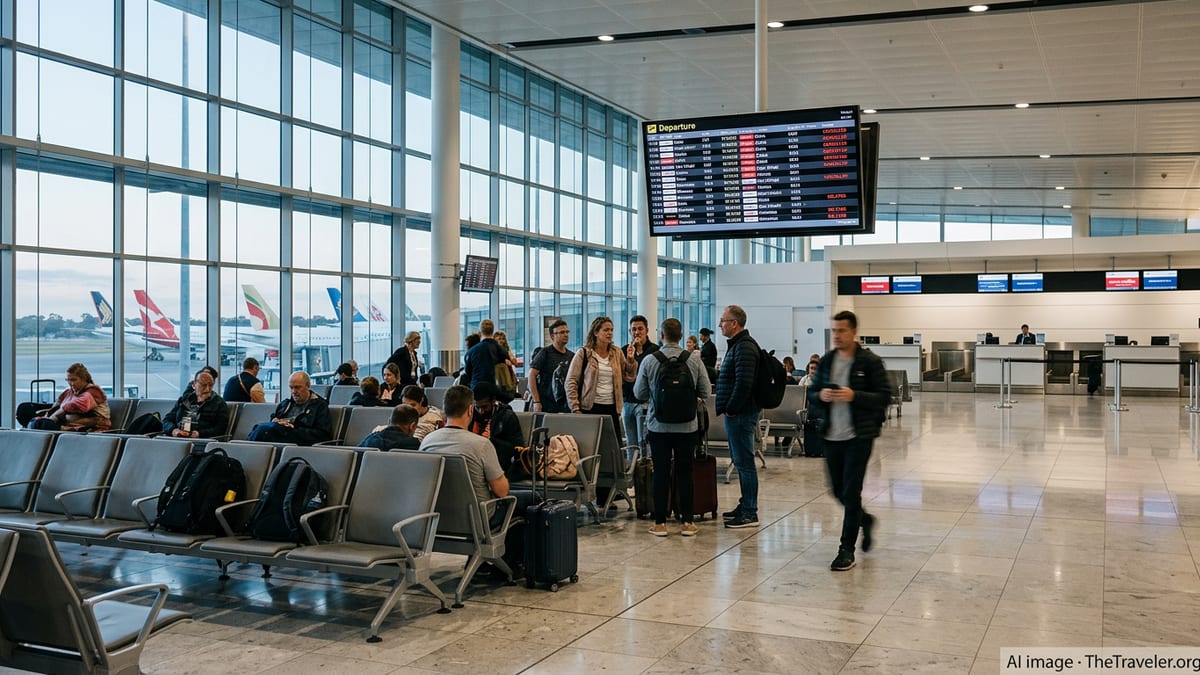
Australia’s Middle East Risk Map Turns Almost Completely Red
According to updated guidance on Australia’s Smartraveller platform, the level of advice for Bahrain was lifted to “do not travel” on 28 February 2026, citing a volatile regional security environment and the risk of further military action across the Gulf and Levant. This shift follows a rapid series of upgrades across the Middle East in late February and early March, as conflict involving Iran and Israel spilled over into airspace closures and missile activity near key corridors.
Publicly available travel risk summaries compiled from Smartraveller advisories and Australian travel industry bulletins now list a broad swathe of destinations under the highest warning, including Iran, Iraq, Syria, Yemen, Israel, Palestine, Lebanon, Qatar, the United Arab Emirates, Kuwait and Bahrain. Several of these destinations had previously been rated at lower levels, such as “reconsider your need to travel,” but have been pushed into the top risk category in response to the deteriorating situation.
A media release from Australia’s Foreign Minister on 11 March noted that the government continues to advise “do not travel” to most destinations in the Middle East and confirmed that a crisis registration portal remains open for Australians in Bahrain, Iran, Israel, Kuwait, Qatar, Lebanon and the UAE. The statement highlighted that outbound commercial flight options are extremely limited in parts of the region and may change with little notice.
Travel insurers and university travel offices in Australia have echoed the official stance, with several institutional advisories making clear that staff and students are not permitted to travel to or even transit through locations under a national “do not travel” warning. For many Australian travellers, that effectively closes off some of the world’s busiest connecting hubs.
Airspace Closures Ripple Across Global Flight Networks
The change in Bahrain’s status comes amid an ongoing wave of airspace shutdowns and route suspensions after United States and Israeli strikes on Iran in late February. Flight tracking data and Australian aviation industry coverage indicate that Iran, Iraq, Israel, Syria, Kuwait and the United Arab Emirates were among countries that temporarily closed their skies in the immediate aftermath, triggering thousands of cancellations and major knock-on delays across Europe–Asia and Australia–Europe routes.
Rolling updates compiled by Australian travel trade outlets in early March show that the UAE, Qatar, Bahrain, Lebanon, Kuwait, Israel, Palestine, Yemen, Iran, Iraq and Syria are now treated as “do not travel” destinations by the Australian government. At the same time, carriers based in the Gulf, including Emirates, Etihad, Qatar Airways and Gulf Air, have been operating with heavily reduced or altered schedules, often rerouting long-haul services around restricted zones or suspending flights entirely for periods.
Reports from travellers and airlines suggest that European and Asian carriers are also avoiding large stretches of Middle Eastern airspace, instead diverting via Central Asia, North Africa or the Indian Ocean. These diversions add hours to some journeys and can force last‑minute re-routing or unplanned overnight stops as crews reach duty time limits. In one recent estimate circulating in specialist travel media, tens of thousands of flights worldwide were either cancelled, delayed or rerouted in the first week of March alone because of the conflict.
Australian leisure and business travellers are among those most affected, given that many itineraries between Australia and Europe or parts of Africa have traditionally relied on one-stop connections through Doha, Dubai, Abu Dhabi or other Gulf hubs. With multiple hubs now operating on a restricted basis and rated “do not travel” by Canberra, alternative routings via Singapore, Bangkok, Hong Kong and other Asian gateways are being promoted as safer, if sometimes more expensive, options.
Transit Hubs Under Strain as Gulf Gateways Face Turbulence
Major Gulf airports that once marketed themselves as seamless global super‑connectors have become focal points of disruption. Australian and international media coverage in recent weeks has described scenes of stranded passengers sleeping on terminal floors after sudden cancellations at airports in the UAE and Qatar, with some travellers reporting that they could hear or see evidence of military activity not far from civilian facilities.
University travel safety briefings and corporate travel advisories in Australia now warn that transit through any airport in a “do not travel” country is generally prohibited for official trips, regardless of whether the passenger intends to clear immigration. In practical terms, that means that a simple through‑ticket flying via Doha, Dubai, Abu Dhabi, Manama or Kuwait City can render a journey non‑compliant with institutional policies and potentially void travel insurance coverage.
Risk specialists note that even airports that remain open in parts of the region are exposed to the broader threat environment, including the possibility of further missile launches, cyberattacks on aviation infrastructure, or sudden changes in airspace access. Several academic institutions in Australia describe transiting the wider eastern Mediterranean and Gulf region as a high‑risk activity, advising staff and students to seek routings that remain entirely outside the Middle East where possible.
As airlines attempt to maintain limited services, passengers on essential travel are being urged through public advisories to monitor flight status closely, register their presence with consular services, and allow for unplanned disruptions, including the possibility of extended layovers in neutral hubs if conflict flares again.
Insurance, Bookings and the Fine Print for Australian Travellers
The expansion of “do not travel” warnings has profound implications for travel insurance and existing bookings. Australian insurance guidance reviewed by TheTraveler.org notes that once the Department of Foreign Affairs and Trade designates a destination as “do not travel”, most standard policies exclude cover for new trips to that location. Some insurers also make clear that claims linked to war, invasion or hostile acts are excluded altogether, even if a policy was purchased before the latest escalation.
Several Australian insurance and travel risk advisories published in early March specifically point to Bahrain, Israel, Kuwait, Lebanon, Qatar and the United Arab Emirates as destinations where government warnings and conflict‑related disruptions are likely to fall outside normal cover. Travellers who bought insurance after about 1 March are being told to expect very limited protection for problems directly tied to the Middle East crisis, from cancelled flights to extended accommodation costs caused by airspace shutdowns.
For those already holding tickets that include transit through affected hubs, the focus has shifted to airline‑initiated solutions. Publicly available airline notices show that some Gulf carriers have offered fee‑free rebooking, refunds or travel credits for passengers booked to travel during the peak period of airspace closures. However, the range of options and eligibility windows differ between airlines, and consumer forums are filled with reports of confusion over rerouted itineraries and partial refunds.
Australian consumer advocates and university travel teams advise travellers to document all communications with airlines, check the precise wording of their insurance policies and keep receipts for any out‑of‑pocket expenses incurred as a result of the disruptions. Given the fluid situation, published advice consistently recommends treating any non‑essential travel involving Middle Eastern transit as highly speculative for the coming weeks.
Planning Routes Without the Gulf: What Travellers Can Do Now
With Bahrain and many of its neighbours now effectively off‑limits, Australian travellers are looking to reshape long‑haul plans without relying on the Gulf. Corporate travel providers note that a majority of Europe‑bound itineraries from Australia are currently being re‑routed via East and Southeast Asian hubs such as Singapore, Kuala Lumpur, Bangkok and Hong Kong, where operations remain largely normal and advisories are at significantly lower risk levels.
Travel management updates from Australian universities and large companies stress that itineraries should avoid not only destinations with “do not travel” warnings but also transit stops in those countries. In practice, that may mean opting for two‑stop journeys through Asia and, in some cases, adding overland segments within Europe or Africa to bypass constrained airspace. While such routings are longer and sometimes more costly, they reduce exposure to sudden Gulf closures and the possibility of being stranded.
Publicly available guidance from institutions and industry bodies also highlights the importance of flexibility. Travellers are encouraged to book changeable fares where budgets allow, keep itineraries as simple as possible, and maintain close contact with airlines or travel agents in the days before departure. Given the pace at which Bahrain’s status shifted into alignment with other Middle Eastern hotspots, analysts caution that further rapid changes to airspace access and risk ratings across the wider region cannot be ruled out.
For now, Australia’s hardening posture on Middle East travel, capped by the addition of Bahrain to its highest warning tier, signals a prolonged period of uncertainty for global aviation and for the many Australians used to treating Gulf hubs as routine stepping‑stones between hemispheres.