

More news on this day
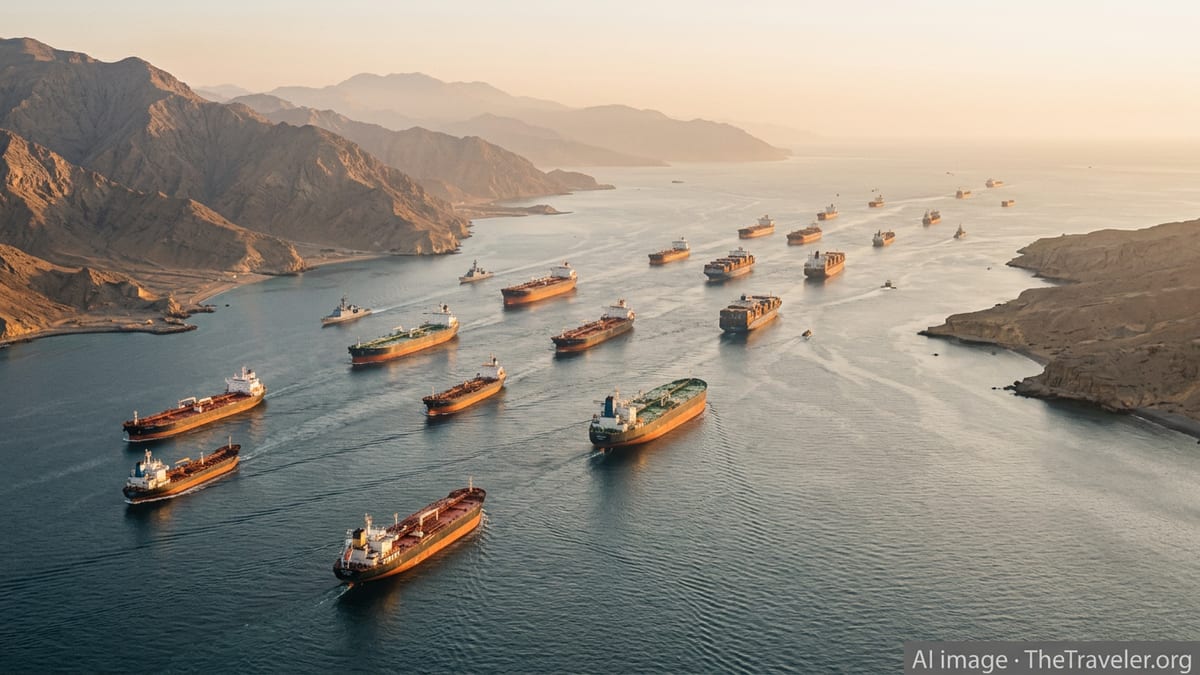
Australia has declined a United States request to commit naval assets to a new security effort in the Strait of Hormuz, reinforcing its preference to prioritise the Indo-Pacific even as Iranian threats, contested shipping lanes and a jittery oil market draw renewed global attention to the narrow waterway.
Get the latest news straight to your inbox!
Canberra’s calculus: alliance loyalty versus regional focus
Recent coverage of Australian deliberations indicates that Washington sought additional allied warships and aviation assets to help restore confidence for commercial tankers transiting the Strait of Hormuz, where more than one fifth of globally traded crude oil moves between the Persian Gulf and the Arabian Sea. Instead of dispatching a surface combatant, Australia has opted to limit its involvement to intelligence, liaison and niche support roles, echoing earlier choices to send personnel rather than a frigate to US-led maritime missions in the Red Sea.
Publicly available information on Australian defence planning shows a consistent message over recent years: finite naval capacity is being directed toward the north-eastern Indian Ocean, Southeast Asia and the Pacific, with the Middle East framed as a secondary theatre. Analysts in Australian universities and think tanks have argued that high-intensity operations in confined Middle Eastern waterways expose relatively small fleets to disproportionate risk while yielding limited direct strategic benefit compared with commitments closer to home.
At the same time, Australia remains formally aligned with earlier multilateral frameworks that grew out of the 2019 tanker crisis, including the International Maritime Security Construct and related combined task forces. Government documents and defence commentary describe these arrangements as a way to “share the burden” of surveillance and coordination without requiring every partner to place high-value warships into the narrowest parts of the Gulf.
The latest decision not to send a Royal Australian Navy ship to Hormuz reflects this calibrated approach: Canberra maintains political support for freedom of navigation and information-sharing with the United States, while drawing a line at deployments that could place Australian crews on the front line of a rapidly escalating confrontation with Iran.
Rising Iranian threats in a critical chokepoint
The Strait of Hormuz has long been one of the world’s most sensitive maritime flashpoints, and recent months have underscored that vulnerability. Maritime incident reports and regional monitoring organisations have documented a pattern of Iranian forces challenging tankers, boarding commercial vessels and issuing threats to ships flagged to states perceived as hostile in the broader confrontation between Tehran, Washington and Gulf capitals.
Published analyses of the current crisis note that Iran has repeatedly warned it could close the strait or severely disrupt traffic if attacked, and has demonstrated an expanding arsenal of drones, cruise missiles and fast-attack craft able to target tankers and naval escorts alike. These capabilities complicate traditional convoy models that rely on a small number of large surface combatants, and they increase the exposure of allied ships operating within range of Iranian coastal batteries.
Energy and shipping specialists stress that even limited harassment can have outsized economic effects. Insurance premiums for tankers transiting Hormuz have already climbed during previous flare-ups, and refiners from Asia to Europe watch each new incident for signs of sustained disruption. With global spare production capacity concentrated in a handful of producers, any credible threat to this chokepoint immediately feeds into price volatility in crude and refined products.
For Australia, which still relies on seaborne fuel imports that trace back in part to Gulf crude, the prospect of a protracted Hormuz crisis is deeply concerning. Yet the government’s current posture suggests a belief that adding an Australian frigate to the mix would do little to deter Iranian brinkmanship while potentially making the ship, its crew and Australia’s broader regional interests more vulnerable.
Oil markets on edge as allies debate burden sharing
Financial press coverage of the Hormuz tensions highlights nervous trading floors tracking both rhetoric and rocket launches. When Iranian units challenge tankers or state media hints at retaliatory closures of the strait, benchmark oil prices tend to spike, only to ease if shipments continue largely unhindered. The latest cycle of threats has coincided with renewed questions among import-dependent states about how to diversify routes and build strategic reserves.
Energy economists point out that while only a portion of Australia’s refined fuel imports are directly loaded inside the Gulf, globalised pricing means any sustained risk premium on Hormuz shipments lifts costs at Australian petrol stations and airports. The decision not to send warships could therefore be seen as accepting a level of economic exposure in order to avoid a deeper military entanglement.
Other allies have responded differently. European states with long-standing naval footprints in the region, along with Gulf navies themselves, have increased patrols or announced new convoy schemes. Reports from regional defence ministries describe efforts to knit together national patrols, aerial surveillance and commercial routing advice into a patchwork of protection for tankers and liquefied natural gas carriers.
This divergence in contributions has renewed debate about “burden sharing” inside Western alliances. Commentators in Australia note that the country has taken on leadership roles in other maritime missions, including in the Red Sea and Indo-Pacific, and argue that burden sharing should be viewed across theatres rather than within a single crisis zone. Critics counter that sitting out a high-profile Hormuz mission risks diminishing Canberra’s influence in Washington at a delicate strategic moment.
Domestic debate in Australia over risk, sovereignty and priorities
Within Australia, the choice not to dispatch a warship to Hormuz has sparked a familiar domestic argument over how far alliance obligations should extend. Opinion pieces in national media describe a spectrum of views, from those who see robust support for US-led operations as essential to deterrence and access to advanced military technology, to others who warn that automatic alignment drags Australia into conflicts far from its core interests.
Veterans of earlier Middle East deployments and defence scholars have drawn attention to the vulnerability of surface ships in confined waters, citing the proliferation of precision-guided weapons and the experience of recent drone and missile attacks on vessels in adjacent seas. They suggest that if Australia wishes to contribute, it may be better placed to offer specialised capabilities such as airborne early warning, cyber support or staff officers embedded in multinational headquarters, rather than high-profile hulls operating under direct threat.
There is also a sovereignty dimension. Some commentators argue that carefully limiting military commitments preserves Australia’s freedom of action in future crises closer to home, particularly in the South Pacific and Southeast Asia. They point to the finite number of combat-ready ships and crews, and the growing list of tasks expected of the Royal Australian Navy, from deterrence patrols to humanitarian assistance and undersea surveillance.
At the same time, business groups and energy users warn that a serious disruption in the Strait of Hormuz would reverberate quickly through Australia’s economy. They advocate for parallel investments in domestic fuel resilience, diversified supply chains and strategic stockpiles to reduce the pressure on defence planners to choose between risky far-flung deployments and exposure to overseas shocks.
Travel and shipping advisories reshape regional routes
For travellers and the broader aviation and maritime sectors, the heightened tension around Hormuz is already reshaping routes. Airline notices and flight-tracking data show carriers adjusting paths to avoid the most sensitive airspace near the strait, adding modest time and fuel costs but reducing exposure to potential miscalculation between regional militaries. Cruise lines, which once marketed Gulf itineraries featuring views of busy shipping lanes, have largely steered clear of the immediate area during past flare-ups and are reassessing future seasons.
Commercial shipping companies are likewise weighing risk against cost. Industry bulletins describe some operators slowing transits at night, hiring additional security advisors or exploring alternative routing where commercially viable, though truly bypassing Hormuz is impossible for exports from many Gulf producers. Port authorities in Oman and the United Arab Emirates are working to reassure clients that they remain open and secure, even as maps of recent incidents cluster at the approaches to the narrow channel.
Travel commentators note that the situation has limited direct effect on most leisure visitors to Australia or the wider Indo-Pacific, but it does influence global sentiment about long-haul travel and energy prices. Rising jet fuel costs can filter into airfares, and any perception of instability in key transit hubs may encourage some travellers to choose different connection points.
Australia’s refusal to send warships to Hormuz therefore sits at the intersection of defence policy, trade resilience and the evolving geography of global travel. As Iranian threats continue and allied navies reposition, Canberra’s bet is that a measured, regionally focused posture can support maritime stability without drawing the country too deeply into a volatile Gulf confrontation whose full implications for oil supply and global mobility are still unfolding.