

More news on this day
Travellers across Australia are facing a fresh wave of disruption as major carriers including Qantas, Virgin Australia and Jetstar suspend 23 flights and log more than 100 delays, with Sydney and Melbourne bearing the brunt of the latest operational turmoil.
Get the latest news straight to your inbox!
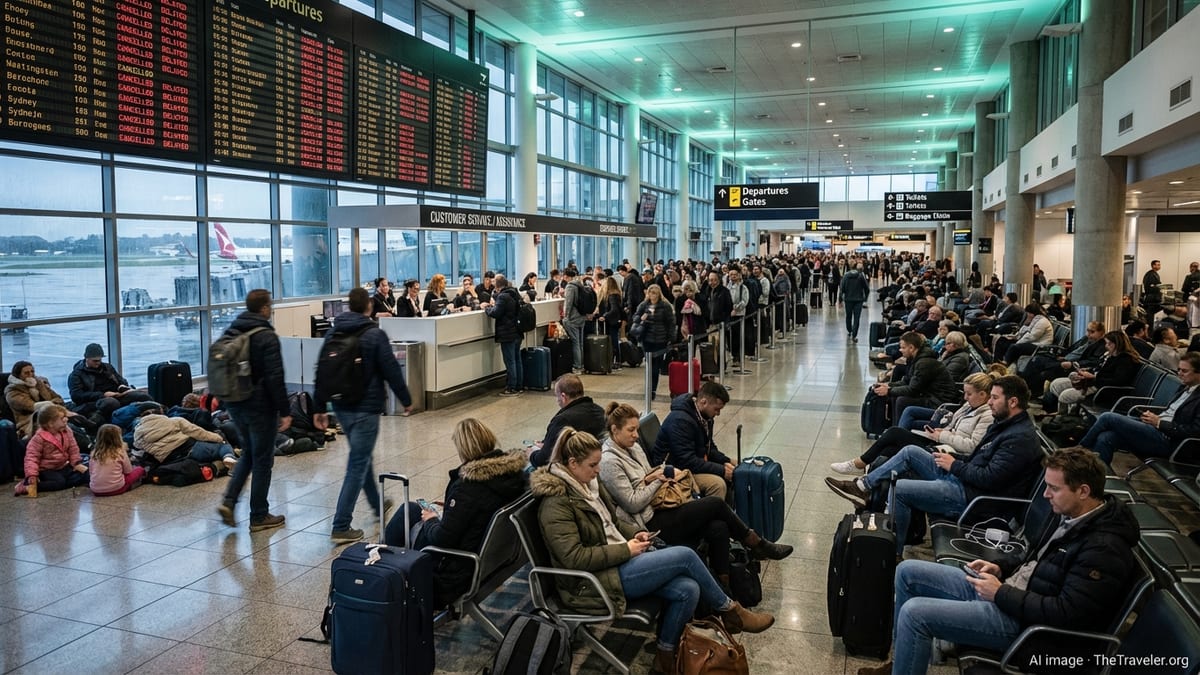
Major Domestic Routes Hit as Disruptions Mount
Published coverage indicates that the latest round of cancellations is heavily concentrated on core domestic corridors linking Sydney and Melbourne, Australia’s two busiest aviation markets. Services on the high-frequency shuttle between the cities, as well as flights to Brisbane and other east coast destinations, are among those most affected.
Travel industry reports describe a patchwork of suspended services spread across the day’s schedule, rather than a single, isolated window of disruption. This pattern has contributed to rolling delays, as aircraft and crews fall out of position and knock-on effects cascade through airline timetables.
Publicly available flight-tracking data suggests that Qantas, Virgin Australia and Jetstar are all contending with a mix of cancellations and late departures, with more than 100 flights reported as delayed nationwide. The concentration of disruption at Sydney and Melbourne means that even passengers transiting through those hubs on longer itineraries are experiencing missed connections and rebookings.
Although the total number of cancelled services is relatively modest compared with peak holiday meltdowns, the timing on busy trunk routes amplifies the impact. Many of the affected flights are commuter or business-focused services, heightening frustration among frequent travellers who rely on the corridor for same-day returns.
Operational Strains Highlight Fragile Airline Recovery
The latest disruption comes at a moment when Australian airlines are still rebuilding networks and capacity, and it highlights the fragility of the domestic system. Monitoring reports from government and competition agencies have previously noted persistent punctuality and reliability challenges on core routes, particularly between Sydney, Melbourne and Brisbane, even as overall traffic has recovered.
Industry analyses have also pointed to structural strains, including tight staffing levels in both airlines and critical aviation services, as well as aircraft availability constraints following pandemic-era fleet reductions. These underlying pressures make the system more vulnerable to sudden spikes in absenteeism, technology failures or adverse weather, any of which can rapidly translate into widespread delays.
Recent data on on-time performance has shown that Qantas, Virgin Australia and Jetstar each face distinct challenges with reliability. While cancellation rates fluctuate by month and route, observers note that delays have often been used as a tool to preserve completion rates, leaving passengers on board or in terminals for extended periods rather than cancelling services outright.
Travel advocacy groups and passenger forums have repeatedly highlighted these patterns, describing a sense that domestic schedules are running closer to the edge, with fewer spare aircraft and crew to absorb unexpected issues. The current wave of delays across Sydney and Melbourne appears to follow that broader trend.
What Today’s Disruptions Mean for Passengers
For travellers caught in the middle of the cancellations and delays, immediate concerns focus on rebooking options, missed connections and accommodation. Airlines typically offer same-day rebooking on the next available service in the same cabin, but during busy periods this may mean several hours’ wait, overnight stays or rerouting via secondary airports.
According to publicly available customer information from the major carriers, affected passengers may be entitled to a combination of alternatives, including fee-free changes, travel credits or refunds when services are cancelled or significantly delayed. Entitlements vary depending on the cause of disruption, the length of delay and fare type, and travellers are being encouraged by consumer advocates to review the specific conditions attached to their tickets.
Reports from airport terminals in Sydney and Melbourne describe long queues at service desks and self-service kiosks, with many passengers attempting to secure earlier options or clarify their rights. Social media and travel forums indicate that some travellers are opting to abandon trips altogether in favor of refunds or credits, especially on discretionary or leisure journeys.
Experts in passenger rights note that Australia’s compensation framework is more limited than in some overseas markets and relies heavily on airline policies rather than statutory compensation for delays. As a result, outcomes can vary significantly between carriers and even between passengers on the same flight, depending on how proactively individuals pursue available remedies.
Ripple Effects Across Australia’s Domestic Network
Although Sydney and Melbourne are the focal points, the suspended flights and delays are sending ripples across the broader domestic network. With aircraft and crews running behind schedule, secondary cities are seeing late arrivals and departures, even when local conditions are stable.
Flight statistics for Australian airports frequently show that disruptions at Sydney, in particular, can reverberate through Canberra, Adelaide, Hobart and regional centers, as delayed aircraft rotate onto subsequent sectors. The current situation appears consistent with that pattern, with a confined set of cancellations creating broader timetable instability.
These cascading effects underscore how dependent the country’s aviation system is on smooth operations at its two primary hubs. Even modest timetable shocks in Sydney and Melbourne can quickly limit flexibility elsewhere, reducing options for travellers seeking alternative routings or same-day recovery.
Industry commentators argue that as airlines rebuild capacity and open new routes, more resilient scheduling and greater operational slack will be essential to reduce the scale of such ripple effects. However, they also acknowledge that higher resilience comes with cost pressures at a time when carriers are under scrutiny for airfares and profitability.
Growing Scrutiny on Reliability and Communication
The latest wave of cancellations and delays is likely to intensify public scrutiny of how Australian airlines manage reliability and communicate with passengers. Surveys and monitoring reports have already documented dissatisfaction with short-notice schedule changes, limited transparency about causes, and inconsistent handling of accommodation and meal support.
Published analyses by consumer organizations have called for clearer baseline standards for handling disrupted passengers, including minimum expectations for timely updates, realistic departure estimates and automatic notification of rebooking options. Such measures, advocates argue, can significantly reduce stress even when delays are unavoidable.
Travel commentators suggest that days like this one, when dozens of flights are disrupted simultaneously across multiple carriers, provide a real-time test of how far the industry has progressed since the acute chaos of the early post-pandemic period. Early indications from passenger reports suggest that communication practices remain uneven, with some travellers praising proactive messaging and others citing confusion and conflicting information.
As the immediate backlog clears, data from regulators and aviation analytics firms will provide a clearer picture of how severe the disruption was relative to historical norms, and whether operational improvements introduced in recent years are translating into more resilient performance on Australia’s busiest routes.