

More news on this day
Australian families planning Easter getaways in early April 2026 are facing a sharply more expensive trip, as surging petrol prices and higher jet fuel costs start to bite into household travel budgets and push airlines to reassess fares and capacity.
Get the latest news straight to your inbox!
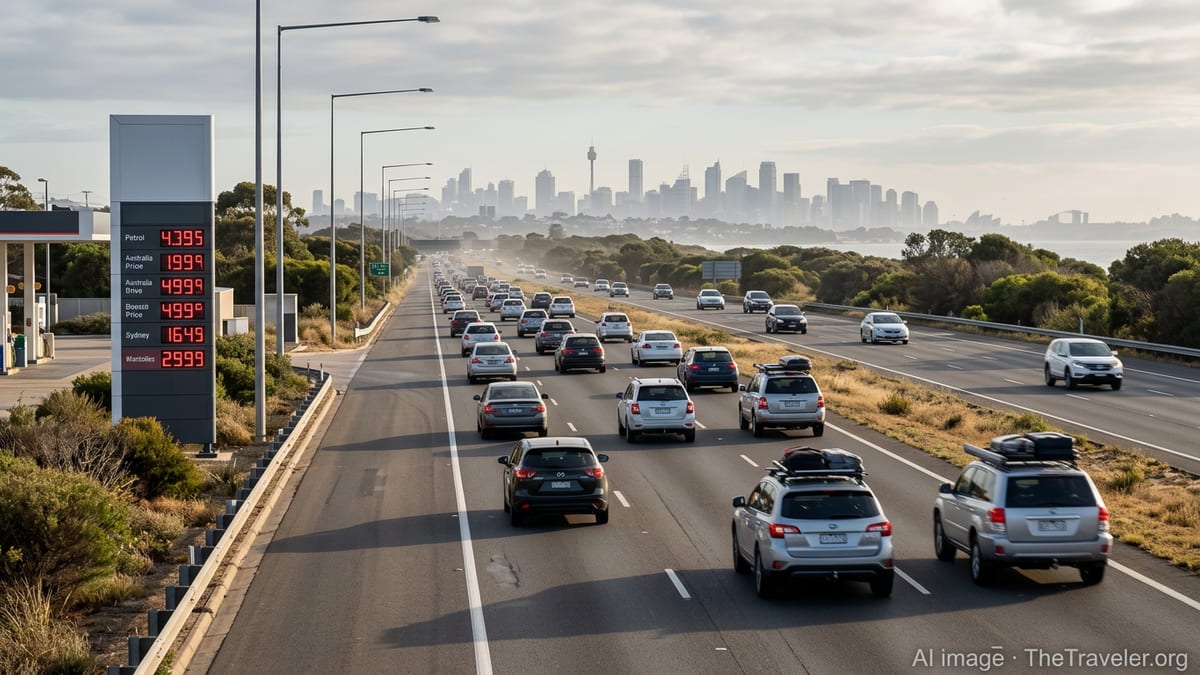
Holiday Timing Collides With Fuel Price Shock
Easter in Australia falls in early April this year, with Good Friday on 3 April and Easter Monday on 6 April, traditionally one of the busiest long-weekend travel periods on the calendar. The break typically triggers a wave of domestic tourism as households pack cars for coastal drives, regional road trips and visits to major events such as the Sydney Royal Easter Show, which opens on 2 April.
This year, the timing coincides with a rapid escalation in global energy costs following renewed conflict in the Middle East and broader disruption to oil markets. Publicly available market analysis shows Brent crude has leapt higher in recent weeks, with analysts warning that the spike is feeding directly into both retail petrol prices and jet fuel costs.
Australian pump prices were already climbing through February, and recent monitoring by local media and financial institutions indicates that national average petrol has moved sharply higher again in March. Some commentators are now warning that unleaded prices in parts of the country could challenge or exceed previous records if wholesale costs remain elevated into the Easter period.
For households that traditionally rely on the Easter break for one substantial family trip, the convergence of school holidays, peak demand and an external fuel shock is raising difficult decisions about where to go, how far to drive and whether to fly at all.
Motorists Brace for Costly Easter Road Trips
Retail fuel data and recent coverage by Australian outlets indicate that average petrol prices have jumped by more than 15 cents per litre nationally over the past week, with some urban centres reporting standard unleaded selling well above 210 cents per litre. In certain locations, motorists have posted prices closer to 250 cents per litre or higher on social media and community forums.
With the Australian Automobile Association and consumer groups regularly estimating that fuel can represent one of the largest running costs for car-dependent households, this latest spike is landing at a sensitive moment. A family driving a medium SUV on a return trip of 1,000 kilometres over Easter could now be paying dozens of dollars more for fuel compared with the same journey a year earlier.
Economic commentary from major banks suggests the petrol surge is likely to show up in inflation readings for March and April, adding to broader cost-of-living pressures. Analysts note that higher fuel prices tend to have a quick and visible impact on consumer sentiment, particularly when price boards at service stations move suddenly higher across multiple regions.
Motoring advocates are advising drivers to shop around using official fuel price apps where available, fill up ahead of traditional price-cycle peaks and consider shortening itineraries. However, many regional communities that rely on holiday traffic are concerned that sustained high prices could deter last-minute road trippers who might otherwise book accommodation or attractions closer to departure.
Jet Fuel Spike Puts Airfares and Capacity Under Pressure
Alongside the hit at the bowser, jet fuel prices have also surged as global oil benchmarks respond to instability in key producing and shipping regions. International aviation reports indicate that jet fuel has risen far faster than many carriers had previously budgeted for, reversing some of the fuel-cost relief that airlines enjoyed in late 2025.
Recent industry coverage from global and regional outlets shows airlines in the Asia-Pacific already announcing fuel surcharges or targeted fare increases on long-haul routes. Reports focused on the Australian market note that Qantas has moved to lift international fares on select routes, citing the volatility of oil prices linked to the conflict, while continuing to monitor domestic pricing. Other carriers serving Australia and New Zealand have adjusted surcharges for flights across the region, including services to and from Australian gateways.
According to aviation analysts quoted in financial and travel industry publications, the full impact of the jet fuel surge typically flows through to ticket prices with a lag of several months. However, for travel periods with strong existing demand such as Easter and the subsequent mid-year school holidays, airlines have less scope to absorb higher costs without passing some portion on to passengers.
Observers suggest that, in addition to higher base fares or surcharges, carriers may respond by fine-tuning schedules, trimming marginal services or adjusting aircraft types on certain domestic and short-haul international routes. Such moves could reduce flexibility for travellers hoping to book late Easter flights at discounted prices.
Households Reconsider Easter Travel Choices
Travel agents and booking platforms tracking Australian demand patterns report that interest in the Easter period remains solid, but inquiries are becoming more price sensitive. Publicly available booking data points to travellers comparing shorter itineraries, closer destinations and alternative modes of transport as they attempt to balance holiday plans with tight budgets.
For some families, higher motoring costs are tilting the decision toward flying rather than driving very long distances, particularly when sale fares are still available or frequent flyer points can be redeemed. For others, steep airfares on popular leisure routes are encouraging a pivot to regional stays within a few hours’ drive, or even a decision to holiday at home and postpone major trips until later in the year.
Accommodation providers in traditional Easter hotspots are reporting mixed signals. Well-known coastal and hinterland regions continue to attract bookings, but some operators note that guests are shortening stays by a night or choosing lower-cost room categories. In metropolitan areas, hotel managers are watching closely to see whether elevated transport costs lead to a late slowdown in city-break demand.
Consumer advocates caution that tight household budgets may limit discretionary spending once travellers arrive, with families cutting back on restaurant meals, paid attractions and shopping to offset the higher cost of getting there. That dynamic could weigh on small tourism operators that depend heavily on the Easter surge to bridge quieter months.
Travel Tips as Australians Navigate an Uncertain Easter
With little clarity on how long oil and jet fuel prices will remain elevated, travel analysts are emphasising planning and flexibility for those still hoping to make the most of the Easter long weekend. Publicly available advice from industry experts highlights the benefits of locking in essential bookings early, particularly for flights and car hire, as well as monitoring price movements in case of limited, short-lived discounts.
For motorists, using real-time fuel comparison tools, refuelling in lower-cost suburbs before leaving major cities and adjusting driving styles to improve efficiency can provide modest savings that add up over a multi-day trip. Some households are also reconsidering vehicle choice for Easter, opting to take the most fuel-efficient car available or share rides with extended family where practical.
Air travellers are being encouraged by consumer groups and travel commentators to check whether existing bookings allow free date changes or credits, and to factor potential schedule changes into plans for connections, airport transfers and accommodation check-ins. Selecting flights earlier in the day and allowing longer connection times may help to reduce the stress of any last-minute disruptions.
For regional communities and tourism businesses, the immediate focus is on communicating value to visitors despite higher travel costs, through bundled offers, flexible cancellation policies and local transport options that reduce the need for long drives. As Australia heads into one of its most important leisure travel weekends of the year, both travellers and operators are preparing for an Easter shaped as much by fuel markets as by tradition.