

Austria’s airports are compact, efficient and increasingly well integrated with the country’s excellent rail network. From the busy global hub at Vienna to the alpine gateways of Salzburg and Innsbruck, understanding how these airports work will help you arrive relaxed and ready to explore. This guide walks through the major Austrian airports, how to get to and from them, and what to expect once you land.
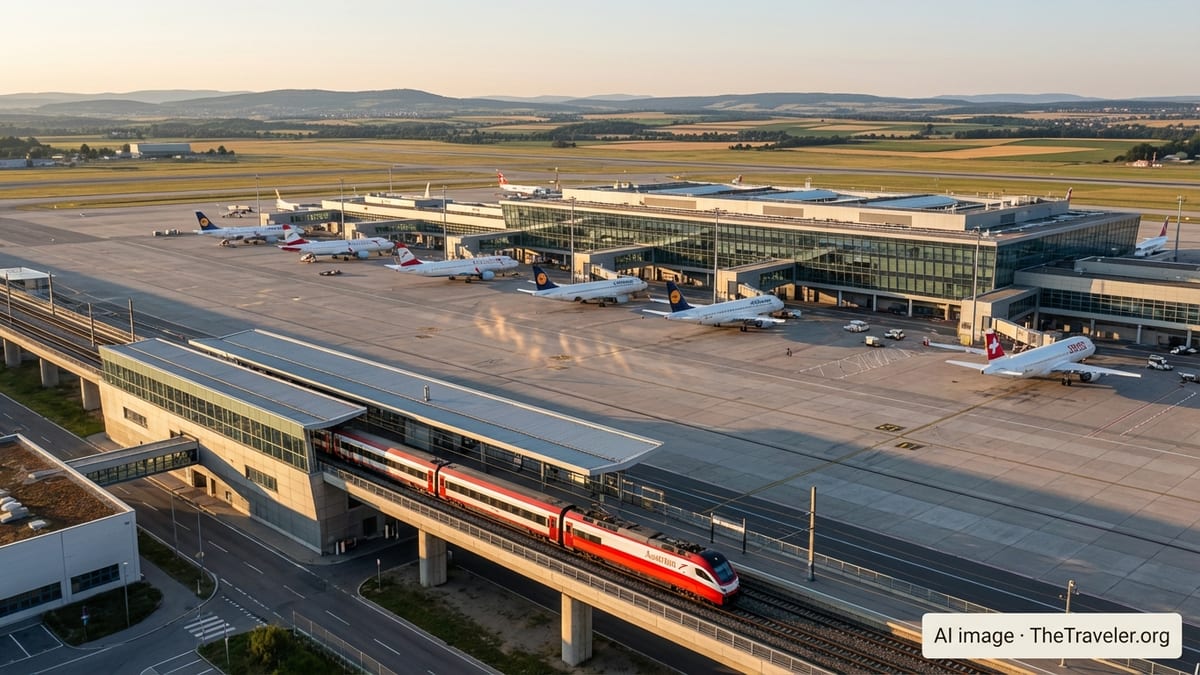
Vienna International Airport: Austria’s Primary Gateway
Vienna International Airport, just outside the capital in Schwechat, is Austria’s largest and busiest airport. It serves as the main gateway for long haul routes as well as an important hub for Central and Eastern Europe. The airport has grown steadily in recent years, regularly handling well over 30 million passengers in pre pandemic years and continuing to rebuild traffic with a broad mix of full service and low cost airlines. For most intercontinental arrivals and departures, Vienna is the natural starting point.
The airport layout is relatively straightforward despite its size. Terminals 1, 2 and 3 are built directly next to each other, along with the smaller Terminal 1A opposite Terminal 1. Terminal 3 is home to Austrian Airlines and many Star Alliance partners, while Terminals 1 and 1A host a variety of European and long haul carriers. Terminal 2, one of the older parts of the complex, has been gradually modernised and its functions reshaped in response to newer facilities. All arrivals are channelled into a central arrivals hall in Terminal 3, which simplifies wayfinding after a long flight.
Vienna continues to invest in its facilities and capacity. Terminal 1A, originally introduced as a temporary structure, has recently undergone refurbishment to update its appearance and passenger flow. Long term plans include further terminal enhancements and airside expansions to accommodate growing traffic and a wider network of destinations. For passengers, that translates into more choice of routes, more frequent services and a generally smoother airport experience year by year.
Despite ongoing development, Vienna International Airport remains easy to navigate. Clear bilingual signage in German and English, logical separation of Schengen and non Schengen departures, and a compact terminal footprint mean transit times are generally manageable. Even when connecting between airlines in different terminals, walking distances are reasonable for most travelers, and staff are visible in key transfer zones to help with tight connections.
Getting To and From Vienna Airport
One of Vienna Airport’s biggest strengths is its excellent ground transport. The airport is directly connected to the city and wider Austria by multiple rail options, dedicated express services and long distance trains that treat the airport as a regular stop on national routes. Taxis and ride services are available outside the arrivals area, but for most visitors the train will be the most efficient and predictable option, especially at peak times.
The City Airport Train provides the fastest dedicated link between Vienna city centre and the airport. It runs non stop between Wien Mitte station and the terminal area, with a journey time of about 16 minutes and departures roughly every 30 minutes. The service markets itself as a premium product, with spacious seating, luggage racks and the option to check in for certain airlines directly at the city terminal in Wien Mitte. For travelers with heavy baggage or those heading straight to central hotels, this can be a particularly convenient choice.
Budget conscious travelers or those staying outside the immediate centre often prefer the S Bahn and Railjet options. The S7 suburban train line connects the airport with Wien Mitte and several intermediate suburban stations. It is slower than the City Airport Train but significantly cheaper and fully integrated into Vienna’s public transport tariff. Railjet high speed services also link the airport with Vienna Central Station and onward destinations, providing a fast route if you are continuing by train to other Austrian cities.
Beyond the city, national rail connections are improving year by year. Direct AIRail services operated in partnership with Austrian Federal Railways link Vienna Airport with cities such as Graz, Linz, Salzburg and Innsbruck, allowing passengers to combine rail and air travel on a single itinerary. On the road, Vienna Airport Lines buses connect the terminal with major nodes in the city including Vienna Central Station and Westbahnhof, while long distance coaches serve regional and international destinations. For those renting a car, well signed motorway access and large on site parking facilities make driving in and out straightforward, though city traffic and parking restrictions in Vienna itself may make rail a more relaxing choice.
Inside Vienna Airport: Services, Transfers and Practical Tips
Once inside Vienna International Airport, most travelers find facilities on par with other major European hubs, though on a slightly more compact scale. Security and passport control are generally efficient, with separate flows for Schengen and non Schengen traffic. At busy morning and evening peaks queues can build, so allowing a little extra time is wise, especially in summer and around holiday periods. Priority lanes for premium passengers and families are available in some areas and can help smooth the process.
Airside, passengers will find a typical range of shops, duty free outlets and food options spread across the concourses. The selection is widest in the areas serving long haul flights, with a mix of Austrian and international brands. Wi Fi is widely available and usually free of charge, and there are numerous power outlets near seating zones. Several airline and independent lounges operate across the terminal complex, providing quiet workspaces, showers and light meals for eligible passengers or those paying for access.
For travelers in transit, Vienna is designed for relatively short transfer times. Minimum connection times vary by airline and ticket type but can be around 25 to 45 minutes for many intra European connections. Transferring between Schengen and non Schengen areas does require passport control, and security may be re screened depending on the route. Clear signage for connecting gates, frequent departure screens and assistance desks near key junction points help reduce confusion. If your connection feels particularly tight, informing cabin crew on your first flight can sometimes prompt on the ground staff to be ready to direct you as you disembark.
Families and travelers with reduced mobility are reasonably well catered for. Baby changing facilities are available across the terminals, and family security lanes may be open at peak times. Passengers requiring wheelchair assistance or special support should notify their airline in advance so that staff can meet them at the aircraft door or check in desk. Elevators, ramps and moving walkways link all public areas, and shuttle services or buggies may be used where walking distances are longer.
Salzburg Airport: Gateway to Music and Mountains
Salzburg Airport, officially named W. A. Mozart Airport, is Austria’s second busiest airport and a key gateway for both city breaks and alpine holidays. Located only a few kilometres from Salzburg’s baroque old town, it serves a mix of scheduled European flights and seasonal services targeting ski and summer tourism. Passenger numbers have rebounded strongly in recent years, with traffic climbing back toward pre pandemic levels as demand for regional and leisure travel has recovered.
The airport has two terminals, although operations are compact compared with Vienna. Terminal 1 handles most year round scheduled flights, while Terminal 2 is used heavily during the winter charter season when tour operators bring in large numbers of ski travelers. Despite the seasonal surges, the airport retains a small scale, manageable feel. Check in counters and security screening are concentrated in a limited area, so walking distances are short and orientation is straightforward even for first time visitors.
Salzburg’s close proximity to both the city and major alpine resorts is one of its main attractions. For visitors coming for the city’s cultural heritage, festivals or Christmas markets, the transfer is quick and simple. For those heading to nearby ski areas in Austria and across the German border, the airport offers a practical alternative to the longer rail or road journeys from Munich or Vienna, especially during peak winter weeks when dedicated transfer services are abundant.
Facilities at Salzburg Airport are modest but adequate for its size. You can expect a small selection of shops, cafés and car rental desks, along with basic services such as ATMs and information counters. Seating is generally sufficient outside the busiest winter Saturdays, and there are panoramic views of the surrounding mountains from certain parts of the terminal and apron. Because the airport is embedded in a residential and commercial area, opening hours and night operations are more restricted than at large hubs, so late night arrivals and departures are less frequent.
Reaching Salzburg Airport and Nearby Resorts
Getting from Salzburg Airport to the city centre is quick and inexpensive. City trolleybus lines connect the terminal with central Salzburg and the main station, generally running every few minutes during the day. Typical journey times to the central station are around 20 to 25 minutes, depending on traffic and exact route. Tickets can be purchased from machines or on board, and fares are integrated into the wider Salzburg public transport system. Because the airport lies so close to town, taxi rides into the centre tend to be relatively short and affordable by European standards.
Unlike Vienna, Salzburg Airport does not have its own railway station. Instead, passengers connect to trains by taking local buses or taxis to Salzburg Hauptbahnhof, the city’s main station, which offers frequent services to Vienna, Munich and other regional destinations. This extra step adds a little time but is usually straightforward, especially if you are travelling with light luggage. Those planning onward rail journeys should allow a comfortable buffer between flight arrival and train departure, particularly in winter when weather can occasionally cause disruption.
For ski travelers, the picture is slightly different. During the main winter season, many resorts and tour operators run direct coach transfers from the airport to major ski areas such as Zell am See, Saalbach Hinterglemm and the Ski Amadé region. These services can be included in package holidays or booked separately, and they often time their departures to coincide with peak arrival waves on Saturdays. Independent travelers can also use regional buses from the airport bus terminal to reach nearby towns and village hubs, where local taxis or hotel shuttles complete the final leg.
Driving is another popular option from Salzburg. The airport sits close to the A1 motorway and major federal roads, with clear signage towards both the city and cross border routes into Germany. Car rental companies have desks in the arrivals area, and vehicles are parked within walking distance of the terminal. In winter, visitors should ensure cars are equipped with appropriate tyres and that they are familiar with Austrian rules on snow chains when conditions require them. Parking at the airport includes both short term lots close to the terminal and more economical long term options a little further away.
Regional Hubs: Innsbruck, Graz, Linz and Klagenfurt
Beyond Vienna and Salzburg, several regional airports play important roles in linking Austria’s provinces with the wider European network. These airports are typically smaller, with a stronger focus on seasonal and point to point traffic, but they can greatly reduce travel time to specific destinations. For visitors headed straight to the Alps or to secondary cities, they are often worth considering as gateways in their own right.
Innsbruck Airport in Tyrol is perhaps the best known regional hub, especially for winter sports. Located just a few kilometres from Innsbruck’s historic centre, it handles a combination of year round regional flights and a pronounced winter peak of charters and scheduled services from across Europe. The approach through the surrounding mountains is famously scenic but also operationally demanding, so weather and visibility can affect schedules, particularly in winter. Once on the ground, transfer times into the city or to nearby ski resorts in the Inn valley are short, making Innsbruck an efficient arrival point for alpine trips.
Graz Airport serves the capital of Styria and the surrounding region in the southeast of Austria. Passenger numbers have been growing steadily, supported by both scheduled services to major European hubs and a solid programme of leisure flights. The airport lies a short distance south of the city, with rail and road links providing easy access. For business travelers, Graz Airport offers a practical connection point to the city’s industrial clusters and university sector, while tourists use it as a convenient entry to wine country, spa towns and the gentle hills of southern Styria.
Linz and Klagenfurt airports, though smaller, also contribute to Austria’s aviation network. Linz, situated on the Danube in Upper Austria, combines passenger services with a notable cargo role, acting as a logistics hub for the region. Klagenfurt, in Carinthia, provides seasonal links to German speaking markets and occasional scheduled services to major hubs, complementing the region’s strong rail connections which have improved further with new high speed lines. At these airports, facilities are straightforward and queues are often shorter than at larger hubs, which many travelers appreciate.
How Austria’s Rail Network Complements Its Airports
One of the distinctive features of air travel in Austria is how closely it ties into the national rail system. Rather than relying heavily on domestic flights, the country has encouraged passengers to use trains for many internal journeys, linking airports with other cities through high quality rail services. For visitors this can mean fewer short haul flights to worry about and more time spent on comfortable trains that deliver you directly to city centres.
Vienna Airport is particularly well integrated into the rail network. In addition to the City Airport Train and S Bahn commuter services, long distance Railjet and InterCity trains regularly stop at the airport station, connecting it with cities such as Graz, Linz, Salzburg and Innsbruck. Some of these services are marketed jointly with airlines and global alliances, allowing passengers to book through itineraries that combine rail segments with flights. This type of intermodal travel can simplify check in, baggage rules and loyalty benefits while reducing the environmental footprint of domestic transfers.
Elsewhere in Austria, new infrastructure projects are shortening travel times between regional centres and major airports. High speed routes such as the line between Vienna and Salzburg, and the completion of the Koralm Railway between Graz and Klagenfurt, are gradually turning rail into the default choice for many domestic journeys. As these services become more frequent and direct, airlines are scaling back certain short hops and focusing their capacity on longer routes that trains cannot easily replace.
For travelers planning an itinerary, this synergy between air and rail offers flexibility. You might arrive by air in Vienna, then use fast trains to explore Salzburg, Innsbruck or Graz before flying out again from the capital. Or you may choose to fly into a regional airport like Innsbruck in winter, then return home via Vienna after a rail journey through the Alps. When comparing options, it is worth checking both air and rail timetables, as the combined network often produces time and cost combinations that would not be obvious if you considered each mode in isolation.
Planning Your Trip: Choosing the Right Austrian Airport
With multiple airports and strong rail links, deciding where to fly can feel confusing at first. The choice usually comes down to your main destination, travel dates and tolerance for transfers. For most long haul travelers or those visiting several regions, Vienna remains the most flexible option, with the widest range of international connections and frequent onward rail services. Its scale brings more competition among airlines, which can translate into better fares and more reliable schedules across the year.
If your focus is Salzburg itself or nearby alpine resorts, flying directly to Salzburg Airport may save time, especially during the winter season when specialist ski flights and transfers are in full swing. However, shoulder season schedules can be thinner, so you may need to adjust travel days to match available services. In those periods, arriving in Munich or Vienna and connecting by train or car could provide more options.
Regional airports such as Innsbruck, Graz, Linz and Klagenfurt are most attractive when you have a specific destination in mind and your airline offers a convenient direct flight. Their smaller size often means quick arrivals, short walks and less queuing, which is appealing after a long journey. The trade off is limited route networks and more pronounced seasonality, so backup options in the event of disruption may involve a rail transfer to a larger hub.
Whichever airport you choose, it is wise to build a modest buffer into your schedule for weather and congestion, especially in winter and around major holidays. Checking how early the first and last trains or buses run to your airport, how frequently they operate and whether there are planned engineering works can help avoid stressful last minute scrambles. In Austria, this information is generally well communicated, but taking a few minutes to confirm details before you travel pays off.
The Takeaway
Austria’s airport network reflects the country’s blend of compact geography, alpine landscapes and well developed infrastructure. Vienna International Airport acts as the primary international gateway, backed by Salzburg’s culturally and seasonally focused operations and a series of regional airports that bring visitors closer to specific cities and mountain regions. Together with an increasingly powerful rail network, they create a flexible system in which air and train complement one another rather than compete.
For travelers, understanding the strengths of each airport and how they connect to rail and road options is the key to a smooth trip. Vienna offers range and reliability, Salzburg provides proximity to music and mountains, and Innsbruck, Graz, Linz and Klagenfurt add tailored gateways for more focused itineraries. By aligning your arrival point with your plans on the ground, and by allowing for seasonal variations in schedules, you can turn the journey through Austria’s airports into a straightforward and even enjoyable part of your travels.
FAQ
Q1. Which Austrian airport should I choose for a first visit to the country?
For most first time visitors, Vienna International Airport is the best choice because it has the widest range of international flights and excellent rail links to other cities.
Q2. How long does it take to reach central Vienna from the airport?
The fastest option, the City Airport Train, takes around 15 to 20 minutes to reach Wien Mitte, while suburban trains take slightly longer but cost less.
Q3. Is it worth flying directly to Salzburg instead of Vienna?
It can be worthwhile if you plan to stay in Salzburg or nearby ski resorts and can find a convenient direct flight, especially during the main winter or festival seasons.
Q4. Does Salzburg Airport have a train station?
No. Salzburg Airport connects to the city and main railway station by trolleybus and bus services, where you can then board regional and long distance trains.
Q5. Are Austrian regional airports reliable in winter?
Regional airports like Innsbruck and Salzburg handle winter operations every year, but snow and low visibility can occasionally cause delays or diversions, so allowing extra time is sensible.
Q6. How early should I arrive at Vienna Airport before my flight?
For most European flights two hours is usually enough, while for long haul departures aiming for around three hours provides a comfortable margin, especially at peak times.
Q7. Can I combine train and plane tickets in Austria on one booking?
On some routes and with certain airlines, you can book combined rail and air itineraries that treat long distance trains to or from Vienna Airport as part of your journey.
Q8. Is public transport from Austrian airports safe and easy to use?
Public transport is generally safe, clean and clearly signed, with multilingual ticket machines and regular services that make it straightforward even for first time visitors.
Q9. Are there good facilities for families at Austrian airports?
Major airports like Vienna and Salzburg offer baby changing rooms, family friendly seating areas and a selection of cafés and shops suitable for traveling with children.
Q10. Can I easily rent a car at Austrian airports?
Yes. Major international and local rental companies operate desks at Vienna, Salzburg and the main regional airports, with vehicles parked close to the terminal buildings.