

More news on this day
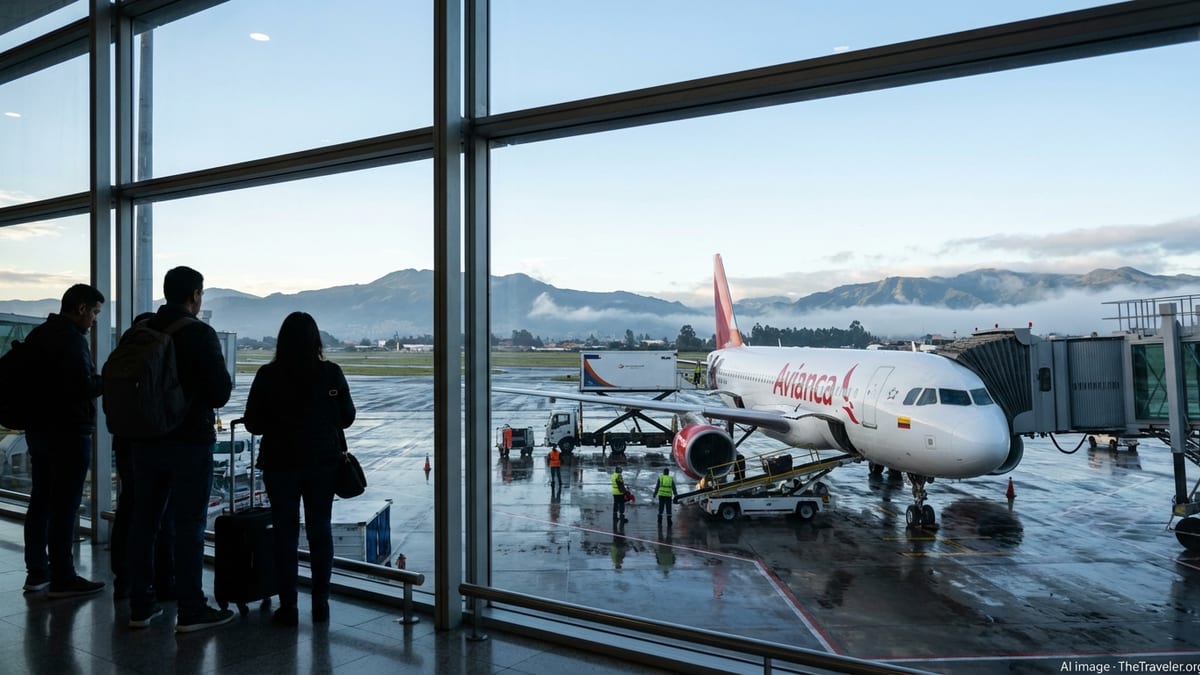
Avianca’s restart of daily nonstop flights between Caracas and Bogotá on February 12, 2026 is being hailed as a pivotal step in rebuilding tourism, business travel, and family links between Venezuela and Colombia, after years of disrupted air connectivity across the region.
From Suspension to Daily Service: How the Route Came Back
The Caracas–Bogotá air corridor has long been one of northern South America’s most important travel arteries, carrying families, workers, students, and tourists in both directions. That connection was badly strained over the last decade, as Venezuela’s aviation market shrank and multiple international carriers pulled out of the country. Avianca itself had halted flights to Caracas in 2017 as economic and operational conditions deteriorated.
More recently, regulatory and security concerns deepened the disruption. In late November 2025, Colombia’s Avianca suspended flights to Venezuela after an order from Venezuelan authorities and in the context of international safety advisories affecting the country’s airspace. Other foreign airlines scaled back or froze service, further isolating Venezuela’s main gateway, Caracas’ Simón Bolívar International Airport in Maiquetía.
That backdrop makes Avianca’s announcement in early February 2026 that it would fully reinstate the Bogotá–Caracas route with daily service especially significant. After consultations with aviation regulators and a renewed assessment of operational safety, the airline moved quickly to restore an historic link that has existed, in various forms, for more than six decades. The first flight of the renewed schedule, AV142 from Bogotá to Caracas, departed on February 12, symbolically marking a fresh start for bilateral connectivity.
For Colombia and Venezuela’s tourism and business communities, the shift from suspended operations back to regular daily service signals a new phase. Stakeholders on both sides see it not simply as a route resurrection but as a catalyst for broader regional reintegration.
The New Schedule and What It Means for Travelers
Avianca’s restored timetable is built around Bogotá’s role as a major hub and the needs of both origin and connecting passengers. Northbound, flight AV143 is scheduled to depart Caracas at 12:10 p.m. and arrive in Bogotá at 1:15 p.m. local time. Southbound, AV142 leaves Bogotá at 7:40 a.m. and lands in Caracas at 10:40 a.m., providing a morning departure that dovetails with overnight and early-morning arrivals from across the Avianca network.
For travelers, these times are designed to enable same-day connections in both directions. Passengers leaving Caracas can reach a wide array of onward destinations via El Dorado International Airport, including North American cities such as Miami, New York, Dallas, Chicago, Boston and other points in Central America, the Caribbean, and South America. Those arriving from Europe on Avianca’s transatlantic flights also gain a more straightforward pathway to Venezuela, often with only a short layover in Bogotá.
The daily frequency is crucial for both leisure and corporate travelers, who typically plan around predictable, year-round schedules. A single weekly or sporadic service can be difficult to incorporate into tour packages, business itineraries, or family visits. Daily flights, by contrast, make it easier for tour operators to build Caracas and other Venezuelan destinations into regional circuits that might also include Bogotá, Medellín, Cartagena, or coastal resorts on Colombia’s Caribbean shore.
Equally important is the non-stop nature of the route. In recent years, some passengers traveling between the two countries have had to rely on multi-stop combinations through Panama, the Dominican Republic, or other hubs, adding hours and complexity to what is, in pure flight time, a journey of less than two hours. The return of a simple, direct option is likely to be a strong draw in both markets.
A Gateway From Caracas to 83 Destinations
Beyond point-to-point demand, Avianca is positioning the Caracas–Bogotá service as a powerful connector into a much larger global network. With the route now reintegrated into Avianca’s hub system, the airline says Caracas is once again linked to 83 destinations in 28 countries. For Venezuelan travelers, that translates into more efficient access to major cities across the Americas and Europe without the need to juggle multiple carriers.
From Bogotá, Avianca serves a growing list of North American gateways as well as key markets in Mexico, Central America, Brazil, and the Southern Cone. For example, a traveler from Caracas can now route through Bogotá to reach destinations such as Mexico City, Monterrey, São Paulo, Lima, San José, or Los Angeles, often on a single ticket and with coordinated connection times. This enhanced reach is expected to be especially attractive to Venezuelans visiting family abroad or seeking medical care, education, or business opportunities.
The reverse flow is equally important. Colombia has become a significant outbound tourism market in its own right, with rising middle-class demand for regional trips. Avianca’s daily link means more Colombians can consider Venezuelan attractions such as the Caribbean island of Margarita, the colonial architecture of Coro, the plains of Los Llanos, or the highland city of Mérida, accessed via domestic connections from Caracas. Tour operators are already watching the route closely as they assess how to reintroduce Venezuelan destinations to their catalogues.
By stitching Caracas back into this web of routes, Avianca is also reestablishing a critical bridge for inbound international tourism to Venezuela. Visitors from the United States, Canada, and Europe who might previously have considered Venezuela logistically complex can now reach the country with a single connection, using Bogotá as a natural jumping-off point into northern South America.
Tourism Stakeholders Eye New Opportunities
The travel industry in both countries has been quick to frame the route’s return as a tourism opportunity. Colombian promotion agencies and Venezuelan private-sector tourism groups see the daily flights as a tool to rebuild two-way visitor flows that were once robust. Before the era of restrictions and airline withdrawals, Venezuelan travelers were a familiar presence in Colombian cities, while Colombians flocked to Venezuela’s Caribbean beaches and duty-free shopping zones.
With Avianca back in the market, hotels and tour operators are expected to start recalibrating their strategies. City-break packages combining Bogotá’s museums, gastronomy, and nightlife with Caracas’ urban culture and nearby coastal towns could gain traction. Regional circuits that take in both countries’ Andean landscapes also become easier to market when a fast, direct air link connects the two capitals.
There is also optimism around business and meetings travel. Colombia’s growing role as a regional hub for conferences and trade shows had been harder to tap for Venezuelan participants when direct air links were scarce. The restored Caracas–Bogotá flights lower those barriers, potentially boosting attendance at events in both countries and encouraging more cross-border corporate activity.
Still, tourism players are cautious. Many stress that sustained growth will depend not only on seats in the sky but also on perceptions of safety, the stability of aviation rules, and improvements in on-the-ground services such as airport processing, ground transport, and digital visa or entry systems where applicable. The new flights are widely seen as an important step, but not the sole ingredient, in a broader recovery.
Balancing Safety, Regulation, and Confidence
The road to reinstating daily service has been shaped by complex safety and regulatory dynamics. Over the past several years, foreign aviation authorities have issued advisories regarding Venezuelan airspace, citing concerns ranging from military activity to air traffic management. Those warnings led some airlines and governments to advise against overflying or serving the country directly, and at times resulted in formal suspensions of routes.
Avianca’s decision to return with daily Caracas–Bogotá flights follows what the airline describes as a comprehensive review of operational and aviation safety conditions, conducted together with Colombian and Venezuelan regulators. While specific technical details of those assessments are not publicly disclosed, industry observers note that any resumption of service by a major carrier typically requires updated risk evaluations, reinforced procedures, and close coordination with air navigation and airport authorities.
For travelers, the relaunch is a signal that conditions are viewed as manageable by both the airline and oversight bodies. Nonetheless, experts underline that the regional regulatory environment remains fluid. Airlines and passengers alike are likely to monitor any new guidance issued by aviation authorities, as well as political developments that could affect airspace access. The history of abrupt suspensions has left many travelers wary, making transparent communication around schedule reliability and passenger protections especially important.
Consumer advocates are therefore encouraging passengers to pay careful attention to fare rules and change policies on the Caracas–Bogotá route. Flexible booking options, travel insurance that covers disruptions, and the use of reputable travel agencies or official airline channels are being recommended as ways to mitigate potential uncertainty while the market stabilizes.
Economic and Diaspora Impacts Across the Border
Beyond tourism, the restored route carries weighty economic and social implications. Trade between Colombia and Venezuela has long depended on workable logistics, and direct air cargo capacity between the capitals can be critical for high-value, time-sensitive goods. Even when freight volumes are modest, the presence of scheduled passenger services often supports belly cargo that helps keep supply chains moving more efficiently.
The human dimension is just as significant. Large Venezuelan and Colombian diaspora communities have family ties that cross the border, and for years many have faced convoluted journeys involving multiple connections or costly detours through third countries. Daily Avianca flights offer a more straightforward path for family visits, medical travel, and emergency trips, potentially reducing both travel time and expense.
Colombian officials have also highlighted the symbolic importance of reestablishing a reliable aerial bridge. After years of diplomatic and economic tension, more consistent people-to-people contact is seen as a way to support gradual normalization. Student exchanges, cultural programs, and binational projects are easier to organize when planners can count on stable, frequent air service between the two capitals.
For Venezuela’s struggling tourism and service sectors, fresh inflows of Colombian visitors and international travelers connecting through Bogotá may help revive hotels, restaurants, and local tour companies. While expectations remain tempered by broader economic realities, industry leaders consider the daily Avianca link one of the most tangible recent signs of renewed regional engagement.
What Travelers Should Know Before Booking
With tickets now on sale through Avianca’s standard distribution channels, prospective passengers are focusing on practical questions. Travel planners note that demand around holidays and long weekends is likely to be strong, particularly from Venezuelans visiting Colombia for shopping, healthcare, or leisure, and from Colombians exploring Venezuelan destinations. Early booking is being advised for peak periods to secure seats and more favorable fares.
Travelers should also pay attention to connection timings in Bogotá, especially if they are pairing the Caracas flight with long-haul services to North America or Europe. El Dorado is one of Latin America’s busiest hubs and can involve substantial walking distances between gates. Building a comfortable connection window into the itinerary can help mitigate the impact of any minor delays on the short Caracas–Bogotá leg.
On the documentation side, passengers are being urged to double-check entry requirements, including passports, visas where necessary, and any health or vaccination rules that may still apply. While many pandemic-era restrictions have eased, policies can vary and may change over time. Using official government sources or reputable travel advisors can help prevent last-minute complications at check-in or immigration.
Finally, seasoned travelers recommend monitoring official airline communications in the days before departure, in case weather, operational issues, or renewed regulatory developments affect the schedule. Signing up for flight alerts and keeping contact details up to date with the airline are simple steps that can make navigating any unexpected changes considerably easier.
A New Phase for Colombia–Venezuela Connectivity
For now, Avianca’s daily Caracas–Bogotá flights stand out as a rare piece of good news in a region where air links to Venezuela have often gone in the opposite direction. Spanish and other European carriers have recently extended suspensions of their routes to Caracas, underscoring how uneven the recovery of international connectivity remains.
That contrast highlights the strategic importance of Bogotá’s role as a regional hub. With Avianca expanding its network across the Americas and Europe, Venezuela gains a critical one-stop connection to global markets even as some direct long-haul links remain on hold. For travelers, the daily flights restore an essential option that reduces travel complexity, reconnects families and businesses, and opens a fresh chapter in cross-border tourism.
Whether the route’s revival will translate into a lasting tourism boom depends on factors that reach well beyond the aviation sector. Still, industry insiders in both Caracas and Bogotá agree that regular, reliable service between the two capitals is a prerequisite for any meaningful rebound. With Avianca’s Airbus narrowbodies once again making the short hop across the Andes each day, that foundation is back in place, and the region is watching closely to see what follows.