

More news on this day
Cluj-Napoca is preparing to host Aviation-Event 2026 CLJ, the fifth edition of the high-level conference that has quickly become one of Europe’s most influential forums on the future of air transport.
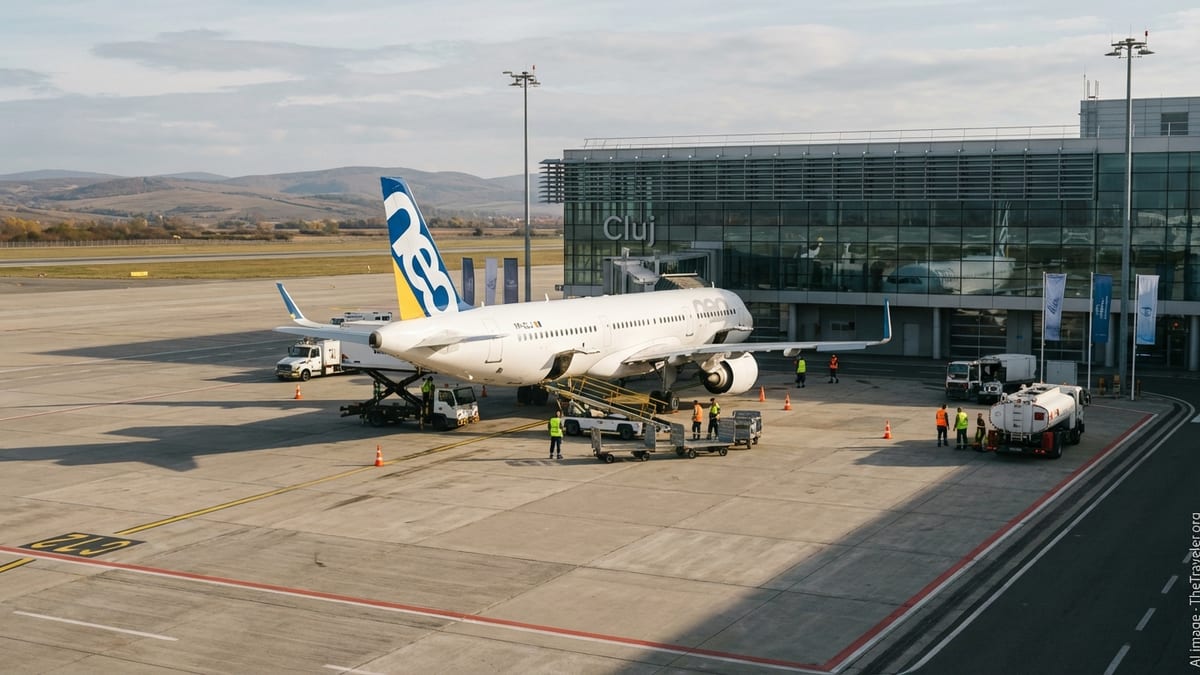
Cluj-Napoca Cements Its Role as a European Aviation Hub
Hosted at Cluj International Airport, Aviation-Event 2026 CLJ builds on the momentum of the 2025 edition, which positioned the Transylvanian city as a serious hub for aviation strategy and policy in Central and Eastern Europe. Organisers expect the 2026 meeting to attract senior executives from airlines, airports and handling companies, alongside regulators, technology providers and tourism officials from across the continent.
Cluj-Napoca, often described as the Heart of Transylvania, offers a mix of heritage, academic energy and a fast-growing tech ecosystem that organisers say mirrors the industry’s own balancing act between tradition and innovation. Local authorities view the conference as a strategic asset for the region, reinforcing the airport’s status as a gateway to Transylvania and a testing ground for new mobility concepts.
Airport management has highlighted recent growth in passenger numbers and route development as evidence that the city can sustain a recurring international aviation summit. With the fifth edition, Cluj is seeking to move from being simply a host location to becoming a reference point in European debates around connectivity, sustainability and resilience in air travel.
Agenda Focus: Sustainability, Regulation and New Business Models
Early information on the Aviation-Event 2026 CLJ programme points to an agenda dominated by decarbonisation, regulatory harmonisation and the search for new business models in a more volatile geopolitical landscape. Panels are expected to examine how European aviation can deliver on climate commitments while keeping air connectivity affordable and competitive.
Industry leaders are set to debate the practical implications of net-zero roadmaps, from sustainable aviation fuels and hydrogen-readiness at airports to the redesign of airspace and ground operations. The conference is also anticipated to tackle the realities of complying with multiple layers of European and national regulation, including emerging rules on environmental reporting, consumer rights and digital services.
Organisers say a particular focus in 2026 will be placed on the economics of regional aviation and secondary hubs. With Cluj International Airport as the backdrop, discussions are expected to highlight how mid-sized airports can absorb demand from congested primary gateways, support tourism diversification and foster new intra-European and point-to-point routes.
Digital Transformation and Passenger Experience in the Spotlight
Beyond sustainability and regulation, Aviation-Event 2026 CLJ is positioning digital innovation as a core theme. Sessions will explore how artificial intelligence, biometrics, data sharing and automation can streamline operations while improving the passenger journey from booking to baggage reclaim.
Airports and airlines are expected to showcase pilots and case studies on predictive maintenance, smart security lanes, touchless processing and integrated mobility platforms that link air travel with rail, bus and urban transport. For technology providers and start-ups, the Cluj conference offers an opportunity to present solutions to decision-makers who oversee airport infrastructure, fleet planning and customer experience programs.
Attendees can also expect debate on the risks tied to rapid digitalisation, including cybersecurity vulnerabilities, data protection obligations and the need to maintain human-centric service in an increasingly automated environment. The organisers aim to encourage frank exchanges between technical specialists, regulators and consumer advocates on how to keep innovation aligned with trust and safety.
Romania’s Strategic Position in European Air Connectivity
Aviation-Event 2026 CLJ comes at a time when Romania’s air transport sector is gaining visibility within Europe’s wider connectivity map. With a network of growing regional airports and a strategic position between Western Europe, the Balkans and the Black Sea, the country is increasingly seen as a bridge between established markets and emerging traffic flows.
Cluj International Airport has capitalised on this geography by expanding services to major European hubs and leisure destinations, while courting new carriers and exploring cargo opportunities. The conference will give Romanian stakeholders a platform to set out their vision for how national infrastructure, regulatory frameworks and tourism strategies can align with European aviation priorities.
By gathering European and international delegates in Cluj, the 2026 edition is expected to underline the role that Central and Eastern European markets play in balancing growth across the continent. Discussions are likely to touch on how investments in airport capacity, air navigation services and intermodal links in the region can relieve pressure on Western hubs and support more evenly distributed development.
What Delegates Can Expect in 2026
For participants, Aviation-Event 2026 CLJ promises a tightly curated mix of keynotes, moderated panels and networking sessions designed to encourage candid dialogue rather than scripted presentations. The event typically limits attendance to industry professionals and policymakers, creating a focused environment for exchanging ideas and building partnerships.
Delegates can expect structured opportunities to meet with airport operators, airline network planners, regulators and solution providers in both formal sessions and informal settings at the airport and in the city. The Cluj setting, with its historic centre, cultural venues and strong university presence, is likely to feature in side events and site visits included around the conference programme.
As the fifth edition approaches, organisers are positioning Aviation-Event 2026 CLJ as a place where strategic decisions about European flight paths, investment priorities and collaboration models can be tested and refined. For Romania and for Cluj-Napoca in particular, the conference is an opportunity to showcase how a regional hub can help shape the broader narrative of European air travel in the second half of the decade.