

More news on this day
Residential ocean living is set for a new chapter in January 2028, as Avora Lumina prepares to transform a former Regent Seven Seas vessel into a fully fledged floating luxury community sailing from Lisbon to destinations around the world.
Get the latest news straight to your inbox!
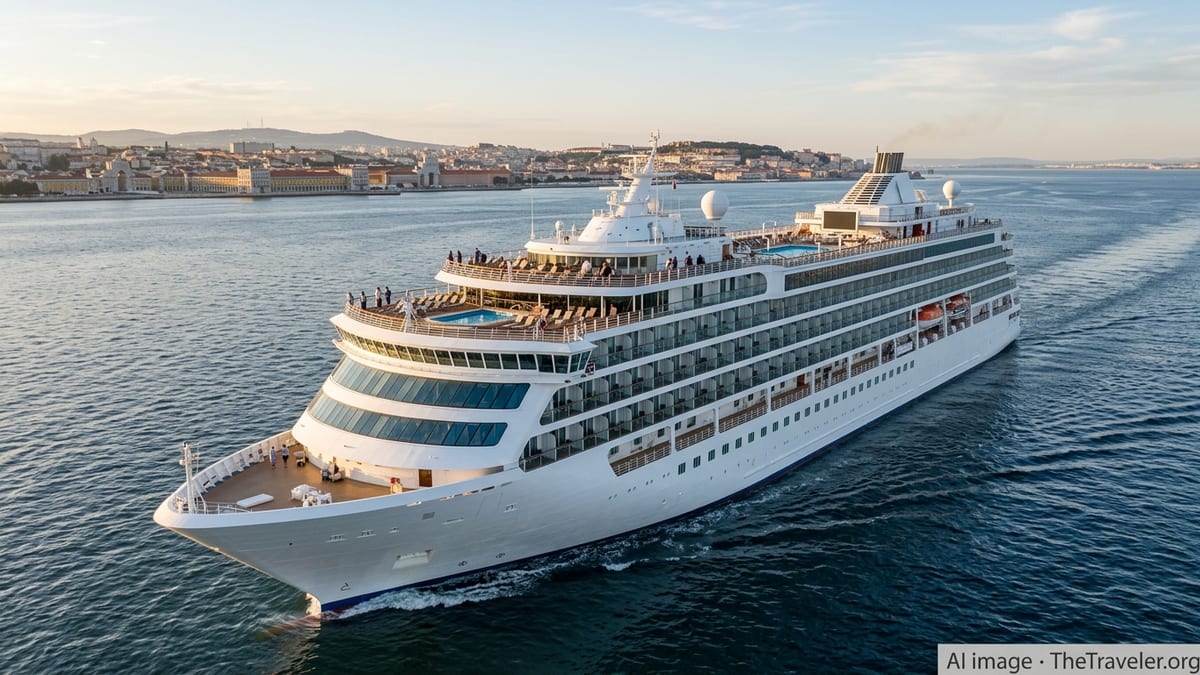
A Legacy Cruise Ship Reimagined as a Floating Residence
Avora Lumina is emerging as one of the most closely watched projects in the fast-growing residential cruise segment, with plans for the ship to begin operations in January 2028. Publicly available industry reports indicate that the vessel will be created through the long-term charter and extensive refit of the 1999-built Seven Seas Navigator, a well-known luxury cruise ship currently operated by Regent Seven Seas Cruises.
Cruise trade coverage notes that Avora Residences, based in Pembroke, Florida, has agreed a nine-year charter with an option to purchase the vessel, paving the way for its transformation into a residential ship marketed under the Avora Lumina name. The ship is expected to leave traditional cruise deployment behind and instead operate as a continuously sailing community, with residents living on board full time or for extended periods.
Before entering service for Avora Lumina, the ship is scheduled to complete its final voyages for Regent Seven Seas Cruises in late 2026. Shipyard work will then adapt its configuration from short-term cruise cabins to longer-stay residences, adding larger private villas, enhanced shared spaces and facilities geared toward everyday living rather than conventional holiday itineraries.
Industry observers view the project as part of a broader trend in which older luxury cruise ships are repurposed for residential concepts, extending their operational life while meeting demand from travelers seeking more permanent, mobile lifestyles at sea.
Luxury Villas Designed for Long-Term Ocean Living
Avora’s published materials present Lumina as a vessel built around seven categories of private villas, ranging from compact studios to expansive, apartment-style residences of more than 1,100 square feet. The aim is to combine the layout and finishes of high-end urban homes with the comforts and services of a luxury cruise environment.
Information released by Avora indicates that each villa category is positioned as a “sanctuary at sea,” with details such as private balconies, separate living and sleeping areas, and spa-inspired bathrooms. Larger categories, including the top-tier Lumina Villa and the Eclipse Villa, are described as offering generous entertaining spaces, multiple baths and extended balcony areas designed for outdoor dining and lounging.
Pricing disclosed on the company’s website and in travel trade reports suggests a range that targets affluent buyers. Entry-level Dawn Villas are presented with lower starting purchase thresholds, while the flagship Lumina Villas reach into multi-million dollar territory for full ownership, accompanied by monthly fees that cover operating costs, staffing and shared services.
Beyond individual residences, the design emphasizes an integrated residential experience, with 24-hour room service, housekeeping, wellness facilities, dining venues and enrichment spaces intended to support everyday life rather than short vacation stays. The overall proposition positions Lumina as a long-term home base at sea, not simply a cruise product with extended itineraries.
Global Itineraries With Extended Destination Stays
Travel and cruise industry coverage describes Avora Lumina as a residential ship that will prioritize slower travel and deeper destination immersion. Instead of the traditional pattern of brief port calls, the vessel is expected to offer extended stays, giving residents more time to explore local culture, lifestyle and infrastructure in each city it visits.
According to recent travel trade reports, Lumina will launch from Lisbon in early 2028 and then follow a global routing that touches hundreds of destinations over time. While full schedules have not yet been published, the concept emphasizes multi-day calls and seasonal stays, enabling residents to spend meaningful time in regions such as the Mediterranean, Northern Europe, the Caribbean and the Americas, as well as selected long-haul ports.
The model is designed to appeal to residents who wish to combine the stability of a permanent address with the variety of life across multiple countries. By remaining aboard, owners and long-stay guests can experience shifting backdrops and climates without the logistical complexity of repeated flights, relocations or frequent packing and unpacking.
Observers note that this slower-travel approach aligns with broader trends in experiential tourism, where travelers seek sustained engagement with local communities, food and culture rather than quick-stop sightseeing. Lumina’s extended port stays are being presented as a competitive differentiator within the residential cruise segment.
A Community-Centric Approach to Life at Sea
Avora’s communications highlight community as a central pillar of the Lumina concept, with a focus on fostering connections among residents who share similar lifestyles and travel ambitions. Descriptions of daily life aboard the future ship emphasize curated gatherings, shared dining experiences, and resident-led programming such as masterclasses, talks and cultural activities.
Schedules outlined on Avora’s website portray a typical day that might start with sunrise yoga, continue with organized shore excursions or workshops, and conclude with communal dinners and informal socializing in lounges and outdoor spaces. The narrative emphasizes intimacy over scale, presenting the ship as a place where residents are more likely to know their neighbors than on a conventional cruise vessel.
This approach reflects a wider shift within the residential cruise concept, which increasingly positions itself as an answer for globally mobile professionals, entrepreneurs and retirees seeking both independence and a built-in social network. By combining co-living dynamics with private, high-end residences, Avora Lumina aims to create a lifestyle that blends privacy with connection.
The community focus is also designed to support residents who may be transitioning from land-based homes to an ocean-based lifestyle, offering structure, shared experiences and a sense of continuity even as the ship’s surroundings change from port to port.
Positioning Within a Growing Residential Cruise Market
Avora Lumina enters a market that has seen rising interest in residential vessels, from purpose-built newbuilds to repurposed cruise ships. Analysts view the project as part of a second wave of concepts that build on earlier experiments in ocean-based condominium living and respond to contemporary preferences for flexibility, remote work and extended travel.
Recent coverage in cruise and travel media notes that Avora Residences has formed a strategic alliance with Villa Vie Residences, another residential-at-sea operator. While the two brands intend to maintain separate identities, the partnership is presented as a way to broaden options for residents, with the potential for cross-access between ships and a shared pipeline of future vessels.
By choosing to convert an existing luxury ship instead of commissioning an immediate newbuild, Avora Lumina is positioned to reach the market on a faster timeline. The refit-driven strategy could allow the company to refine its residential model at sea while demand for long-stay and full-time ocean living continues to develop.
As 2028 approaches, Avora Lumina is expected to draw interest from travelers, real estate investors and cruise industry observers watching how the project balances high-end residential expectations with the operational realities of running a global ocean-going community. Its progress will likely serve as a bellwether for the next stage of luxury living at sea.