

More news on this day
As travelers look ahead to 2026, Portugal’s Azores archipelago is gaining momentum as a rare combination of wild Atlantic scenery, close-up wildlife encounters and one of Europe’s most ambitious sustainable tourism strategies.
Get the latest news straight to your inbox!
A Mid-Atlantic Archipelago Moving Into the Spotlight
Set roughly midway between Europe and North America, the nine islands of the Azores have long been known to hikers, sailors and whale watchers, but recent tourism data suggests the archipelago is moving from niche to notable. Regional statistics and published coverage point to record visitor numbers in 2024, with more than a million arrivals and over four million overnight stays, even as authorities work to avoid the pitfalls of mass tourism. Strategic plans running through 2030 frame tourism as a pillar of the local economy, but one that must remain within the environmental limits of a fragile volcanic landscape.
For 2026, analysts of adventure and sustainable travel trends highlight a growing appetite for remote destinations that still feel authentic yet are reasonably accessible from major hubs. Nonstop and connecting flights from mainland Portugal and several European and North American cities give the Azores an edge for transatlantic travelers looking for a long-weekend trekking escape or a multi-island journey. At the same time, reports indicate concerns about overtourism in other European hotspots are pushing visitors to consider lesser-known regions where crowding and carbon footprints are more tightly managed.
Marketing campaigns and tour operators are already positioning the Azores as a “mid-Atlantic masterpiece” for 2026 itineraries, often pairing the islands with mainland Portugal or Spain but emphasizing that the archipelago is a standalone destination. Travel programs for 2026 highlight lake-filled volcanic calderas, geothermal pools and black-sand beaches as alternatives to Europe’s traditional city breaks.
Volcanic Landscapes and Trail Networks Draw Adventure Travelers
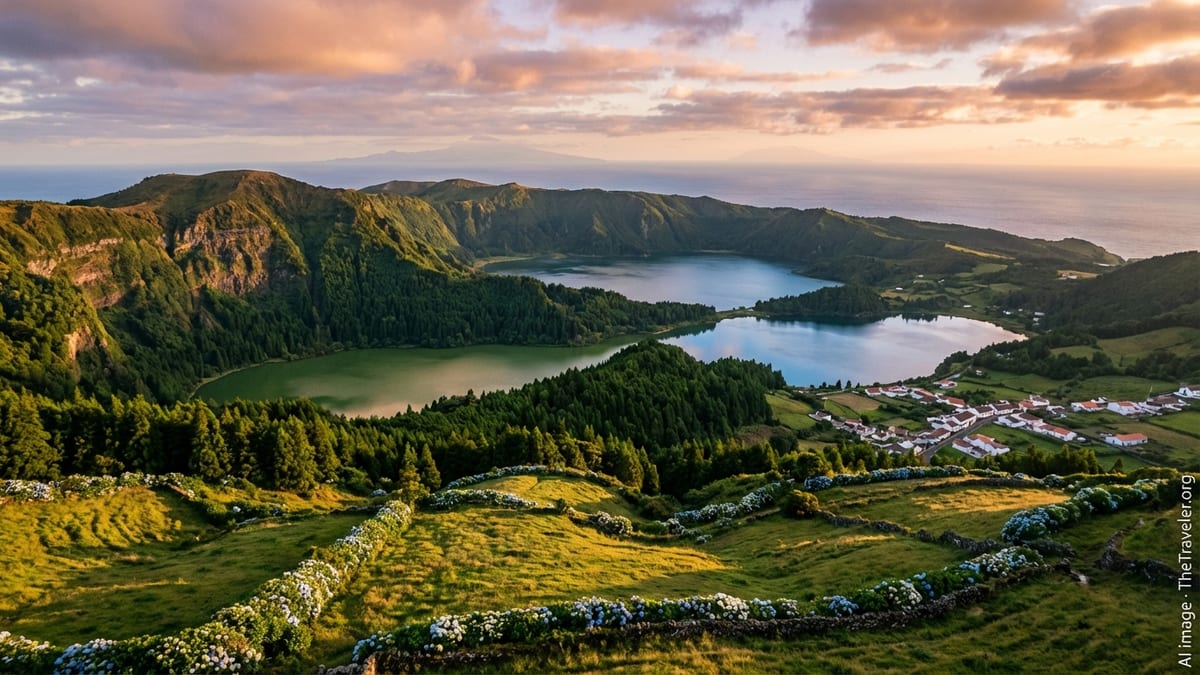
Adventure travel specialists describe the Azores as a natural playground carved by volcanoes and the Atlantic. On São Miguel, one of the most visited islands, crater lakes such as Sete Cidades and Furnas sit inside vast calderas, with waymarked trails looping past viewpoints, hydrangea-lined roads and fumarole fields. Published route descriptions show how hikers can combine half-day walks with hot-spring bathing and village stops, making the island a practical base for travelers new to multi-day trekking.
Faial and Pico, in the central group, appeal more to seasoned hikers. Faial’s trails trace the rim of a caldera and descend through the Capelo volcanic complex toward the Capelinhos lighthouse, where an eruption in the 1950s added new land to the island. Pico, dominated by Portugal’s highest peak, attracts summit-seekers to a steep but rewarding climb that often features ocean views stretching toward several neighboring islands. Organized trail events scheduled into late 2025 underline how the archipelago is investing in well-maintained, clearly signed routes that are likely to be in strong demand by 2026.
On lesser-known Flores and Corvo, hikers encounter waterfalls, highland moors and sea cliffs with few crowds. These outer islands are frequently cited in nature-focused coverage for their sense of remoteness, with official nature parks managing access to sensitive caldera and coastal habitats. For travelers planning 2026 itineraries, such diversity means an island-hopping trip can be tailored from gentle coastal walks to technical volcanic ascents within the same journey.
Whales, Seabirds and Unique Atlantic Wildlife
The waters around the Azores are considered one of the North Atlantic’s key feeding grounds for marine megafauna, making wildlife encounters a major draw. Conservation reports note that at least four cetacean species, including resident sperm whales and several dolphin species, can be seen year-round, while migratory species such as blue, fin and sei whales pass the islands in spring. Recent expedition findings show that some individual sperm whales have been recorded in the region for decades, underscoring the archipelago’s role in long-term marine research.
Whale watching operators and non-governmental organizations have developed codes of conduct that limit the number and approach of vessels around animals, reflecting a broader commitment to low-impact wildlife tourism. Volunteer expeditions based on islands such as Faial have been collecting data on whales, dolphins and sea turtles for years, providing travelers with opportunities to join research-focused trips rather than simple sightseeing excursions. For 2026, itineraries marketed to “citizen scientists” are expected to remain popular among visitors who want hands-on conservation experiences.
On land, the Azores’ position in the Atlantic flyway makes the islands an important refuge for seabirds. Conservation projects on São Miguel and São Miguel’s eastern highlands, highlighted in European biodiversity campaigns, focus on endemic bird species and the restoration of native laurel forests. Birdwatchers traveling in spring and autumn have the chance to see shearwaters, petrels and storm-petrels, along with rare vagrant species. Combined with the marine life offshore, this concentration of wildlife adds significant appeal for nature enthusiasts planning 2026 trips.
Sustainability Credentials Appeal to Conscious Travelers
One of the main reasons the Azores are emerging as a standout destination for 2026 is the region’s sustainability track record. The archipelago has earned EarthCheck Gold certification and has repeatedly appeared in global rankings of the world’s most sustainable destinations, based on independent audits that assess hundreds of environmental, social and governance indicators. European best-practice case studies describe the Azores as a laboratory for how small island regions can manage increased tourism while still prioritizing conservation and community well-being.
Policy documents published by the regional government outline a long-term sustainability agenda running to 2030, including caps and permits in the most fragile areas, efforts to disperse visitors across all nine islands and actions to extend tourism beyond the peak summer months. Recent analyses note that while total visitor numbers have grown, management tools such as trail quotas, carrying-capacity studies and smart crowd-monitoring pilots are being used to reduce pressure on hotspots. For travelers considering the climate impacts of their trips, these measures offer reassurance that their visit contributes to a destination that is actively trying to balance growth with protection.
At the same time, local surveys suggest residents remain broadly supportive of tourism as the main economic driver, while voicing concerns about housing costs and infrastructure pressure. For 2026 and beyond, the success of the Azores as a “hidden gem” will likely depend on how effectively new accommodations, transport links and visitor services can be integrated without eroding the qualities that make the islands attractive in the first place.
Positioned for Nature-Led, Low-Impact Travel in 2026
Looking ahead to 2026, the Azores appear well placed to benefit from global demand for slower, nature-led journeys. Travel industry forecasts indicate that hikers, wildlife watchers and wellness travelers are showing heightened interest in destinations that combine outdoor adventure with credible sustainability credentials. As travelers turn away from crowded urban centers toward open landscapes, the Azores’ combination of volcanic scenery, trails, geothermal bathing and marine encounters stands out in the Atlantic.
Tour operators are already expanding multi-island packages that weave together São Miguel’s crater lakes, Pico’s volcanic summit and Faial’s whale-watching heritage, often with optional conservation volunteering or farm stays. For independent travelers, growing but still modest infrastructure, a network of marked trails and inter-island flights and ferries make self-guided exploration increasingly feasible, especially for longer summer stays in 2026.
While the Azores can no longer be described as undiscovered, the archipelago remains under the radar compared with many European beach and city destinations. For nature enthusiasts and adventure seekers looking ahead to 2026, the islands offer a rare mix of dramatic landscapes, charismatic wildlife and a governance model that places sustainability at the core of tourism development.