

More news on this day
A British Airways Airbus A350 flying from Las Vegas to London remained on course across the North Atlantic after a mid-air systems alert referenced a critical engine safety control, spotlighting how modern long-haul jets and transatlantic procedures handle in-flight warnings between the United States and United Kingdom.
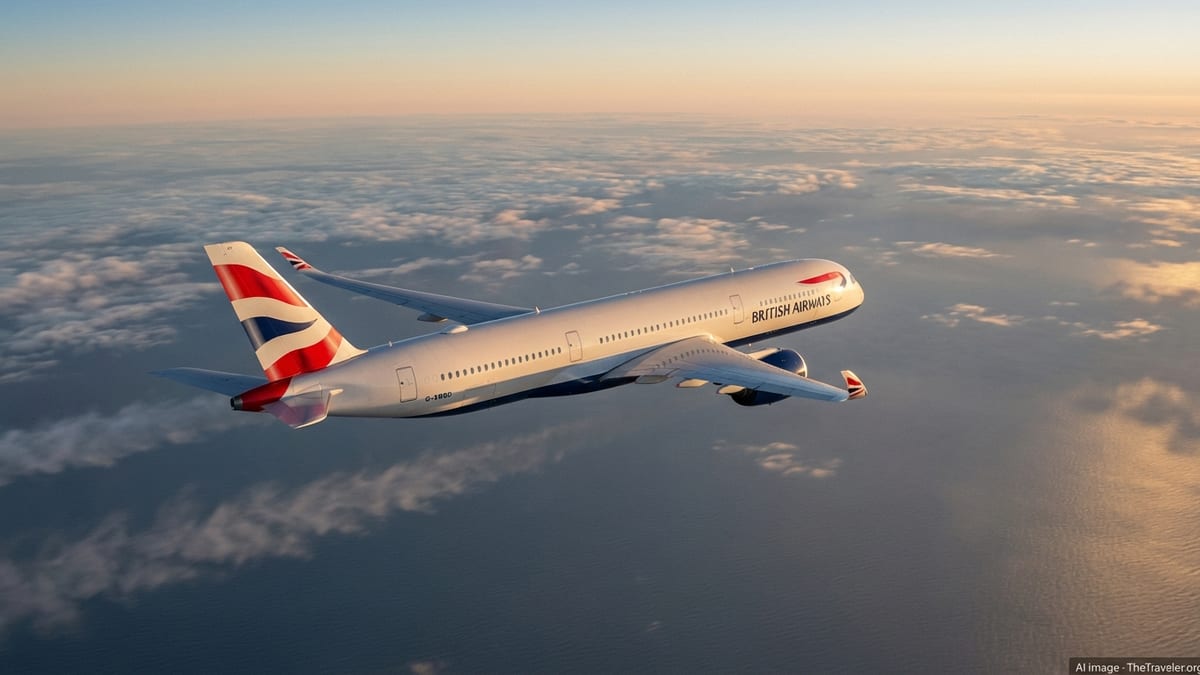
Mid-Air Alert on a Busy Transatlantic Corridor
The latest incident involved British Airways flight BA274, an overnight service from Harry Reid International Airport in Las Vegas to London Heathrow, operated by an Airbus A350-1000. Cruising at around 39,000 feet over the North Atlantic, the aircraft generated a cockpit message transmitted via ACARS, reportedly referencing an engine fire switch. While there was no confirmed engine fire, the wording of the alert prompted the crew to treat the situation with caution and adjust the flight profile.
Flight-tracking data and specialist aviation outlets indicated that the widebody twinjet initiated a descent from its cruise altitude, stabilising at a lower flight level while pilots and airline operations teams evaluated the alert. After checks and systems monitoring, the aircraft later climbed back toward its original cruising height, continuing its eastbound crossing toward the United Kingdom without diverting to an alternate airport.
The event unfolded on February 19 and 20, 2026, only weeks after the same British Airways route drew global attention for a separate technical issue on departure from Las Vegas. Together, the episodes have focused attention on how flight crews, manufacturers and regulators manage complex system messages on one of the world’s most heavily trafficked long-haul corridors.
Atlantic Crossing Continues After Safety Assessment
Despite the seriousness implied by any message associated with an engine fire system, there is currently no indication that passengers on board experienced smoke, fire, or loss of thrust. Aviation analysts note that the A350’s layered electronic monitoring can generate highly conservative alerts designed to err on the side of safety, sometimes without an underlying physical emergency.
After receiving the ACARS message, the crew reduced altitude, a step that can provide additional options in the event of a genuine engine issue, including more favourable glide performance and easier diversion planning. Once aircraft systems and performance parameters remained stable, and in coordination with British Airways’ operations and engineering teams on the ground, the pilots returned the jet to higher altitude and continued toward London.
Observers say the choice to proceed rather than divert to airports in eastern Canada, Iceland or Ireland reflects a combination of engineering confidence and established decision-making frameworks. For long-range aircraft such as the A350, crews work with detailed checklists and performance data to decide whether an immediate diversion is required or whether it is safer and more practical to continue under close monitoring to a major hub such as Heathrow.
Earlier Wheel Detachment Highlights A350’s Redundancy
The mid-air systems alert comes on the heels of another headline-grabbing event involving the same airline, aircraft type and route. On January 26, 2026, a British Airways A350-1000 operating BA274 from Las Vegas to London lost a wheel from its main landing gear during takeoff. Dramatic video from the airport perimeter showed sparks from the gear area and a wheel separating from the aircraft as it rotated for departure.
In that case, the crew did not immediately declare an emergency or return to Las Vegas. According to aviation reports, the jet climbed normally, stabilised at cruise altitude and continued its scheduled transatlantic crossing to London. Passengers were largely unaware of the missing wheel until after landing, when images and reports began to circulate publicly.
Safety specialists point out that the A350’s landing gear assembly incorporates multiple wheels and tyres, allowing the aircraft to remain controllable and capable of landing safely even if one wheel is lost, provided the remaining gear components are intact. The aircraft landed without injuries at Heathrow, where emergency services were positioned as a precaution, and was subsequently withdrawn from service for detailed inspections and repairs.
While rare, such mechanical events are anticipated in aircraft design and crew training. Regulators and airline safety departments expect that individual components can fail over the service life of an aircraft, and certification standards require that modern widebodies remain safe to operate with certain defined failures, including landing-gear tyre losses and some systems anomalies.
Regulators and Investigators Step Up Scrutiny
The recent sequence of incidents is prompting particular interest from air safety investigators in both the United Kingdom and partner authorities in Europe and North America. Agencies are expected to review the A350’s performance, the maintenance history of the aircraft involved, and the decision-making processes used by flight crews and airline operations centres during both the wheel detachment and the more recent systems alert.
The UK’s Air Accidents Investigation Branch routinely collects data from cockpit voice and flight data recorders after notable in-flight occurrences, even when there are no injuries or aircraft damage. Depending on the severity and frequency of events, investigators may issue safety bulletins, formal reports or recommendations addressing maintenance practices, inspection intervals or software and sensor configurations.
Industry observers say regulators will look closely at how quickly airlines and manufacturers communicate technical findings across fleets. If the mid-air alert over the Atlantic was ultimately linked to a sensor fault, software logic or a specific component, guidance could be shared with other operators of the Airbus A350 and similar long-haul aircraft to prevent nuisance warnings and ensure crews receive clear, actionable information during flight.
For travellers, the investigations remain largely invisible, but they shape the behind-the-scenes processes that help keep incident rates low on one of the world’s safest forms of transport.
Balancing Caution and Continuity in Long-Haul Operations
Deciding whether to continue a transatlantic flight after a system alert or mechanical anomaly is one of the most complex judgments long-haul pilots and dispatchers face. Aviation safety experts stress that the paramount consideration is always risk management rather than schedule integrity. Crews weigh the nature of the alert, the reliability of the aircraft’s remaining systems, fuel state, weather along the route and the availability of suitable diversion airports on both sides of the Atlantic.
In many cases, landing at the next appropriate airport is the obvious choice. However, there are scenarios in which turning back or diverting to a smaller facility with limited maintenance resources may introduce different risks or operational complications. With highly redundant systems and extensive performance margins, a large international hub such as London can offer better runway options, emergency services, and technical support than some mid-route alternatives.
In the case of BA274, both the wheel detachment and the subsequent systems message were managed in a way that allowed the aircraft to complete its Atlantic crossings without incident. Aviation analysts caution, however, that hindsight can make such decisions appear more straightforward than they are in real time. Crews must act on incomplete information and conservative checklists, often in consultation with company engineers and, where necessary, air traffic control and airline medical advisors.
These decision chains are precisely what regulators review after an event. Each incident feeds into a feedback loop that refines operating manuals, training scenarios and technical bulletins, gradually tightening safety margins through iterative improvements.
Public Perception Versus Statistical Safety
For passengers reading about wheel detachments and mid-air alerts, the psychological impact often far outweighs the actual level of risk they faced. Visual footage of sparks beneath a takeoff roll or reports of a message referencing an engine fire system can appear alarming, particularly when amplified across social media. Yet long-term statistics show that serious accidents on modern commercial jets remain extremely rare, especially on established routes between major hubs such as those in the United States and United Kingdom.
Aviation researchers frequently note that the visibility of isolated incidents can obscure the immense volume of uneventful flights occurring daily. Thousands of transatlantic sectors are completed each year without notable technical events. When something unusual does occur, it is subject to intense scrutiny precisely because the baseline safety performance is so high.
British Airways and other transatlantic carriers invest heavily in maintenance, pilot training and operational control centres staffed around the clock to support crews in flight. Far from undermining confidence, the safe completion of BA274’s recent Atlantic crossings despite system alerts and a wheel detachment is being cited by some specialists as evidence that the multilayered safety net built into modern aviation is working as intended.
Nevertheless, airlines are acutely aware that trust can be fragile. Transparent communication, timely updates and visible engagement with investigators are increasingly seen as essential parts of maintaining public confidence, particularly in an era when flight-tracking apps and live data streams give passengers and observers unprecedented insight into what happens in the sky.
Implications for Future US–UK Air Travel
The BA274 events arrive at a time when transatlantic travel demand between the United States and United Kingdom is near or above pre-pandemic levels, with leisure and business traffic fuelling dense schedules across multiple carriers. British Airways, Virgin Atlantic, American Airlines, United Airlines and others rely heavily on widebody fleets like the A350 to sustain high-frequency services linking London with major US gateways.
Safety professionals say the heightened attention on a single aircraft type and route is likely to translate into additional internal audits, simulator training scenarios and engineering reviews, but not into any immediate structural change in how transatlantic services are operated. The Airbus A350 remains one of the newest and most technologically advanced long-haul aircraft in service, with a strong safety record and growing global fleet.
For travellers planning US–UK trips in the coming months, the practical impact may be limited to small adjustments in scheduling if specific aircraft are temporarily withdrawn from service for inspections. The broader transatlantic network has enough capacity and flexibility to absorb isolated disruptions, although peak holiday periods can still see tight seat availability.
More subtly, these incidents may reinforce ongoing industry debates about how much technical information should be visible in real time to the public. As more enthusiasts monitor altitude changes, squawk codes and ACARS-style data, airlines and regulators are reassessing how to communicate abnormal events without causing unnecessary alarm, while still respecting the public’s growing appetite for transparency.
What Travellers Should Know Before Crossing the Atlantic
For most passengers, the key takeaways from the British Airways A350 episodes are practical rather than technical. Booking on a modern widebody aircraft between the United States and United Kingdom remains one of the safest ways to travel, supported by layers of oversight from manufacturers, airlines, regulators and independent accident investigators.
Experts recommend that travellers focus on standard safety practices within their control, such as paying attention to safety briefings, keeping seatbelts fastened when seated and following crew instructions swiftly during any abnormal situation. In the recent BA274 events, there were no reports of injuries, and cabin operations remained calm, a testament in part to well-drilled flight attendants and passengers who complied with procedures.
In the longer term, findings from investigations into system alerts and mechanical issues will be folded into updated manuals and may eventually filter down into subtle design changes, revised checklists or improved training modules. These incremental adjustments, rarely visible to passengers, are what underpin the high safety levels travellers have come to expect on US–UK routes.
As British Airways and its partners review the latest incidents, the airline is likely to emphasise that its A350 fleet continues to operate under strict regulatory oversight and rigorous maintenance regimes. For those gazing out over the Atlantic from a window seat, the events serve as a reminder that every smooth crossing is supported by a vast and constantly evolving safety apparatus, designed precisely to manage the kind of alerts that briefly interrupted BA274’s journeys before both flights touched down safely in London.