

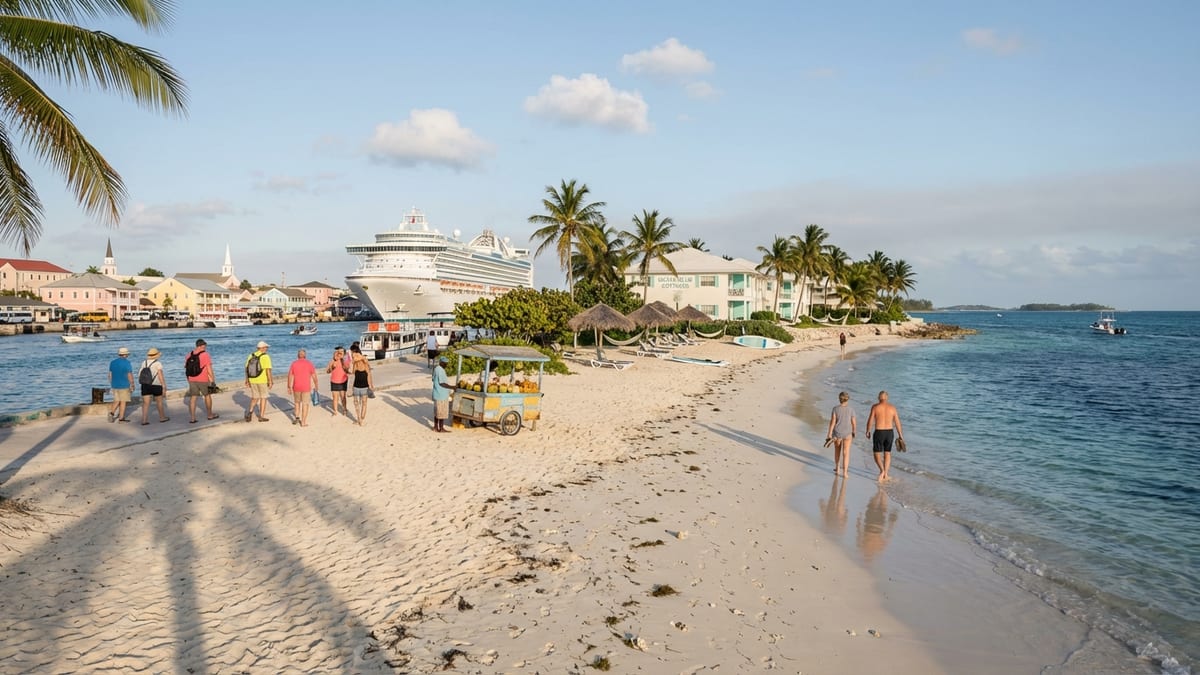
The Bahamas has long embodied the classic Caribbean holiday dream, with powdery beaches, turquoise shallows and a tourism industry that now welcomes more than 11 million visitors a year. For travelers, one of the biggest planning decisions is whether to experience the islands by cruise ship or by checking into a resort on shore. Each approach offers a different rhythm, budget profile and level of immersion. Understanding these differences is essential if you want your trip to match your expectations rather than fight them.
The Big Picture: How Bahamas Cruises and Resorts Shape Your Trip
Cruises to the Bahamas are built around movement and sampling. Most itineraries include one to three Bahamian calls such as Nassau, Freeport, Bimini or a private island owned or leased by a cruise line. You sleep at sea, wake up to a new port and have a fixed number of hours ashore before sailing on. That structure offers an efficient, mostly prepackaged way to experience the country, especially if you are new to the Caribbean or looking to combine the Bahamas with other destinations.
Resort stays, in contrast, center your experience on a specific island or even a single beach. Instead of sailing between ports, you fly into the Bahamas and settle in for several days at a hotel or all inclusive property. You may still island hop on day trips, but the focus is on depth rather than breadth, with time to get to know local neighborhoods, favorite cafes, repeat snorkeling spots and the nuances of Bahamian culture that reveal themselves slowly.
On a national level the Bahamas has leaned heavily into both markets. Government figures for 2024 and 2025 show cruise arrivals outnumbering air arrivals by several times, while high spending stopover guests who stay in hotels and resorts remain the backbone of tourism revenue. That split is reflected on the ground. Port areas are being expanded and refreshed for the steady flow of ships, while billions of dollars are being invested in new luxury resorts, branded residences and boutique properties across the islands.
The choice between cruise and resort is therefore not only about travel style, but about what kind of Bahamas you want to see. Port districts and purpose built private islands have a very different feel from tranquil outer cays or a small beachfront inn on Exuma. Neither is automatically better. The right choice depends on your priorities, budget, travel companions and appetite for independence.
Cost, Value and What You Actually Pay For
For many travelers the first comparison point between a Bahamas cruise and a resort stay is price. At face value, short cruises can seem dramatically cheaper. Mass market lines frequently advertise three or four night sailings from ports such as Miami, Fort Lauderdale and Port Canaveral at headline fares that undercut what you might pay for two or three nights in a midrange Bahamian hotel. These fares often include accommodation, transportation between ports and most onboard dining, delivering a perception of excellent value.
The true cost picture is more nuanced. Port taxes and fees are added to cruise fares. On board you also encounter automatic gratuities, specialty dining, drinks packages, internet plans, spa treatments and shore excursions. For some travelers these extras remain optional; others find that the cost of enhancing their experience brings the final bill well above the base fare. Cruises can still be good value, but it is important to price the trip as you will actually take it rather than as it appears in marketing materials.
Resort pricing in the Bahamas operates differently. You pay by the night for your room, often with taxes and resort fees on top. Food, drinks and activities are mostly a la carte unless you select an all inclusive property. Government and industry data show that stopover visitors, which include resort guests, spend more than two thousand dollars per trip on average, with a typical stay around six nights. That figure reflects not only accommodation but restaurant meals, water sports, taxis, inter-island flights and shopping.
From a value standpoint, the appeal of a resort stay is that a larger portion of your spending directly supports local businesses and gives you more control over how and where you allocate your budget. You can choose a modest guesthouse and eat at inexpensive local spots, or you can splurge on a luxury resort and fine dining. In both scenarios you are buying time and flexibility on the ground, which can be especially rewarding if you plan to explore beyond a single beach.
Time on the Islands: Depth Versus Highlights
One of the biggest practical differences between cruising and staying at a resort in the Bahamas is how much usable time you have ashore. Cruise authorities and Bahamian tourism officials report that ships routinely deliver thousands of passengers a day to ports like Nassau, Freeport and Bimini. Yet for each traveler the window in port might be only eight to ten hours. Factor in disembarkation, crowds and the need to be back before departure and your real island time narrows further.
That compressed schedule lends itself to curated highlights. Shore excursions bundle together popular activities such as snorkeling, catamaran sails, visits to private beaches, encounters with pigs in the Exumas or stingrays in the Berry Islands. These experiences can be fun, photogenic and logistically simple. The downside is that they are often shared with many other people and leave little room for unscripted wandering, conversations with locals or relaxed afternoons when you have nowhere in particular to be.
Resort guests, by contrast, measure their island time in days rather than hours. A typical stay might run from four nights to a full week or longer. That allows for slower mornings, repeat visits to favorite spots and the freedom to adjust plans to the weather or your mood. You can dedicate one day to beaches, another to a full-day boat excursion, another to exploring historic downtown Nassau or the Lucayan National Park on Grand Bahama, then still have time left simply to sit and enjoy the view without any agenda at all.
This extended presence also opens doors to more offbeat experiences. You might discover a small fish fry where locals gather on weekends, catch a community Junkanoo practice outside the main festival period, or visit a family owned conch stand that is not on any cruise excursion roster. These encounters give many travelers the sense that they have really visited the Bahamas rather than just passed through, a distinction that becomes clearer the longer you stay.
Experiences, Excursions and Access to the Islands
In terms of activities, both cruises and resorts can provide memorable experiences in the Bahamas, but they do so in different ways. Cruise lines emphasize variety within a tightly managed structure. Major companies operate or partner with private islands and beach clubs where only their passengers disembark for the day. These sites offer calm turquoise waters, water parks, cabanas, dining venues and curated shore excursions, combining a controlled environment with the scenery that travelers expect from the Bahamas.
On port days in Nassau or Freeport, cruise guests can choose from a menu of excursions that typically include snorkeling on nearby reefs, glass bottom boat rides, visits to major resorts with day passes, shopping tours or short cultural experiences. Because the cruise line has prearranged transportation and vetted vendors, the process is straightforward. The tradeoff is that you usually see the islands through the lens of limited-time activities chosen to appeal to broad tastes rather than through spontaneous exploration.
Resort based travelers often have more organic access to their surroundings. Many properties offer complimentary kayaks, stand up paddleboards, bicycles or snorkeling gear. Concierges can arrange fishing charters, diving trips, excursions to nearby cays and guided cultural tours, but guests are also free to explore independently using taxis, rental cars or locally operated ferries. On islands such as Exuma, Eleuthera or Long Island, small operators take visitors to sandbars, blue holes and secluded beaches that seldom see the volume of cruise traffic found near major ports.
For travelers specifically interested in diving, bonefishing, sailing or other niche activities, a resort or lodge that specializes in that pursuit can be a better fit than a cruise. You gain access to guides, gear and local knowledge that build over multiple days, increasing your chances of favorable conditions and meaningful experiences. On the other hand, if your goal is primarily to relax and taste a variety of low-effort activities without planning, a cruise ship coupled with a private island stop may deliver exactly the mix you want.
Crowds, Atmosphere and Cultural Connection
The feel of your Bahamas trip will be shaped not only by activities but by the atmosphere around you. Cruise vacations concentrate thousands of people into a relatively small floating community. On board that can translate to energetic pool decks, lively entertainment and a sense of shared experience. When several large ships are in port at the same time, downtown Nassau or the Freeport waterfront can feel very busy, with tour operators, straw markets and bars working at full tilt to accommodate the influx.
Many travelers enjoy this buzz and the sense of being part of a bigger scene. Others find the crowds and commercial focus tiring. Private island days tend to strike a middle ground, with enough people to create a festive mood but facilities designed around the capacity of the ships that call there. Still, the atmosphere is curated primarily by the cruise line rather than shaped by local communities. While Bahamian staff work at these destinations, the experience is intentionally insulated from some of the complexities of everyday life in the islands.
Resort stays offer a broader spectrum of atmospheres. Large all inclusive or branded properties on Nassau and Paradise Island can feel as busy and programmed as a ship, with pool games, entertainment, multiple restaurants and a high energy bar scene. Smaller boutique hotels on outer islands often deliver the opposite experience: quiet beaches, minimal structured activities and evenings where the loudest sound might be the surf and the music from a nearby beach bar.
Cultural connection tends to come more naturally for resort guests who venture beyond their property. Spending several days on one island allows you to notice local rhythms, from church services and schoolchildren in uniform to rush hour patterns and weekend fish fries. You may get to know hotel staff, taxi drivers, shop owners and guides by name, and hear stories that go deeper than the quick exchanges often possible during a brisk port call. For travelers who value this sense of place, a land based stay usually has an advantage.
Logistics, Safety and Practical Considerations
Logistics are a major reason cruises are popular introductions to the Bahamas. Ships depart from several ports in the southeastern United States that are easy to reach for millions of travelers by car or short flight. Once on board, you unpack once and the vessel takes you to multiple islands without any need to organize transfers, ferry tickets or hotel check in. Immigration formalities, luggage handling and even mealtimes are streamlined, which can be especially reassuring for first time international travelers or families.
Resort stays require more planning but offer more control. You must choose an island and property, book flights, and arrange ground transportation. Depending on connections, you might overnight in a U.S. hub or in Nassau before continuing to an outer island. Yet this added effort can be worthwhile if you want to align your trip with specific seasons, festivals or local events, or if you value being able to adjust your schedule day by day without the fixed timetable of a ship.
Safety is a consideration in either case. The Bahamas remains one of the most visited destinations in the region and most trips are uneventful, but U.S. officials currently advise travelers to exercise increased caution due to crime concerns, particularly in certain areas of Nassau and Freeport. Cruise passengers tend to remain within well trafficked zones and organized excursions, which may reduce some risks but can foster a false sense of invulnerability. Resort guests, especially those renting cars or exploring on their own, should stay informed about local advice, avoid poorly lit areas at night and use common sense when it comes to valuables and personal security.
Weather and seasonal factors also matter. The Bahamas enjoys warm temperatures year round, but hurricane season, typically from June through November, can affect both cruises and land stays. Ships can alter course to avoid storms, sometimes changing ports at short notice. Resort guests may face flight disruptions or island specific impacts. Travel insurance that covers weather related interruptions can be prudent in either scenario, particularly for trips scheduled during the more active months of the Atlantic hurricane season.
Who Should Choose a Cruise, Who Belongs at a Resort
Ultimately the choice between a Bahamas cruise and a resort stay comes down to matching the trip format to your personality and priorities. Short cruises are well suited to travelers who want a convenient, largely prearranged break with clear budgeting and the chance to sample the Bahamas as part of a broader Caribbean itinerary. They work particularly well for those who enjoy onboard entertainment, prefer not to manage logistics and are comfortable experiencing destinations mainly through day visits and excursions.
Families often appreciate the built in activities for children, from kids clubs to water slides, and the ability for different generations to do their own thing yet regroup for meals. Multigenerational groups may find it easier to coordinate on a ship than to juggle multiple room bookings and transportation needs on land. First time cruisers who discover they love the atmosphere can then return on longer itineraries that include more far flung Bahamian ports or combine the islands with other regions.
Resort stays appeal to travelers who prefer depth, flexibility and a stronger sense of place. If your idea of a successful vacation includes mornings at the same beach, learning the menu at a neighborhood restaurant or striking up repeated conversations with the same bartender or dive guide, then staying put on one island will likely be more satisfying than hopping between ports. Couples seeking privacy, honeymooners and travelers interested in quieter outer islands often gravitate toward resorts, villas or small inns.
From a financial perspective, travelers who are comfortable managing their own spending day by day may find a land based stay gives them better control and potentially better value, especially if they are willing to travel in shoulder seasons, consider smaller properties or prepare some of their own meals. Those who strongly prefer to prepay most costs and avoid thinking about money on the trip itself might lean toward an all inclusive resort or a cruise with a well chosen package of extras.
The Takeaway
Choosing between a Bahamas cruise and a resort stay is less about which option is objectively better and more about what kind of experience you want to have. Cruises deliver convenience, a changing view and the comfort of a highly structured environment, giving you a curated sample of the Bahamas with minimal planning. They can be an efficient, sociable and budget friendly way to enjoy clear waters and sunny skies, particularly for shorter getaways.
Resort stays, by contrast, give you time and space. They invite you to settle into the rhythms of a single island, explore beyond the main tourist corridors and develop a more layered understanding of Bahamian life. You trade the variety of multiple ports for the richness that comes from staying put, returning to the same shoreline at different times of day and seeing the same faces often enough to exchange more than a quick greeting.
When you weigh the decision, consider not just the sticker price but how much time you will really spend on the islands, how comfortable you are with independent travel, and whether you value highlights or depth. If you are unsure, one strategy is to start with a short cruise to get acquainted, then return on a dedicated resort stay to an island or cay that captured your imagination. However you choose to experience the Bahamas, aligning the trip format with your travel style is the surest path to the kind of memories you want to bring home.
FAQ
Q1: Are Bahamas cruises actually cheaper than staying at a resort?
In many cases a short Bahamas cruise has a lower starting price than several nights at a resort, especially when you factor in that the fare includes your cabin and most meals. However the final cost can rise once you add port fees, gratuities, drinks, specialty dining, internet and excursions. With a resort you usually pay more per night upfront but have greater control over daily spending and can seek out everything from budget accommodations to luxury stays, so the better value depends on how you like to travel and what extras you prioritize.
Q2: How much time will I really get in the Bahamas on a cruise?
On a typical three to five night cruise that includes Nassau or a private island, you might have roughly eight to ten hours in port on each Bahamian stop. After accounting for disembarkation and the need to return before departure, your usable time is often closer to six to eight hours ashore. Longer itineraries or those with multiple Bahamian ports increase total island time, but your visit to each specific place remains relatively short compared to a land based stay.
Q3: Which option is better for families with young children?
Cruises are often convenient for families because they offer kids clubs, splash zones, scheduled activities and easy dining, all contained within a secure environment. Parents can relax knowing that entertainment is built in and logistics are handled. Resorts can also be excellent, particularly those with family pools, kids programs and spacious suites, but they may require more planning for activities and meals. If you prefer a self contained, high structure environment, a cruise may suit you. If you want more flexibility and the ability to settle into one beach or neighborhood, a family friendly resort is a strong choice.
Q4: Will I experience local Bahamian culture more on a cruise or at a resort?
You will generally have more opportunities for cultural connection during a resort stay, especially if you venture beyond your property. Spending several days on one island makes it easier to visit local markets, attend events, try neighborhood eateries and get to know residents. Cruise passengers can certainly enjoy cultural excursions and sample Bahamian food in port, but the short time frames and structured nature of port calls tend to limit how deeply you can engage.
Q5: How do safety considerations differ between cruises and resort stays?
On cruises, much of your time is spent in the controlled environment of the ship and organized excursions, which can reduce certain risks but does not remove the need for awareness in port. During a resort stay you are more likely to explore independently, so it is important to follow local advice, stay in well frequented areas, avoid displaying valuables and use licensed operators for tours and water sports. In both cases, basic precautions and attention to official travel advisories help you make informed decisions.
Q6: What is the best choice if I want a romantic or honeymoon trip?
For many couples, a resort stay on a quieter Bahamian island or in an adults only property offers the most romantic setting, with privacy, unhurried days and the option to tailor your schedule. You can dine at different restaurants, book spa treatments and linger on the beach without watching the clock. Cruises can still be romantic, particularly on ships with adult only areas and balcony cabins, but the atmosphere tends to be livelier and your time in each destination more structured and limited.
Q7: Do cruises or resorts offer better access to snorkeling and diving?
Both options can deliver impressive snorkeling and diving, but in different ways. Cruises typically offer organized excursions to popular reefs or private island snorkeling areas, which can be ideal if you want a simple, guided experience without arranging gear or transport yourself. Resorts, especially those located near reefs or partnered with dive shops, allow you to get in the water more often over several days, sometimes directly from the beach. Serious divers and enthusiasts often favor land based stays that let them schedule multiple dives under varying conditions.
Q8: How does hurricane season affect the decision between cruise and resort?
During hurricane season, which usually runs from June through November, both cruises and resorts can be affected by storms. Ships have the flexibility to adjust itineraries, skip ports or reroute to avoid severe weather, which may mean you still travel but visit different destinations than planned. Resort guests are more tied to their chosen island and may face delays, cancellations or local disruptions. In either case, travel insurance that covers weather related changes and careful attention to forecasts are advisable if you are traveling during the more active months.
Q9: Is an all inclusive resort a better deal than a cruise?
An all inclusive resort can be an excellent value if you plan to spend most of your time on property and take full advantage of included meals, drinks and activities. It simplifies budgeting in a similar way to a cruise, but with the benefit of more time on one island and often a greater sense of place. Cruises, on the other hand, bundle your transportation between destinations into the fare. The better deal depends on whether you prioritize visiting multiple ports and enjoying shipboard entertainment, or settling into one setting with most expenses covered up front.
Q10: If I have never been to the Bahamas, which should I try first?
If you are unsure how you will feel about Caribbean travel or shipboard life, a short cruise can be a low commitment way to sample the Bahamas alongside the cruising experience. You will get a taste of the scenery and ports without needing to plan many details. If you already know you enjoy beach destinations and want to immerse yourself in one place, starting with a four to seven night resort stay in Nassau, Paradise Island or an outer island can provide a richer introduction. In the long run, many travelers find that a combination of both approaches over different trips offers the most complete picture of what the Bahamas has to offer.