


More news on this day
Sudden airspace closures across Iran, Iraq and parts of Azerbaijan following a sharp escalation in regional conflict are rippling through global aviation, forcing airlines to redraw routes in real time and deepening uncertainty for the tourism industry just as international travel was regaining momentum.
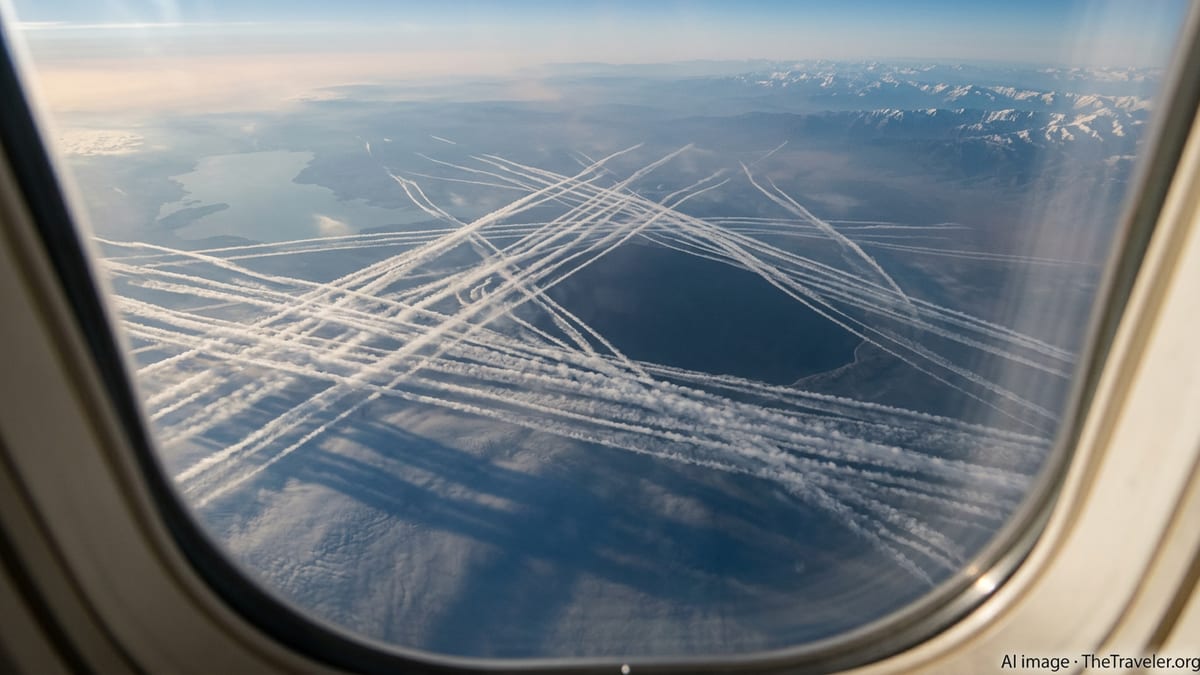
Escalating Conflict Triggers a Patchwork of No-Fly Zones
The latest wave of disruption began on February 28, when coordinated U.S. and Israeli strikes on targets inside Iran prompted a cascade of airspace shutdowns from the Gulf to the Levant. Iran, Iraq, Israel, Qatar, Bahrain, Kuwait and Syria all moved to close their skies, while air traffic over the United Arab Emirates largely halted as authorities imposed a temporary but sweeping suspension of civilian flights. Key hubs in Dubai, Abu Dhabi and Doha, normally among the world’s busiest transit points between Europe, Asia and Africa, saw thousands of flights cancelled or turned back mid-route.
European regulators quickly followed with strengthened warnings. The European Union Aviation Safety Agency extended a Conflict Zone Information Bulletin in early March, advising carriers to avoid the flight information regions covering Iran, Iraq and much of the surrounding Middle East because of the risk posed by missiles and drones at all altitudes. Even when Iranian authorities briefly reopened national airspace after the first night of strikes, routing data showed most European and Asian airlines continuing to steer clear of the Tehran and Baghdad control regions, effectively treating them as a de facto no-fly zone.
The shockwave has not been confined to the Gulf. On March 5, Iranian drones crossed into Azerbaijan’s Nakhchivan exclave, with one reportedly striking near Nakhchivan International Airport and damaging infrastructure. In response, Azerbaijan temporarily closed part of its southern airspace for a 12-hour period, halting overflights that would normally form part of the increasingly important Caucasus corridor linking Europe and Asia. Though the closure was short-lived, it underscored how quickly conflict in and around Iran can spill over to neighboring states and constrict the remaining safe routes.
For travelers, the effect has been immediate and highly visible. Flight-tracking platforms show large swathes of previously busy skies over Iran, Iraq and parts of the Gulf now empty of commercial aircraft, while traffic density has surged over alternative corridors above Turkey, Egypt, Saudi Arabia and the eastern Mediterranean. That concentration is putting strain on air traffic control systems and reducing airlines’ flexibility to manage delays, diversions and emergencies.
Airlines Redraw Maps: Longer Routes, Fuel Stops and Suspended Services
Airlines operating between Europe and Asia, as well as between North America and India or Southeast Asia, have been forced into rapid, complex replanning. Carriers that once traced near-great-circle routes across Iran or Iraq are now pushing flights north over Turkey and the Black Sea, east through Central Asia and Afghanistan, or south over Saudi Arabia and Egypt. Industry analysts estimate that some long-haul journeys have lengthened by three to five hours, adding significant fuel burn and crew costs at a time when margins are already tight.
Gulf super-connectors such as Emirates, Qatar Airways and Etihad were among the hardest hit in the early days of the crisis, with several thousand flights cancelled or delayed as their home airports either closed outright or operated under tight restrictions. While limited evacuation and special services have restarted from the United Arab Emirates, much of the region’s traditional hub-and-spoke activity remains suspended or heavily curtailed. Schedules are being rebuilt day by day as airlines wait for clearer guidance from regulators and insurers on acceptable levels of risk for overflights.
European operators have taken a particularly conservative line. Following EASA’s heightened warnings, many have adopted formal policies to avoid Iranian and Iraqi airspace even when local notices allow overflights, preferring to absorb the cost of longer routings rather than expose passengers and crews to what they regard as unpredictable military activity. Some low-cost and leisure-focused carriers have added technical stops in Cyprus, Greece or Central Asia to refuel and swap crews on ultra-long diversions, turning what were once nonstops into multi-leg journeys to keep duty times within legal limits.
Regional airlines around the Caspian and Caucasus have also adjusted quickly. Azerbaijani operators halted overflights through the temporarily closed southern sectors, while carriers in neighboring Armenia and Georgia have quietly promoted their airports as alternative waypoints for East–West travel. Yet they too remain highly exposed to any further deterioration in regional security, with insurance costs and operational risk assessments being updated almost daily.
Tourism Faces a New Shock Just as Demand Rebounded
The timing of the crisis is particularly painful for the tourism sector. Before the latest escalation, destinations such as the United Arab Emirates, Saudi Arabia, Oman, Qatar and parts of Iran were riding a wave of post-pandemic recovery, with new hotels opening, cruise calls increasing and airlines adding capacity to capture growing demand from Europe and Asia. Analysts had expected double-digit growth in international arrivals to the wider Middle East in 2026.
Those forecasts are now being hastily revised. Early estimates from tourism economics groups suggest that inbound visitor numbers to the region could fall by between 11 and 27 percent this year, a dramatic swing from previous expectations of strong expansion. The combination of outright flight cancellations, prolonged diversions, higher ticket prices and widespread government travel advisories is already deterring discretionary travelers, especially families and first-time visitors unfamiliar with the region.
The impact radiates far beyond the immediate conflict zone. Travelers heading to Indian Ocean resorts, Southeast Asia and even Australasia often rely on one-stop itineraries via Dubai, Doha or Abu Dhabi. With those hubs operating at a fraction of normal capacity, itineraries are being rebooked through European or East Asian gateways, adding travel time and often cost. Package tour operators report a spike in calls from nervous customers seeking reassurance or trying to reroute away from the Middle East entirely.
Within the region, domestic tourism and short-haul travel are also feeling the strain. Popular city-break destinations such as Dubai and Doha, which depend heavily on quick weekend trips from Europe and neighboring Gulf states, face a sudden drop in arrivals. Hotel occupancies, which had climbed back toward pre-pandemic levels, are slipping as conferences, trade shows and large-scale events weigh whether to postpone, cancel or move to alternative cities perceived as safer and more accessible.
How Airlines Are Managing Safety, Insurance and Passenger Communication
Behind the scenes, airline operations centers have shifted into crisis-management mode. Carriers are running rolling risk assessments that blend real-time intelligence from governments and industry bodies with their own internal models. While national authorities decide on formal airspace closures, it is ultimately the airlines’ responsibility to determine whether a given route is safe. Recent history, including the downing of civilian airliners over conflict zones, has made most major carriers acutely aware of the reputational and legal consequences of underestimating the risks.
Insurance is a pivotal factor. War-risk premiums for flights anywhere near the conflict area have jumped, and some insurers have temporarily withdrawn coverage for routes traversing the wider Gulf and Caspian regions. Airlines whose policies exclude operations in designated conflict zones must either secure special waivers at significant extra cost or avoid those regions altogether, accelerating the shift to longer detours and additional fuel stops. Smaller carriers with thinner balance sheets are especially vulnerable, and some have opted to suspend affected routes rather than absorb mounting operational and insurance expenses.
Passenger communication, meanwhile, remains a sore point. Many travelers first learned of cancellations or diversions while already at the airport, as schedule changes raced ahead of automated messaging systems. Airlines and online travel agencies have been urging customers to monitor flight status closely and to ensure their contact details are up to date, but call centers and digital chat channels are still struggling to keep up with demand for rebooking and refunds. Some carriers have introduced flexible change policies for itineraries involving the Middle East, allowing customers to reroute via alternative hubs without standard penalty fees.
Industry groups are pressing for clearer, more coordinated information flows. They argue that closer alignment between aviation regulators, military planners and commercial operators could help reduce last-minute shocks by signaling likely risk scenarios earlier. For now, however, airlines continue to work with fragmented data and shifting advisories, a reality that makes operational planning for the coming weeks extremely uncertain.
Searching for Stable Corridors in an Uncertain Region
As conflict persists, attention is turning to the remaining viable corridors that can keep global air travel moving. Airspace over Saudi Arabia has become a critical east–west artery, bearing unprecedented volumes of long-haul traffic normally distributed across several parallel routes. That concentration has brought delays and occasional airborne holding patterns as controllers manage the surge, but it also demonstrates how essential a handful of relatively stable states have become to global connectivity.
The Caucasus and Black Sea regions are emerging as secondary pressure valves, with flights funneled through Turkish and Georgian airspace and, when conditions allow, over parts of Azerbaijan and Armenia. Yet these paths are constrained by geography, existing military tensions and the legacy of earlier conflicts, reminding planners that there are limited truly safe alternatives when a large section of Middle Eastern sky is effectively off-limits.
Looking ahead, airlines are preparing for a prolonged period of volatility. Network planners are drawing up tiered schedules that can be activated depending on how the conflict evolves, from partial normalization if some airspace reopens to deeper cuts should hostilities spread further into the Caucasus or eastern Mediterranean. Fleet deployment is being adjusted to favor fuel-efficient widebodies on affected routes, and alliances are exploring deeper code sharing and capacity swaps to plug gaps left by suspended services.
For travelers and the tourism industry, the message is that disruption is likely to remain a defining feature of trips that cross the Middle East in the coming months. While airlines have shown they can adapt quickly to changing risk maps, there is no immediate prospect of a return to the seamless, highly optimized routing that underpinned the region’s rise as a global aviation crossroads. Until the conflict eases and airspace restrictions are lifted, the skies over Iran, Iraq and Azerbaijan will continue to cast a long shadow over global mobility.