

More news on this day
Volcanic activity in eastern Indonesia has once again rippled across one of Asia’s busiest holiday gateways, with ash clouds prompting widespread flight cancellations to and from Bali and leaving travelers scrambling to rearrange their plans.
Get the latest news straight to your inbox!
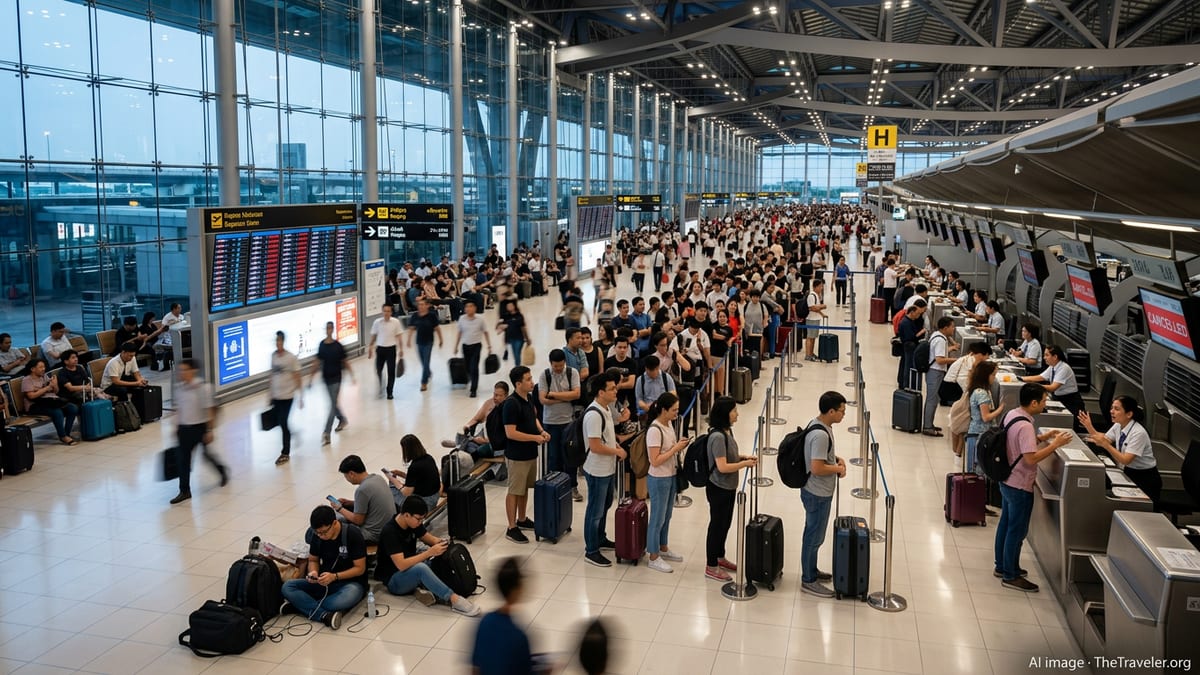
Volcanic Eruption Sends Ash Into Key Air Corridors
Recent eruptions from volcanoes in eastern Indonesia have sent ash plumes into air routes commonly used by flights serving Bali, disrupting regional traffic despite Bali’s own skies remaining largely free of ash at times. Publicly available information points in particular to renewed activity at volcanoes in East Nusa Tenggara, including Mount Lewotobi Laki Laki, whose ash clouds have on multiple occasions drifted into busy flight paths used by international services bound for Denpasar.
Ash in the upper atmosphere poses a well documented risk to jet engines and aircraft systems, prompting aviation authorities and airlines to act cautiously when clouds intersect key corridors. Travel advisories and airline statements indicate that carriers have opted to cancel or reroute flights even when Bali’s I Gusti Ngurah Rai International Airport remains technically open, citing the potential for conditions to deteriorate along approach and departure routes.
In several recent incidents, airlines operating long haul services to Bali from India, Australia and Southeast Asia have turned aircraft back mid journey or suspended rotations for specific days, underscoring how eruptions hundreds of kilometers away can still effectively ground Bali bound traffic.
Wave of Cancellations Hits Bali’s Ngurah Rai Airport
The impact on travelers has been immediate at Bali’s main gateway, where rolling cancellations have affected both arrivals and departures as carriers respond to changing ash forecasts. Reports from regional news outlets and airline advisories describe days when dozens of international services were withdrawn from the schedule, including flights linking Denpasar with Delhi, Singapore, Sydney and other major hubs.
Some accounts from passengers and local coverage point to days when more than 30 international flights were canceled in a single 24 hour period, including a mix of outbound and inbound services. On other days, smaller clusters of cancellations have been recorded as airlines wait for updated ash dispersion models before resuming operations.
While full airport closures have been less frequent than during Bali’s high profile Mount Agung eruptions of 2017 and 2018, the pattern of repeated partial disruption has still left many travelers stranded in transit hubs or forced to extend stays on the island. Schedules have often been reviewed at short notice, with some flights reinstated after conditions improved and others scratched late in the boarding process.
Domestic traffic has also faced pressure, particularly routes that connect Bali with islands closer to the erupting volcanoes. In several recent episodes, these shorter services have been among the first to be suspended when ash clouds drift across eastern corridors.
Airlines Balance Safety, Schedules and Passenger Demands
The renewed volcanic disruption has highlighted how airlines and regulators weigh safety against commercial pressures in one of the world’s most tourism dependent aviation markets. Publicly available aviation guidance emphasizes that even low concentrations of ash can cause serious engine damage, leading carriers to err on the side of caution when satellite imagery and pilot reports indicate possible contamination.
Airlines serving Bali have adopted varied responses depending on route, fleet type and risk tolerance. Some have preemptively canceled rotations on days when ash clouds are forecast to intersect long haul paths, offering passengers fee free rebooking or refunds. Others have attempted to maintain service by adjusting flight times, routing aircraft around affected areas or operating at different cruising levels where meteorological data suggests safer conditions.
Travel insurance advisories and tour operator updates show a parallel effort to manage customer expectations. Policies have been activated that treat eruption related disruption as a defined event, allowing eligible travelers to claim for additional accommodation, missed connections or unused land arrangements, subject to policy terms and purchase dates.
For ground handlers and airport operators in Bali, the stop start nature of the disruption has meant repeated operational adjustments. Staff and facilities have needed to scale up for periods of normal traffic, then quickly pivot to accommodate stranded passengers when another wave of cancellations is announced.
Tourism Industry Faces Renewed Volcanic Uncertainty
Bali’s tourism sector, which remains a cornerstone of the island’s economy, is once again contending with the reputational and logistical fallout from volcanic activity elsewhere in the Indonesian archipelago. Hotel operators, tour companies and small businesses reliant on international visitors are reporting a mix of short term cancellations and increased booking inquiries from travelers seeking flexible options and clearer contingency plans.
Industry commentary suggests that while most travelers still view Bali as a desirable destination, some are delaying trips or opting for more flexible fares, closely checking airline policies on natural disruption. Travel forums and agency updates indicate rising interest in routes that offer alternative connections or greater rebooking flexibility if volcano related closures intensify.
Local businesses have also become more accustomed to these disruptions after previous high profile eruptions. Many now maintain direct communication channels with repeat guests, sharing practical guidance on how to handle last minute flight changes and suggesting backup activities if departures are delayed.
Despite the challenges, booking patterns suggest that demand for Bali remains resilient, particularly from regional markets. However, the latest eruption episodes have reinforced perceptions that travel to the island can be vulnerable to events unfolding hundreds of kilometers away, beyond the control of local operators.
Travelers Advised to Monitor Updates and Build Flexibility
For travelers planning journeys to or from Bali in the coming weeks, publicly available advisories consistently emphasize the importance of monitoring updates from airlines and aviation agencies right up to departure. Because volcanic conditions can change within hours, a flight that appears to be operating as scheduled may still be subject to last minute rerouting or cancellation if ash clouds drift into a critical corridor.
Travel specialists recommend booking tickets that allow for date changes, keeping at least one buffer day at the end of trips where possible, and ensuring accommodation plans can be adjusted if departures are pushed back. Many policies also highlight the value of comprehensive travel insurance purchased before a widely reported eruption, as cover can be more limited once an event is classified as a known incident.
Passengers already in Bali are being encouraged through airline notices and tourism bulletins to confirm their flight status regularly rather than relying solely on original itineraries. Airport information boards and carrier communication channels have become key sources for same day changes, especially on routes passing closest to active volcanoes.
As Indonesia’s complex volcanic landscape continues to shape regional air travel, Bali’s experience illustrates how quickly a shift in wind direction or ash intensity can move from a geological event to a global tourism story. For now, the island’s runways remain busier on some days than others, but the prospect of further disruption is likely to keep both airlines and travelers on high alert.