

More news on this day
Volcanic ash linked to renewed activity at Indonesia’s Mount Lewotobi is once again disrupting flights to and from Bali in April 2026, with airlines adjusting routes and warning of potential delays across one of Asia’s busiest holiday corridors.
Get the latest news straight to your inbox!
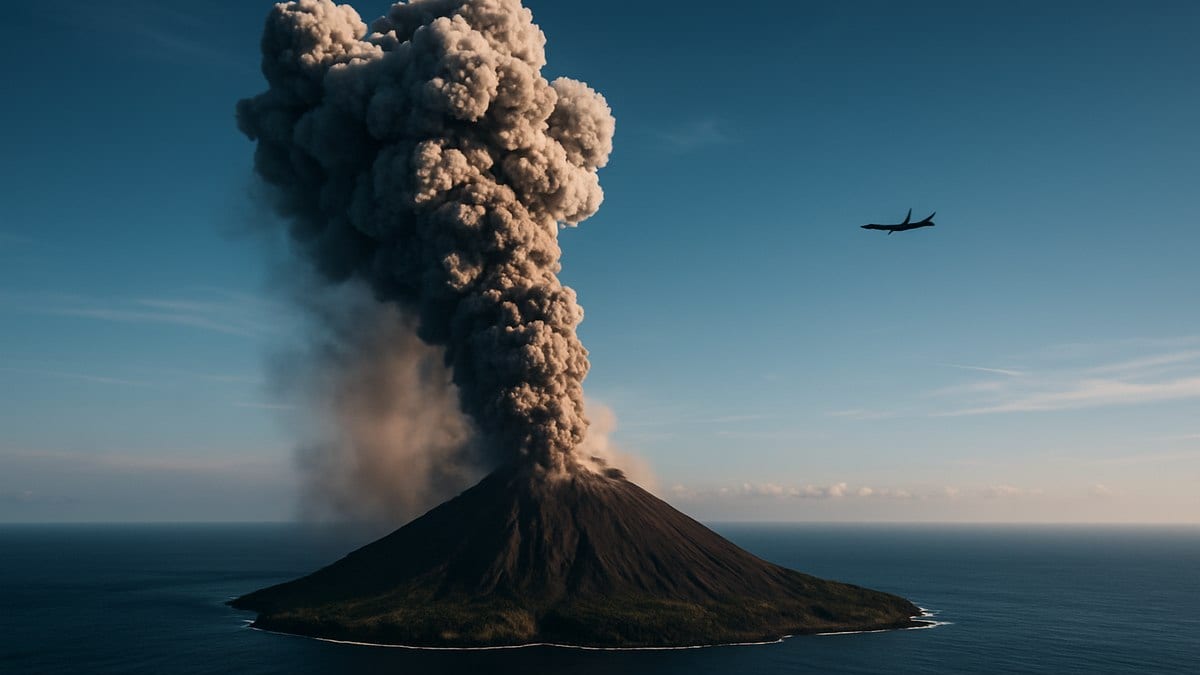
Fresh ash prompts renewed flight headaches
Publicly available aviation data and regional media coverage indicate that fresh ash emissions from Mount Lewotobi on Flores have intensified in recent days, prompting air traffic managers to re‑evaluate key flight paths serving Bali. While Bali’s I Gusti Ngurah Rai International Airport remains technically open, airlines are reported to be cancelling or rerouting selected services as a precaution when ash drifts toward established approach corridors.
The renewed disruption follows a pattern seen since late 2024, when a sustained eruption at Lewotobi Laki‑Laki led to repeated ash plumes rising into cruising altitudes and drifting hundreds of kilometres across Indonesia’s archipelago. Previous episodes in 2025 triggered widespread cancellations at Bali’s main airport and at several smaller gateways in eastern Indonesia, with operations only resuming once satellite monitoring showed ash concentrations falling away from major air routes.
In early April 2026, aviation advisories continue to flag Indonesian airspace as an area of interest due to intermittent ash clouds from multiple volcanoes. Reports point to operators adopting a cautious stance, preferring to delay or divert flights rather than risk exposure to fine ash that can damage jet engines, sensors and windscreens even when concentrations appear visually low.
Travel industry commentary suggests that the latest wave of disruption is more targeted than the blanket closures seen during earlier eruptions of Mount Agung or Rinjani, but it is still creating last‑minute changes for passengers connecting through Bali from Australia, Southeast Asia and the wider region.
Long‑running eruption keeps pressure on regional skies
Mount Lewotobi’s current eruptive phase has been under close watch since late 2023 and early 2024, when Indonesian volcanology bulletins first highlighted sustained activity and growing ash emissions. Over subsequent months, ash columns repeatedly climbed into the altitude band commonly used by regional and long‑haul jets, on several occasions reaching heights of 10 to 11 kilometres and spreading along prevailing wind patterns toward major flight corridors.
Published accounts from 2024 and 2025 describe how earlier Lewotobi eruptions forced temporary closures or restrictions at airports in East Nusa Tenggara before ash drifted westward toward Bali. During some of the strongest events, Bali’s Ngurah Rai airport experienced waves of cancellations and extended delays, particularly on services linking the island with Australia and domestic hubs such as Jakarta and Surabaya.
Those past episodes mean airlines and air navigation services in Indonesia now have a tested playbook for responding to new ash surges. When satellite imagery and volcanic ash advisory centres identify denser plumes near busy airways, carriers typically thin out schedules on affected routes, dispatch aircraft with additional fuel to allow for rerouting, and hold departures on the ground until clearer paths can be confirmed.
Current reports for April 2026 suggest that this established risk‑management approach is again in play around Bali and the wider Lesser Sunda region, with operators aiming to keep core connections running while avoiding any unnecessary exposure to ash‑contaminated airspace.
What travelers to Bali can expect in April 2026
For travelers heading to Bali in the coming days, the latest Lewotobi ash developments translate less into outright airport closure and more into a heightened chance of schedule changes. Airline and airport information feeds show that most flights are still operating, but some departures and arrivals may be retimed, consolidated or routed on alternative tracks to skirt any detected ash clouds.
Travel advisories and consumer guidance from earlier Lewotobi events underline the importance of checking flight status frequently in the 24 hours before departure. When ash‑related disruptions have occurred in the past, some carriers have offered flexible rebooking options or allowed passengers to shift travel dates without penalty, especially on routes with a history of repeated ash exposure.
Travel insurance experts also point out that not all policies treat volcanic ash in the same way. Some plans specifically list volcanic activity as a covered disruption, while others classify it under broader “natural event” clauses that may carry additional conditions. Travelers are therefore encouraged to review their policy wording carefully, particularly those connecting through Bali from longer‑haul origins where alternative routings can be complex and costly.
On the ground in Bali, hotel and tour operators are used to occasional volcanic interruptions and generally accommodate late arrivals where possible. However, April is a popular period for regional travel, so travelers facing rebooked flights may need to coordinate closely with accommodation providers to avoid no‑show penalties.
Airlines and aviation agencies adapt to evolving ash risks
Publicly available information from global volcanic ash advisory centres and aviation safety bodies highlights how advances in satellite imaging, ash dispersion modelling and pilot reporting are helping airlines fine‑tune their responses to eruptions such as those at Mount Lewotobi. Instead of broad, time‑based closures of entire regions, decision‑makers are increasingly relying on real‑time data to identify specific altitudes and corridors that should be avoided.
The shift toward more targeted restrictions has been visible across Indonesia’s busy airspace in recent years. Earlier eruptions of Mount Agung on Bali, as well as Rinjani and Lewotobi itself, led to significant but relatively short‑lived shutdowns that were lifted once monitoring showed ash concentrations had moved or dissipated. Those experiences have informed current contingency plans, including pre‑agreed diversion airports and communication protocols designed to keep passengers updated more quickly.
Nevertheless, volcanic ash remains a uniquely challenging hazard. Unlike thunderstorms or routine turbulence, ash clouds can be difficult to see at night or in certain lighting conditions, and the fine particles can cause abrupt power loss in turbine engines if ingested in sufficient quantities. As a result, carriers operating in and out of Bali remain conservative in their risk assessments when Lewotobi’s activity increases, even if that means additional disruption in the short term.
Aviation analysts note that Indonesia’s position along the seismically active Pacific Ring of Fire means periodic eruption‑related flight impacts are likely to remain a fact of life for the country’s tourism and transport sectors, and that the current situation around Bali in April 2026 fits into a broader pattern rather than representing a one‑off shock.
Planning ahead for trips through Bali’s main gateway
With fresh Lewotobi ash still an intermittent factor, prospective visitors to Bali over the coming weeks are being urged, in publicly available travel guidance, to build additional flexibility into their plans. This can include leaving longer connection times on multi‑segment itineraries, avoiding tight same‑day links to onward international flights, and considering the potential for short‑notice schedule changes when arranging transfers and tours.
Regional travel forums and past advisories from diplomatic missions in Southeast Asia emphasize that, during previous ash events, many travelers were eventually able to reach Bali or return home, albeit with delays of several hours or, in heavier disruption windows, one or two days. Those experiences suggest that patience and up‑to‑date information, rather than outright trip cancellations, are often the most practical response when volcanic activity affects Indonesian skies.
As April 2026 progresses, the trajectory of Mount Lewotobi’s activity will remain a key variable for Bali‑bound flights. Should ash output ease, schedules are likely to normalise quickly, as they did after earlier eruptions in 2025. If activity intensifies, more extensive traffic management measures, including possible temporary runway closures, cannot be ruled out, although any such steps would be expected to follow established regional protocols.
For now, Bali’s tourism industry continues to operate, with resorts, restaurants and attractions open as usual, even as airlines and air navigation services watch the evolving ash situation to keep one of the world’s best‑known island destinations connected as safely as possible.