

More news on this day
Volcanic ash from Mount Lewotobi Laki Laki in East Flores has once again disrupted air links to Bali in April 2026, with reports indicating waves of flight cancellations, diversions and delays as airlines reassess safety along key domestic and international routes.
Get the latest news straight to your inbox!
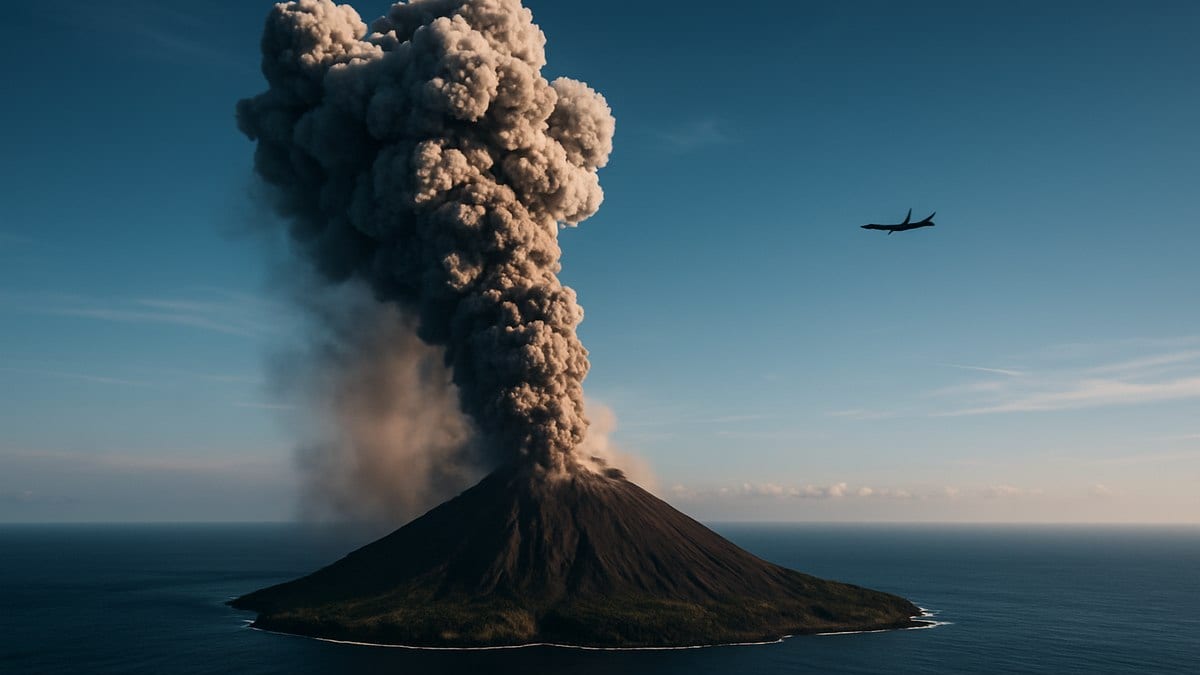
Renewed Eruptions Revive Ash-Cloud Flight Risks
Mount Lewotobi Laki Laki, located on Flores Island in East Nusa Tenggara, has remained intermittently active since late 2023, with a series of eruptive phases generating high ash plumes across the region. Publicly available monitoring data from Indonesia’s geological and disaster agencies indicate that the volcano entered another pronounced phase of activity in early April 2026, sending fresh columns of ash into busy air corridors that serve Bali and eastern Indonesia.
Recent bulletins describe renewed eruptions in mid April 2026, with seismic records capturing short but energetic bursts accompanied by visible ash emissions. The exact height and extent of each ash column vary, but aviation notices highlight the risk that fine volcanic particles pose to aircraft engines and navigation systems, particularly along routes that cross between Bali, Flores and other parts of the archipelago.
This latest phase builds on a pattern established by earlier Lewotobi episodes in 2024 and 2025, when drifting ash clouds contributed to regional airspace closures and temporary shutdowns of Denpasar’s I Gusti Ngurah Rai International Airport. While Bali lies hundreds of kilometers from the crater, prevailing winds can carry ash toward the island, forcing airlines and air-traffic controllers to act with caution whenever new eruptions are reported.
The result in April 2026 is heightened operational sensitivity. Even relatively short-lived eruptions are now triggering rapid reviews of flight paths and occasional suspension of services when satellite imagery or pilot reports suggest ash along standard approach and departure tracks.
Disruptions at Bali’s Ngurah Rai International Airport
In the opening weeks of April 2026, Bali’s Ngurah Rai International Airport has again become a focal point for the wider impact of Lewotobi’s unrest. Local news coverage and traveler accounts describe clusters of cancellations affecting both domestic and international services, with some days seeing dozens of flights scrubbed or rerouted at short notice.
Reports from Bali-based travel and hospitality operators indicate that the disruptions have not been continuous but have instead arrived in waves, often coinciding with days of more intense volcanic activity or shifting wind patterns. On such days, airlines have chosen to delay departures, hold aircraft at origin airports, or substitute alternate routings that avoid airspace projected to be affected by ash plumes.
At the terminal level, this has translated into crowded departure halls and longer-than-usual check-in and security queues, as travelers attempt to rebook or wait out rolling updates from airline desks. Some carriers have been able to consolidate passengers onto later services once conditions improve, while others have issued travel waivers allowing ticket changes without penalty when volcanic ash is cited as the cause.
Airport operations appear to have remained broadly functional for much of April, with runway closures limited in duration and scope. However, publicly available images and local media assessments suggest a visible slowdown in both arrivals and departures on days when Lewotobi’s ash clouds drift closest to Bali’s main approach paths.
Stranded Tourists and Emergency Stay Measures
The knock-on effects for visitors have been significant, particularly for travelers nearing the end of their stays. Local tourism-industry reporting in early April highlights that some foreign visitors have found themselves unexpectedly stranded after outbound flights were canceled or rescheduled outside their original visa validity periods.
In response to these circumstances, publicly available information from immigration-focused channels in Bali describes the introduction of temporary emergency stay arrangements for affected tourists. The measures, offered at no additional charge to eligible visitors, are intended to cover those whose flights were canceled or severely delayed due to airspace disruptions and who risked overstaying through no fault of their own.
Travel service providers on the island have begun advising clients to retain clear documentation of canceled flights, revised itineraries and any written notices from airlines attributing changes to volcanic activity. Such records can assist with immigration processes and support insurance claims once travelers return home.
Accommodation providers in popular areas such as Kuta, Seminyak and Ubud are also reporting extended stays and last-minute bookings from guests who suddenly require additional nights. While some properties have been able to offer flexible rates or complimentary late check-outs, others are facing capacity pressures during peak holiday and domestic travel periods.
Impacts on Domestic and Regional Air Networks
Beyond the immediate situation in Bali, April’s Lewotobi activity is rippling through broader domestic and regional networks. Aviation-industry bulletins tracking route changes across Indonesia in 2026 show airlines adjusting capacity on certain Bali-linked domestic routes, including connections to secondary cities that are more directly aligned with Flores and East Nusa Tenggara.
Some carriers have announced short-term suspensions or frequency reductions on routes that are considered more vulnerable to ash interference, while retaining or even strengthening services on alternative corridors viewed as less exposed. Wider fleet-planning decisions for the April to June travel season are now being made with the assumption that sporadic volcanic disruptions could continue.
Regional connections are also feeling the strain. Flights between Bali and key hubs in Southeast Asia and Australia have experienced uneven punctuality, with occasional diversions and refueling stops when aircraft take longer detours around suspected ash. Industry analysts note that these changes increase operating costs and complicate aircraft rotations, with effects that can cascade into schedules several days after a major ash event.
Despite this, capacity announcements for later in 2026 still show confidence in Bali’s long-term appeal as a gateway to Indonesia. New routes and additional frequencies scheduled for the second half of the year suggest that airlines see the current volatility as a manageable, if unwelcome, operational challenge rather than a structural threat to demand.
What Travelers Should Know for April 2026 Trips
For travelers heading to or from Bali in April 2026, public advisories and travel-industry guidance converge on a few consistent recommendations. Prospective visitors are encouraged to monitor airline notifications closely in the 48 hours before departure, as schedule changes related to volcanic ash are often confirmed only after fresh satellite imagery and updated aviation weather briefings become available.
Many carriers serving Bali have activated flexible rebooking policies when volcanic activity is cited as a contributing factor, allowing passengers to move travel dates or reroute via different hubs. Travel insurers and tour operators are also publishing updates that clarify the extent to which ash-related disruptions are covered under existing policies, particularly regarding extra accommodation costs, missed connections and alternative transport.
Travelers already on the island are being urged, through published travel alerts, to allow additional time at the airport in case of longer queues and to keep essential items and medications in carry-on luggage in the event of an unplanned overnight delay. Those with tight onward connections through other regional hubs may benefit from building in longer layovers or considering more direct routings where available.
While Lewotobi Laki Laki’s current activity has added a layer of uncertainty for April 2026 journeys, Bali remains open to visitors and continues to receive substantial numbers of domestic and international arrivals on days when skies are clear of ash. For now, the situation is defined less by prolonged shutdowns and more by intermittent disruptions that reward flexible itineraries, up-to-date information and a degree of patience at the departure gate.