

More news on this day
Bali’s most sacred volcano, Mount Agung, has been closed to climbers for roughly a month as the island enters a period of major religious ceremonies at Besakih Temple, halting one of its signature adventure tourism experiences during a key travel season.
Get the latest news straight to your inbox!
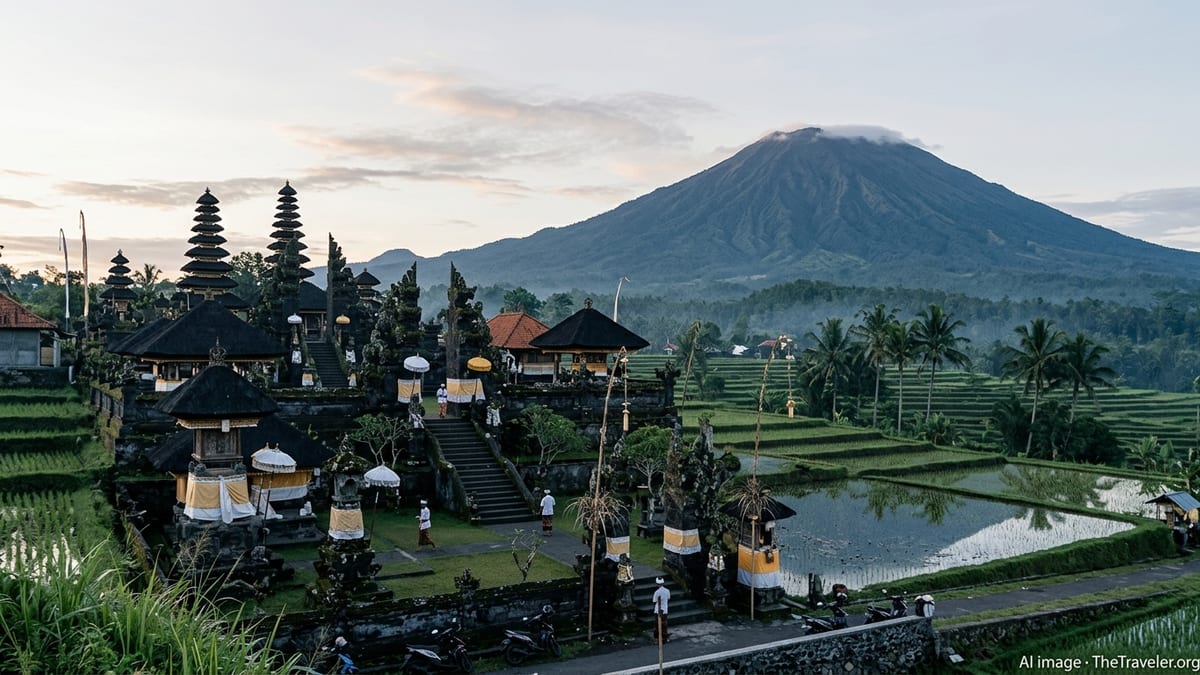
Month-Long Closure Centered On Besakih Temple Rites
Publicly available information from regional tourism advisories and local news outlets indicates that access to Mount Agung’s hiking routes is being suspended for about four weeks to allow uninterrupted religious rituals at Pura Agung Besakih, often referred to as Bali’s Mother Temple. The current shutdown falls between late March and late April, coinciding with a dense calendar of ceremonies that draw worshippers from across the island.
The restriction applies to all trekking paths, including the popular Besakih and Pasar Agung approaches that normally take hikers to sunrise viewpoints near the summit. Tour operators have been instructed to halt selling and running Mount Agung hikes during the closure period, and climbers are being turned back at official posts leading into the sacred zone.
Reports highlight that the temporary ban is framed not as a safety measure in response to volcanic activity, but as an act of respect for ritual purity. During major ceremonies, sacred areas around Besakih and the slopes of Mount Agung are reserved for worship, with local customary rules limiting non-religious access to protect the sanctity of the site.
Visitors already on the island are being advised to adjust their plans, while those planning future trips are urged to check whether the closure overlaps with their travel dates, as ceremonies tied to the Balinese calendar can shift slightly from year to year.
Legal Backing Reflects Bali’s Shift Toward Sacred-Site Protection
The latest shutdown follows a series of formal measures in recent years to strengthen protection of Bali’s sacred mountains. Previous closures of Mount Agung for ceremonies in 2024 and 2025 were anchored in a governor’s circular that made entering the mountain’s sacred zone without permission during specified periods a provincial-level offense, according to published coverage by Bali-focused media and legal advisories.
Those earlier directives covered extended blocks of time, including a roughly two-month closure from October to November 2024 and another stretch from early April to early May 2025. The pattern illustrates how ritual calendars, rather than tourism demand, are increasingly determining when the volcano is available for recreational climbing.
Advocates for tighter rules argue that formalizing closures deters disrespectful behavior on sacred peaks, an issue that has surfaced repeatedly on social media and in local reporting. Incidents such as inappropriate photographs, off-trail wandering in temple precincts, and hiking against community wishes have fueled calls for clearer boundaries.
For tourism businesses, the growing use of legal instruments creates more predictability, even if it temporarily restricts income. With dates published ahead of time, trekking companies and hotels can adjust promotional campaigns and advise guests before they arrive, rather than cancelling tours at short notice once ceremonies begin.
Immediate Tourism Impact: Trekking Operators Pivot Plans
The most direct effect of the month-long closure is being felt by trekking operators in Karangasem and surrounding regions that rely on Mount Agung sunrise hikes as a core product. Many small guiding businesses build their high-season schedules around the volcano, marketing it as one of Bali’s most challenging and rewarding climbs.
With routes closed, operators are steering clients toward alternative experiences, including sunrise treks on Mount Batur, lower-impact walks around rice terraces, and cultural tours linked to the same religious season that has paused climbing. Some regional tourism commentaries suggest that the rerouting is helping spread visitor flows to lesser-known areas, although income from high-fee summit treks is difficult to replace in the short term.
Accommodation providers near Agung’s main trailheads are also adjusting. Guesthouses and homestays that typically cater to pre-dawn hikers report reorienting their offerings toward slower-paced stays, highlighting views of the volcano from a respectful distance and promoting temple festivals, village markets, and local craft workshops instead of summit attempts.
Travel planners note that while a closure of one marquee attraction can initially discourage bookings, Bali’s broader appeal, from beaches and wellness retreats to cultural festivals, gives the island room to absorb the disruption. For many visitors, trekking is just one component of a multi-stop itinerary.
Balancing Spiritual Priorities With Visitor Expectations
The current shutdown of Mount Agung highlights a long-running debate about how to reconcile Bali’s mass tourism economy with the spiritual significance of its landscapes. Cultural studies research and local discourse emphasize that mountains such as Agung are viewed not simply as natural features, but as living embodiments of divine presence within Balinese Hindu cosmology.
This perspective shapes expectations around behavior on the mountain. Local customary norms typically call for modest dress, guided hikes, and avoidance of certain activities or areas during key ritual times. When visitor behavior clashes with those expectations, it can trigger community pressure for tighter access controls, as seen in past discussions about restricting or fully banning non-religious climbs.
Travel commentary over recent seasons indicates a growing recognition among international visitors of these sensitivities. Many blogs, forums, and destination guides now emphasize that access can close with little flexibility around sacred dates, encouraging would-be hikers to treat the experience as a privilege rather than a guaranteed activity.
For Bali’s policymakers and community leaders, the closure offers another test case in managing that balance. By prioritizing ceremonies at Besakih and maintaining a clear, time-limited ban on trekking, the island is signaling that spiritual obligations come first, even when this temporarily curbs one of its most marketable adventure tourism assets.
What Travelers Should Know Before Planning an Agung Trek
For future visitors, the latest month-long pause underscores the importance of checking both religious and regulatory calendars before committing to a Mount Agung trek. The Balinese ceremonial year is distinct from the Gregorian calendar, which means closure dates can vary; major rituals tied to full moons and temple anniversaries often drive access decisions.
Travelers are encouraged by public advisories and local coverage to verify whether any new circulars or community notices are in force ahead of their trip, ideally through licensed guides or reputable tour agencies that stay informed about temple and village decisions. Booking last-minute or maintaining flexible dates can help reduce disappointment if a planned climb suddenly overlaps with a sacred period.
Visitors already in Bali during a closure still have options to appreciate Mount Agung without setting foot on its slopes. Many viewpoints across eastern Bali offer sweeping vistas of the volcano at sunrise and sunset, and some tour programs now integrate storytelling about the mountain’s spiritual role, temple networks, and recent closures into cultural excursions.
The latest shutdown serves as a reminder that Bali’s most iconic natural landmarks are also active religious spaces. For tourism on the island, accepting periodic inaccessibility as part of that reality may increasingly become a condition of experiencing its most storied places.