

More news on this day
Travelers heading from Bangkok to Koh Samui on Wednesday morning faced fresh disruption after an early Bangkok Airways departure was cancelled at short notice, stranding passengers at Suvarnabhumi Airport and intensifying concerns over the reliability of one of Thailand’s busiest domestic corridors.
Early Morning Cancellation Deepens Ongoing Disruptions
According to real-time airport and flight-tracking data, a Bangkok Airways service operating on the Bangkok–Samui route was pulled from the schedule in the early hours, leaving booked passengers to discover at check in that their flight would not depart. While most other morning departures to the island appeared to operate, the sudden loss of one rotation tightened capacity further on a route that has already been under pressure throughout the peak season.
The affected flight formed part of the tightly banked morning wave of services funnelling holidaymakers and connecting international passengers from Bangkok’s Suvarnabhumi Airport to Koh Samui. With limited alternative flights and high load factors on remaining services, many passengers reported being unable to secure same-day rebooking to the island or onward ferry connections from the mainland.
The latest disruption follows weeks of reports from travelers struggling to find seats on Bangkok–Samui services, particularly around weekends and peak holiday dates. Combined with previous instances of delayed or cancelled Bangkok Airways flights on the Samui–Bangkok leg, the new cancellation is heightening scrutiny of reliability on this high-demand domestic route.
Passengers Stranded at Suvarnabhumi Face Long Queues and Uncertainty
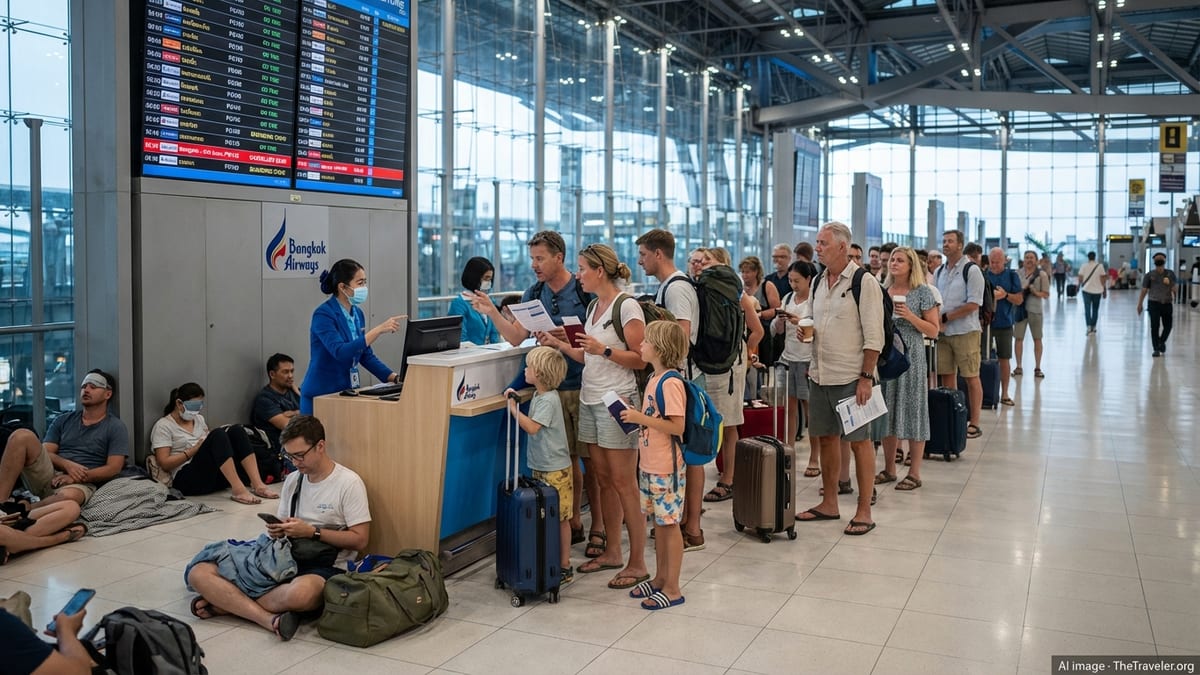
At Suvarnabhumi, the immediate impact was visible in growing queues at Bangkok Airways service desks as stranded passengers sought answers and rebooking options. Many were partway through longer itineraries, having just arrived on overnight or early-morning international flights with tight same-day connections to Samui for resort stays, weddings and dive trips.
Several travelers reported being offered rebooking on later flights the same day on a standby basis, with no guarantee of a seat due to already strong demand. Others were told that confirmed rebooking might only be possible one or more days later, effectively cutting into prepaid hotel stays on Samui or forcing them to consider rerouting via Surat Thani with a bus and ferry combination.
The disruption added to broader operational pressure at Suvarnabhumi, which has been grappling with high traffic volumes and weather-related knock-on delays across Asia. With hundreds of delayed flights reported across the region, even a single cancellation on a constrained route like Bangkok–Samui can have an outsized effect on passenger flows and airport congestion.
Knock-on Effects for Koh Samui Tourism and Island Connectivity
Koh Samui’s tourism economy depends heavily on reliable air links to Bangkok, with Bangkok Airways operating the majority of flights into privately run Samui Airport. When a morning flight is cancelled, the impact is felt not only at departure airports but also by hotels, resorts and tour operators on the island waiting to welcome arriving guests.
Industry sources note that peak-season services to Samui have been running close to full, leaving little slack in the system when aircraft go tech or weather or staffing issues force last-minute schedule changes. The result is that cancellations can quickly translate into missed check-ins, shortened stays and rebooked excursions, with costs often borne by travelers and smaller local businesses rather than large carriers or hotel chains.
Travel agents in Bangkok and on Samui say they have increasingly been advising clients to build in longer connection times and, where possible, to travel a day earlier than strictly necessary for key events such as weddings, retreats and dive liveaboards. The latest cancellation is likely to reinforce that caution as the island continues to attract strong demand from European, Middle Eastern and regional travelers.
Limited Alternatives on a Monopolized Route
The disruption has once again highlighted the limited alternatives available to passengers when a Bangkok Airways flight on the Bangkok–Samui corridor is cancelled. Because the airline holds the dominant position at Samui Airport, with a capped number of daily movements, other carriers have only a small presence on the route, leaving travelers with few same-day options if their flight is pulled from the schedule.
Overland and sea combinations via Surat Thani and Don Sak pier remain a fallback, but they significantly extend travel time compared with the one-hour hop from Bangkok to Samui. For passengers already at Suvarnabhumi with checked luggage, tight holiday schedules or young children in tow, the prospect of transferring to another airport and then taking a bus and ferry can be logistically daunting.
Consumer advocates say the concentration of services on a single airline also shapes how cancellations are handled. With alternative carriers unable to absorb large numbers of disrupted passengers, those affected are often dependent on the original airline’s willingness to offer hotel accommodation, meal vouchers or rerouting, which can vary depending on fare type and the cause of the disruption.
What Travelers Need to Know Now
For passengers booked on upcoming Bangkok–Samui flights, industry experts recommend closely monitoring flight status in the 24 hours before departure and checking in online as early as possible to secure seats and boarding passes. Travelers with onward connections, such as ferries to Koh Phangan or Koh Tao, are being urged to allow extra buffer time or consider flexible tickets that can be changed without heavy penalties.
Those already affected by today’s cancellation at Suvarnabhumi are being directed to Bangkok Airways service counters inside the terminal, where staff are prioritising same-day rebooking subject to seat availability. Passengers whose trips are time-sensitive may wish to ask specifically about rerouting to Surat Thani or other mainland airports with ground and ferry connections, even if this involves a more complex journey.
Travel planners say the incident underscores the importance of comprehensive travel insurance that explicitly covers missed connections, schedule changes and additional accommodation costs arising from airline disruption. With Asia’s aviation network running close to capacity during peak travel periods, a single early-morning cancellation on a key island route can cascade through itineraries, making preparation and flexibility more important than ever for visitors heading to Thailand’s Gulf islands.