

More news on this day
Bangladesh and Nepal are moving to deepen air connectivity, with an upgrade of Saidpur Airport in northern Bangladesh and increasingly competitive Dhaka–Kathmandu airfares poised to reshape travel between the two South Asian capitals.
Get the latest news straight to your inbox!
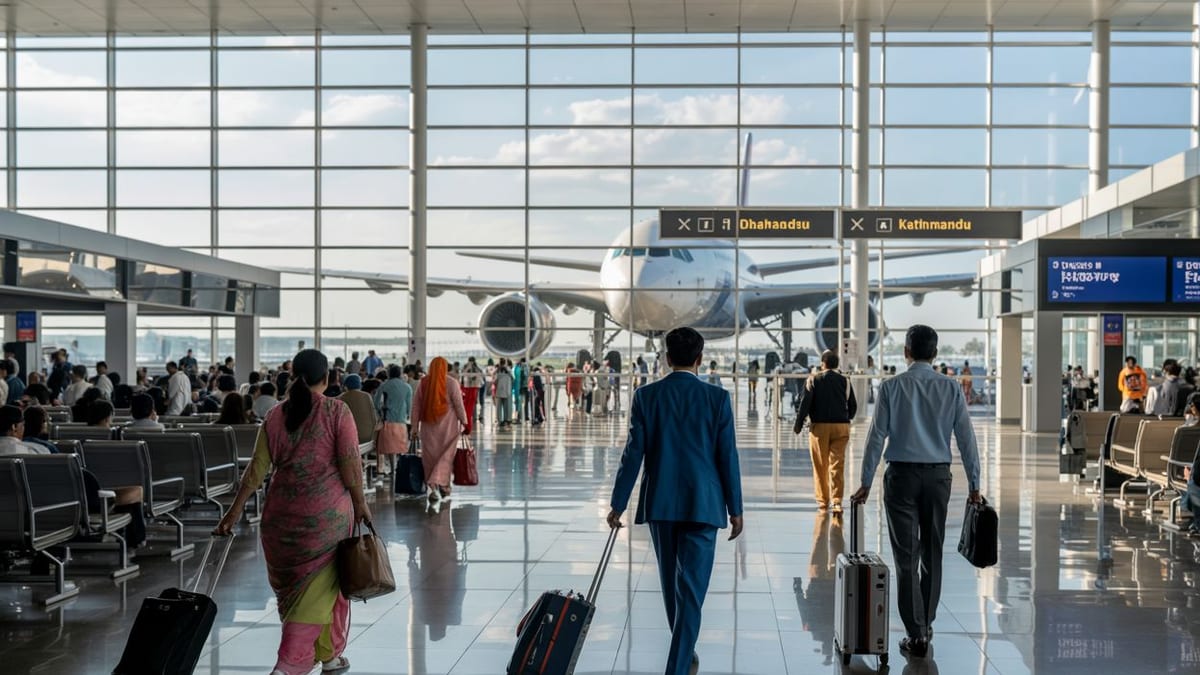
Image by Travel And Tour World
Saidpur’s Upgrade Targets Regional Gateway Status
Located in Nilphamari district, Saidpur Airport has traditionally served as a busy domestic hub linking northern Bangladesh with Dhaka. Publicly available planning documents and local media coverage indicate that the facility is undergoing a significant upgrade program aimed at transforming it into a regional aviation gateway capable of handling international traffic to neighboring countries, including Nepal and Bhutan.
Information noted in recent overviews of the project describes runway strengthening, terminal expansion and improved navigation and safety systems designed to meet international standards. The objective is to support cross-border flights to eastern Nepal and beyond, reinforcing broader regional connectivity goals for Bangladesh’s northern districts and reducing pressure on Dhaka’s main airport.
Reports from Bangladesh-based outlets characterize Saidpur as one of the country’s busiest domestic airports by flight movements, which has strengthened the case for elevating its status. Aviation planners in both countries have framed the upgrade as part of a longer-term strategy to disperse air traffic more evenly across the region while opening new tourism and trade corridors.
Although a full timeline for the completion of all international-standard works has not been publicly finalized, commentary from aviation analysts suggests that progress at Saidpur is being closely watched in Kathmandu and Dhaka as a potential catalyst for new cross-border routes.
From Dhaka to Kathmandu: A Route Already Gaining Momentum
While Saidpur’s expansion advances, Dhaka–Kathmandu remains the primary air bridge between Bangladesh and Nepal. International schedules published by the Civil Aviation Authority of Nepal list Biman Bangladesh Airlines among carriers linking the Bangladeshi capital to Tribhuvan International Airport, with multiple weekly services forming the backbone of direct connectivity between the two cities.
Online airfare aggregators and regional travel guides show that several airlines now compete on the broader Dhaka–Kathmandu corridor, including through one-stop connections via Indian hubs. Search data for departures in late 2025 and early 2026 indicates economy-class fares starting in the mid-200 US dollar range, with some Bangladesh-based travel agencies advertising promotional prices in local currency aimed at budget-conscious leisure travelers and students.
Industry observers note that this combination of direct and connecting options has helped hold prices down compared with a decade ago, when fewer carriers operated on the route. Affordable fares have, in turn, encouraged more frequent short-break trips to Kathmandu from Bangladeshi travelers, and have made Dhaka more accessible to Nepali visitors seeking medical treatment, education or business opportunities in Bangladesh.
Travel planning resources widely used by South Asian passengers highlight Dhaka–Kathmandu as a relatively short regional hop, typically scheduled at under two hours of flying time on nonstop services. This has reinforced the route’s appeal as an efficient alternative to overland journeys that can take multiple days across busy border crossings.
Biratnagar and Eastern Nepal in Focus
Beyond the better-known Dhaka–Kathmandu pairing, policymakers have signaled growing interest in linking Bangladesh with eastern Nepal. Publicly available texts referencing recent understandings between the two governments mention future air services connecting Saidpur with Biratnagar in Nepal, a city that is being promoted domestically as a regional international gateway.
Biratnagar Airport currently functions as a key domestic hub for eastern Nepal, but national planning documents describe aspirations to handle more regional international traffic in the coming years. Establishing direct flights between Saidpur and Biratnagar would shorten travel times for traders and tourists moving between northern Bangladesh, Nepal’s eastern Terai and the hill towns that feed into the Himalayan tourism circuit.
Regional economic studies have pointed out that both sides see value in diversifying routes away from a single Dhaka–Kathmandu axis. Flights between Saidpur and eastern Nepal could support new logistics chains for agro-products, textiles and light manufacturing, lowering transport costs and enabling just-in-time deliveries to growing urban markets.
Analysts also suggest that once basic cross-border routes via Saidpur are established and commercially viable, additional secondary city pairings could follow, further embedding air connectivity into the wider network of road, rail and river links being pursued under various bilateral and subregional initiatives.
Cheaper Seats, New Flyers: How Airfares Are Shifting
Published fare snapshots from booking platforms in 2025 and early 2026 show Dhaka–Kathmandu ticket prices trending toward more affordability, particularly outside peak tourism seasons. For economy-class travelers, baseline one-way fares on direct flights often appear around the equivalent of 230 to 270 US dollars, with lower promotional levels available on select dates.
Bangladeshi travel portals that specialize in South Asian routes emphasize that competition among carriers, flexible booking tools and dynamic pricing have created additional opportunities for travelers to secure cheaper seats. These platforms routinely advise passengers to book several weeks in advance for the best savings, and note that student and group discounts are becoming more visible on the route.
For Nepali travelers, the availability of competitive fares has broadened access to Dhaka’s healthcare, education and shopping sectors. For Bangladeshi visitors, lower prices make it easier to consider repeat trips focused on trekking, spiritual tourism or regional festivals in Kathmandu Valley and beyond.
Industry commentary indicates that as more passengers discover these lower price points, airlines can justify maintaining or even increasing capacity on Dhaka–Kathmandu services. This creates a reinforcing cycle where healthy load factors support stable schedules, which in turn sustain attractive fares.
Stronger Bilateral Ties Through the Skies
Bangladesh and Nepal have maintained a bilateral air services agreement since the 1970s, and policy papers produced in both countries underline air connectivity as a central pillar of their broader economic and cultural relationship. In recent years, these texts have increasingly referenced multimodal transport, linking air routes with plans for corridors by road, rail and inland waterways.
The upgrade of Saidpur Airport fits within this wider context. By positioning the northern Bangladeshi facility as a regional node for flights to Nepal and Bhutan, planners aim to connect secondary cities more directly and reduce dependence on single major gateways. Such changes would support tourism circuits that combine cultural heritage in Kathmandu Valley, spiritual sites in northern Bangladesh and adventure tourism in the Himalayas.
Trade specialists in South Asia have also highlighted the potential for improved air links to accelerate the movement of high-value and time-sensitive goods. Faster air connectivity between Dhaka, Kathmandu and future points such as Biratnagar could make it easier to export pharmaceuticals, readymade garments, processed foods and electronics, complementing existing land-based trade routes.
As infrastructure work at Saidpur progresses and airlines continue to fine-tune Dhaka–Kathmandu pricing, the two countries appear set to benefit from a tighter embrace of the skies. For travelers, that is likely to mean more choices, more competitive fares and a smoother journey between two capitals that are drawing steadily closer together.