

Port McNeill on northern Vancouver Island is small in size but big in character. Set between dense coastal forest and the protected waters of Queen Charlotte Strait, it is a working logging town, a regional hub and a gateway to some of British Columbia’s most rewarding wildlife and cultural experiences.
For first time visitors, it can feel both remote and welcoming at once. This guide walks you through the essentials so you can arrive prepared, relaxed and ready to explore.
Getting Your Bearings in Port McNeill
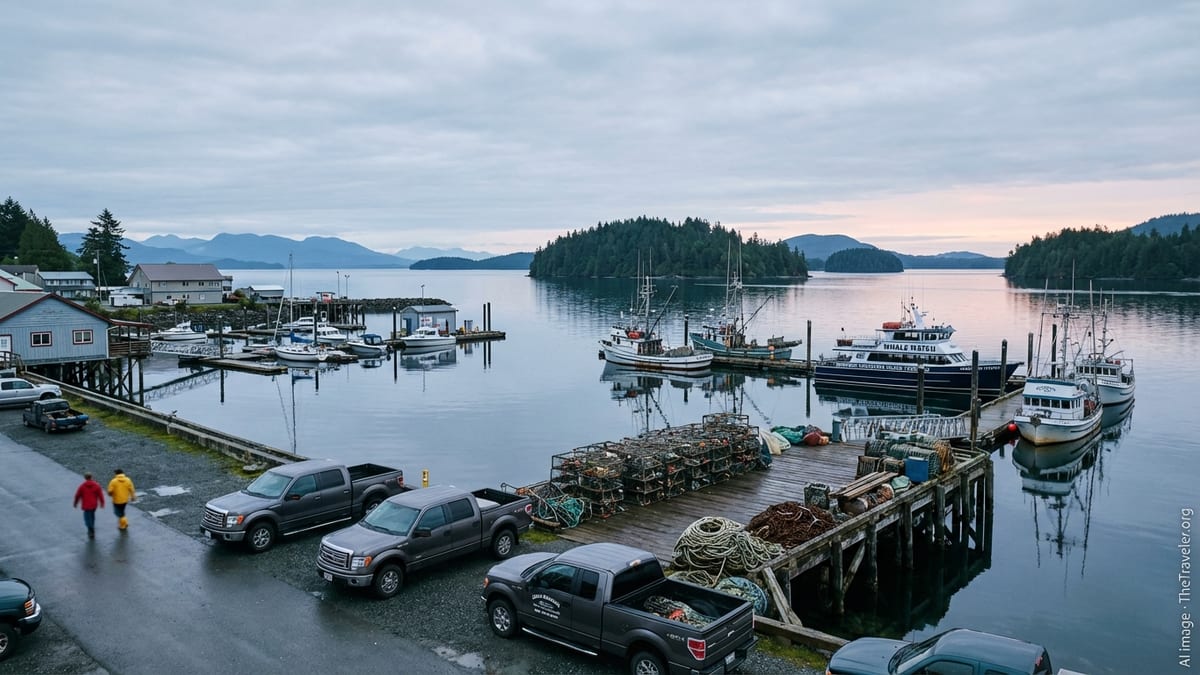
Port McNeill sits on the northeast coast of Vancouver Island in British Columbia, roughly a four hour drive north of Nanaimo and about two hours north of Campbell River. The town faces the islands and channels of Johnstone and Queen Charlotte straits, with the coastal mountains of the mainland rising beyond. It is large enough to offer practical services such as groceries, fuel, banks and a hospital, yet compact enough that most visitors quickly feel oriented. The harbourfront, marina and seawall form the heart of the community, with forested hills rising gently behind.
This is a place where working industry and tourism coexist. Logging remains a major employer alongside fishing, marine services and ecotourism operations. You will likely see boom boats nudging log booms in the harbour and barges moving along the coast, sharing the channel with whale watching vessels, kayaks and small private boats. The mood is practical and unpretentious rather than resort focused. As a first time visitor, it helps to arrive with an appreciation that you are stepping into a lived-in coastal community as well as a jumping off point for nature trips.
Most of what you will want to reach in town lies within a short drive or a manageable walk. The main commercial strip runs inland from the waterfront with shops, cafes and services. Down by the water, the seawall, marina and small parks provide an easy first stroll after your journey. A brief stop at the local museum or the world’s largest burl, a huge timber growth from an old growth tree displayed near the highway, offers an introduction to the area’s logging history and long relationship with the surrounding forests and sea.
When to Visit and What Weather to Expect
Port McNeill has a cool, maritime climate with relatively mild temperatures year round, but conditions can change quickly. Summers from June through early September are generally the most popular time to visit, with longer daylight, calmer seas and the best odds of dry weather. Average daytime highs in July and August hover in the high teens Celsius, which many visitors find comfortable for hiking, boating and being out on the water. Even in midsummer, evenings can feel brisk by coastal standards, especially when the wind comes off the water, so plan on a warm layer.
Spring and autumn can be rewarding shoulder seasons if you are prepared for more varied weather. May and September often see a mix of sun and showers, cooler nights and fewer visitors. Wildlife viewing, particularly for whales and bears on guided outings, tends to be strong from roughly June into early autumn, though exact timing can vary by year and by operator. Winter months from November through March are much quieter for tourism. Temperatures are cool rather than severely cold by Canadian standards, but you should expect frequent rain, short days, occasional wet snow and storm systems moving through.
For a first visit, many travellers choose July or August for a balance of daylight, sea conditions and activity options. If you prefer fewer crowds and do not mind layering up, late June or early September can be appealing. Whatever the season, think in terms of waterproof and wind-resistant outerwear rather than heavy insulation. A breathable rain jacket, quick-drying trousers, a fleece or light puffer, and a warm hat and gloves will go a long way to keeping you comfortable on boat decks or forest trails. Footwear that can handle mud, boardwalks and slippery docks is more important than formal shoes.
How to Get to Port McNeill and Around the Area
Reaching Port McNeill usually involves a combination of ferry, highway and, for some visitors, regional flights. If you are coming from the Vancouver area, the standard route is to take a car ferry to Nanaimo, either from Horseshoe Bay or Tsawwassen on the mainland, then drive north on Highway 19. The drive from Nanaimo to Port McNeill typically takes around four hours in normal conditions, passing through communities such as Parksville, Courtenay, Campbell River and the forested interior of northern Vancouver Island. Road services become more spaced out as you head north, so topping up fuel in Campbell River or Port Hardy is sensible.
By air, the nearest commercial airport is Port Hardy, about 35 to 40 kilometres north of Port McNeill by road. It offers scheduled flights to and from Vancouver, generally with more frequent service in the summer months. From Port Hardy, you can arrange a rental car or pre-book a shuttle or taxi south to Port McNeill. Some visitors also arrive on chartered seaplanes that land at nearby docks, arranged through specialized operators. Because schedules and options can change, it is wise to confirm connections and operating seasons in advance when planning a first trip.
Within Port McNeill, having a vehicle offers the greatest flexibility, particularly if you plan day trips to nearby communities, trailheads or parks. The town itself is walkable, and the harbourfront, museum, grocery stores and several accommodations are all within a short distance of each other. There is no large-scale public transit system in town, but some tour companies offer pick ups from central hotels or the marina for booked excursions. Taxis operate on a limited basis. For ferries to nearby islands, such as Alert Bay on Cormorant Island and Sointula on Malcolm Island, you board at the Port McNeill ferry terminal and sail as a foot passenger or with a vehicle.
Where to Stay, Eat and Stock Up
Port McNeill offers a modest but practical range of accommodation suitable for a first-time visit. You will find small hotels, motels, inns, vacation rentals and a municipal or private campground serving tenters and RVs. In summer peak periods rooms can book up, particularly during local events or when wildlife viewing season is in full swing, so advance reservations are recommended. Many visitors choose Port McNeill as a base for several nights while exploring surrounding islands, parks and ocean channels via day trips.
Dining in town reflects its working community roots. Expect casual restaurants serving hearty Canadian and coastal fare, from fish and chips and burgers to simple seafood dishes and baked goods. There are cafes where you can pick up coffee, sandwiches and pastries before heading out on the water, along with pubs that become informal gathering spots in the evenings. Menus are typically straightforward rather than experimental, with portions designed to satisfy after a day outdoors. Some accommodations offer kitchenettes or full kitchens, making self catering an easy option for families and longer stays.
For supplies, Port McNeill has grocery stores, a liquor outlet, fuel stations, pharmacies and basic retail stores. These services make it a practical staging point before continuing to more remote locations where shopping is limited. If you are planning to camp, kayak or undertake multi day excursions, it is sensible to purchase provisions, stove fuel and last minute gear in town. The visitor centre can provide maps, tide tables and printed information, while outdoor and marine retailers can advise on local conditions, safety considerations and recommended equipment.
Wildlife, Culture and Outdoor Experiences
Port McNeill is widely known as a gateway to exceptional wildlife viewing and marine exploration. From the town’s harbour, operators run whale watching tours, grizzly bear viewing safaris to mainland inlets, and trips focused on humpback whales, orcas, sea lions and coastal birds. The season for these marine wildlife outings generally stretches from mid or late spring through autumn, with peak activity often overlapping the summer months. For a first time visitor, joining a guided tour is the safest and most informative way to experience these animals in their natural habitats, with knowledgeable guides interpreting behaviour and discussing conservation.
Sea kayaking and small-boat touring are popular ways to explore the nearby Broughton Archipelago and sheltered coastal channels. Conditions can vary with wind and tide, so guided trips are recommended for those without local experience. Scuba diving in the region appeals to experienced divers drawn by rich cold water ecosystems, while anglers target salmon and bottom fish on chartered fishing trips. Inland, Nimpkish Lake Provincial Park and other protected areas near Port McNeill offer hiking, backcountry-style experiences and views of old growth forests, mountains and lakes. Many trails are not heavily developed, and cell service can be limited, so you should plan conservatively and carry appropriate safety gear.
The cultural landscape around Port McNeill is equally significant. Nearby communities such as Alert Bay and Sointula are accessible by ferry and make excellent day trips. Alert Bay is known for its strong Indigenous heritage and cultural centres, while Sointula has a distinct historical character linked to early Finnish settlers. In Port McNeill itself, visiting the local museum, events and cultural tours run in partnership with First Nations and local guides can add important context to the land and waters you are travelling through. Respectful engagement, learning a few local place names and observing protocols on cultural or ecological tours will deepen your experience.
Practical Tips, Safety and Responsible Travel
Although Port McNeill has reliable services, it retains a remote, coastal feel. Planning ahead is important. Book key elements such as accommodation, car rentals and specialized tours before you arrive, especially from June through August. Check tour departure points and times carefully. Many wildlife excursions leave early in the morning and run for several hours, and operators often ask you to arrive early to check in and receive safety briefings. If you are travelling by ferry to or from nearby islands, leave extra time at the terminal, and remember that some smaller routes do not take reservations and operate on a first come, first served basis.
Weather and sea conditions are major considerations throughout the year. Even on calm, sunny summer days, the combination of wind, spray and standing on open decks can feel significantly cooler than the posted air temperature. Dress in layers, carry a hat and gloves, and pack a dry bag for cameras and phones. Motion sickness can affect even confident travellers on smaller vessels. If you are prone to it, speak with a pharmacist or health professional before your trip and bring suitable remedies. On land, be prepared for wet, uneven trails, frequent puddles and slippery boardwalks, particularly in forested areas and along creeks.
The region’s wildlife, including black bears and occasionally cougars, is best appreciated with caution and respect. Within town and on popular trails you are unlikely to encounter wildlife at close range, but it is wise to practice basic precautions such as securing food and rubbish, never approaching or feeding animals, and making noise when walking in dense forest. When out on guided bear or whale viewing tours, listen carefully to your guides and follow their instructions about safe distances and behaviour. Responsible operators work under viewing guidelines that minimize disturbance, and your role as a guest is to support that approach.
Finally, consider your environmental footprint. Northern Vancouver Island’s ecosystems and communities are sensitive to increased visitation. Simple steps such as staying on established trails, packing out all waste, using refillable bottles, supporting locally owned businesses and learning about local stewardship initiatives help to ensure that your visit has a positive impact. For first time visitors, taking part in an interpretive tour or stopping at the visitor centre for information about current conditions, closures or cultural guidelines is an excellent starting point.
Sample First Timer Itinerary Ideas
For a short visit of two to three days, a simple structure works well. On your first afternoon, settle into your accommodation and take an easy walk along the harbour seawall. Visit the local museum if time allows and stop at the world’s largest burl on your way into or out of town for a quick photograph and orientation to the area’s forestry story. An early dinner in town followed by a stroll along the water sets the tone and may offer your first views of bald eagles, seals or working boats returning for the evening.
Dedicate your second day to a guided wildlife experience from the harbour. Depending on availability and your interests, this might be a whale watching trip, a combined cultural and wildlife outing, or a grizzly bear viewing tour that crosses to the mainland inlets. These excursions typically last several hours and often extend well into the afternoon. Return to town for a relaxed evening meal, and if daylight permits, explore a nearby short trail or viewpoint recommended by the visitor centre or your guides.
On a third day, consider a ferry trip to Alert Bay or Sointula. Both communities make rewarding day excursions, with opportunities to walk through residential streets, learn about local culture and history, and enjoy different perspectives on the surrounding channels and mountains. Alternatively, if you prefer to stay on Vancouver Island proper, you might drive to Nimpkish Lake or other regional viewpoints, stopping at pullouts, rivers and beaches along the way. For travellers with longer stays, additional days can be devoted to hiking, kayaking, further cultural visits or quiet time in town enjoying the change of pace.
The Takeaway
Port McNeill rewards travelers who value authenticity, nature and a slower, more attentive pace. It does not present itself as a polished resort town. Instead, it offers practical comforts, deep coastal culture and ready access to some of the Pacific Northwest’s most compelling marine and forest environments. For first time visitors, coming prepared for changeable weather, planning key logistics in advance and maintaining a flexible, respectful attitude will help you make the most of your stay.
Whether you are stepping onto a whale watching vessel at dawn, walking the seawall at sunset, or boarding a small ferry bound for an island community across the channel, Port McNeill has a way of making you feel both far from city life and closely connected to the landscape. A thoughtful first visit often becomes the foundation for return trips, as visitors come back to explore further afield, dive deeper into local stories and continue their relationship with this distinctive corner of northern Vancouver Island.
FAQ
Q1. Is Port McNeill a good destination for a first trip to northern Vancouver Island?
Yes. Port McNeill is a practical, welcoming base with essential services, a working harbour and easy access to wildlife tours, ferries and nearby communities.
Q2. How many days should I plan for my first visit?
A stay of two to four days works well for most first time visitors, allowing at least one full day for a wildlife or cultural tour and time for a day trip or local exploring.
Q3. Do I need a car in Port McNeill?
The town itself is walkable, but having a car makes it much easier to reach trailheads, nearby lakes, viewpoints and ferry terminals on a flexible schedule.
Q4. When is the best time of year to see whales and bears?
Wildlife viewing seasons vary by operator and year, but whale and bear tours generally run from late spring through autumn, with strong activity in the summer months.
Q5. Is Port McNeill suitable for families with children?
Yes, provided you plan age appropriate activities. Harbour walks, short trails, gentle ferry rides and family friendly wildlife tours can all be good options with kids.
Q6. What should I pack for the weather?
Pack layers, a waterproof jacket, sturdy footwear and warm accessories such as a hat and gloves, even in summer. Expect cool breezes and the possibility of rain.
Q7. Are there medical services in Port McNeill?
Port McNeill has basic medical services and a hospital that serves the wider region, but serious issues may still require transfer to larger centres, so travel insurance is advisable.
Q8. Can I visit nearby islands without bringing a vehicle?
Yes. Ferries from Port McNeill carry both vehicles and foot passengers, and the main settlements on nearby islands are compact and walkable from the docks.
Q9. Is Port McNeill a good place for hiking?
There are local trails and access to nearby parks, but many routes are lightly developed. If hiking is a priority, seek current trail information and start with recommended options.
Q10. How can I travel responsibly during my visit?
Use local services, follow leave no trace principles, respect wildlife viewing guidelines, learn about local culture and support operators and businesses rooted in the community.